An AI Design Clash Needs a Human Proof Chain
Two digital pipes appear to intersect on a project model. Software flags a clash and suggests moving the proposed storm drain. On screen, the adjustment clears the obstacle. Yet the model cannot establish, by itself, where the existing utility actually runs or whether the proposed shift preserves drainage performance.
Consider this hypothetical exercise on a bridge-approach rehabilitation project. A contractor's coordination team overlays a planned drainage line on an existing-conditions model. An artificial intelligence-assisted system highlights an apparent conflict with a buried communications duct. The recommendation looks sensible until a junior engineer checks the underlying records: the duct's location came from an older utility map, while the latest roadway survey uses a different reference. Neither source confirms the duct's precise depth. The design engineer cannot approve a change from those inputs alone.
That gap matters as transportation teams gain powerful tools for capturing and comparing site conditions. In an October Roads & Bridges interview about reality capture, Leica Geosystems executive Troy Dahlin described the value of detecting utility conflicts before excavation. What determines their value is the quality of the human decision that follows.
A Clash Alert is a Question
The first mistake is to treat a plausible visualization as verified field evidence. An AI-assisted clash tool may correctly detect an overlap between two modeled objects while those objects contain uncertain information. A collision-free alternative may violate a drainage requirement, cross another utility, interfere with a footing or require an approval outside the contractor's authority.
The Federal Highway Administration's digital delivery initiative identifies fragmented bridge, pavement and utility data, incompatible systems and outdated survey practices as persistent problems. Better data integration can improve coordination, but the history and limits of each input remain material to design review.
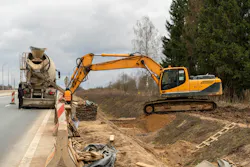
In the hypothetical bridge project, a useful first response is therefore to stop the proposed change from being treated as approved and open a documented design-coordination issue. The team must establish whether the clash exists in the field, whether the alignment can change, and who has authority to decide. Depending on the project and governing procedures, the next step may involve the utility owner, surveyor, contractor, design engineer and public agency.
Build the Proof Chain Before Moving the Line
The project team should maintain a short, auditable record for every material AI-flagged clash. It can fit inside an existing request-for-information or issue-management system. What matters is that a reviewer can reconstruct the decision without trusting the software's conclusion.
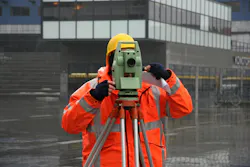
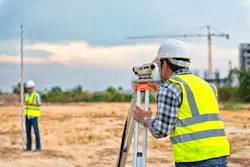
Start with the original evidence. Record the survey or utility record's source, date, coordinate system, vertical datum, accuracy or confidence limitations and any field verification. Label mapped-but-unconfirmed subsurface features as uncertain. If project procedures call for locating or exposing the utility, document the authorized method and result rather than treating a colored line as an excavation-ready fact.
Next, record what the model assumed. Identify the model version, design revision, involved objects, alert, recommended adjustment and relevant tolerances. Keep the original configuration alongside the candidate fix.
Then require an independent technical check. Assign a qualified reviewer to test the proposal against the applicable design criteria, contract documents, field conditions and downstream effects. In this example, the review could include the proposed drain's grade and capacity, required cover, utility separation, adjacent foundations and constructability. The team should state which conditions remain unverified. The list is a prompt for project-specific professional review, not a substitute for engineering calculations or governing standards.
Identify the decision owner and the escalation path. The contractor may flag the issue and propose alternatives; the engineer of record and other authorized parties determine which engineering changes and approvals are required. If facts remain uncertain, record a hold or request for information. The schedule pressure to clear a red mark from the screen cannot replace an authorized determination.
Finally, capture the resolution. Preserve who checked what, which alternative was accepted or rejected, the technical rationale, approval status, and where the controlled design revision was issued. Update construction and as-built data through the project's established document-control process.
Teach the Judgment the Software Cannot Supply
A proof chain also creates a practical training exercise. Give a junior engineer or virtual-design coordinator the apparent clash and the AI's suggested fix. Before showing the senior engineer's assessment, ask the junior employee to identify three pieces of missing information, explain the risk of each, and name the people who can verify them. They should propose the next check and say what evidence would change their recommendation.
The licensed engineer should challenge the reasoning in a short review meeting. Why trust the mapped utility depth? Which datum was used? Could moving the drain transfer the conflict elsewhere? What requires agency approval? The goal is to develop the ability to detect weak assumptions, even when the software produces a polished answer. A junior employee who learns only to accept or dismiss alerts may become fast at a task without learning the judgment behind it.
The distinction has a professional obligation behind it. The National Society of Professional Engineers (NSPE) says a professional engineer in responsible charge remains actively engaged from the start of engineering work through completion. Reviewing a finished document without the necessary direction and control does not meet that position. State licensure law, contracts and project requirements govern the actual approvals.
An NSPE ethics case addressing AI-assisted engineering documents illustrates the risk. In its hypothetical, a licensed engineer's cursory review missed misaligned dimensions and required safety features. The board found that using the tool did not excuse inadequate oversight. The lesson for project leaders is to demand the same disciplined checks from AI-supported work that they would require from any other proposed design.
Measure What the Team Catches
Project managers should evaluate this process by the quality of the decisions, rather than by the number of AI alerts closed. Track how many material conflicts were confirmed, how many suggested fixes were rejected or modified after independent checking, and how often a reviewer discovered an unsupported assumption. Examine avoidable field rework and repeat requests for information, with enough context to distinguish improved detection from worsening design quality.
Review a small sample of closed issues each month. Can a colleague find the original evidence, the model version, the independent check, the approval and the released revision? If the answer is no, the team has an auditability problem even if its dashboard reports every issue resolved. Managers should also examine whether junior staff are becoming better at explaining exceptions and asking for the right field information.
Start with one high-consequence clash category, such as conflicts involving underground utilities near structures, rather than imposing a cumbersome new workflow on every minor model warning. Define who can recommend, verify, approve and release changes. Run the exercise against a past or simulated issue, repair the gaps, then expand where the process proves useful.
Successful AI adoption at work depends on giving people the authority and practice to question the output. For road and bridge projects, the most valuable alert is the one that leads to a defensible decision before crews discover the consequences in the field.
Gleb Tsipursky, Ph.D., is a behavioral scientist, CEO of Disaster Avoidance Experts, and author of The Psychology of AI Adoption at Work: From Resistance to Results (Georgetown University Press, 2026).