AI Work for Infrastructure
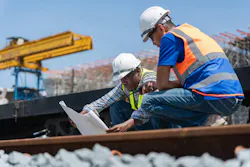
Artificial intelligence (AI) has become part of the workflow. From helping engineers understand the basics of designing an alignment to generating design alternatives, AI is challenging the way we work in construction and infrastructure. But engineers working with AI is one thing. Making AI work within the realities of engineering is another.
Engineering workflows are built around standards, specifications, regulations, existing software, project requirements and professional judgment. AI can be capable, but it still must fit within those systems without sacrificing accuracy and reliability.
That is what makes AI implementation so important. The question isn't simply whether engineers will use AI. It's whether AI can adapt to the way engineers actually work.
But this isn't the first time our industry has adapted to change. It's hard to imagine but there was a time when plans were drafted with T-squares and French curves.
The digital era changed that and showed that our industry is not resistant to innovation. We have consistently embraced new tools and adapted our workflows. Yet, AI has left many professionals wondering what its role truly is within our field.
For the first time, we have access to tools that can act like assistants at our fingertips. AI can explain unfamiliar terminology, summarize specifications, generate code, automate repetitive tasks or assist with design development. Companies are also accelerating this shift with products such as Bentley's Python Assistant for natural language coding, Viktor AI for automating engineering workflows and Autodesk Forma for AI-assisted planning and design throughout the project lifecycle.
But having more tools doesn't necessarily make adoption easier. If anything, it creates analysis paralysis. Which workflow is the most efficient? Which platform will become the industry standard? Which outputs can actually be trusted?
Integrating AI is far more complex than simply introducing another software package. It requires specialized training, new skill sets, seamless integration with existing workflows, reliable outputs across varying design standards and specifications, high-quality data and organizational support.
On top of that are the familiar challenges of technological change: skepticism toward automation, differences in company culture, varying levels of digital maturity and the persistent fear that AI will replace jobs.
Many organizations are investing heavily in platforms like Microsoft Copilot and encouraging employees to incorporate AI into their daily work. Yet many professionals continue relying on the workflows they've refined over years of experience. Those methods are familiar, dependable and produce results they trust. As we've all learned by now, AI isn't always right.
Widespread adoption ultimately depends on whether these tools solve problems engineers actually face. The question isn't simply whether AI is available. It's whether it genuinely improves productivity while maintaining the accuracy and reliability that engineering demands.
The nature of our industry makes that challenge even greater. Engineering isn't just about producing a CAD model. It involves coordination across disciplines, contract administration, regulatory compliance, public meetings, evolving site conditions and countless decisions that depend on engineering judgment rather than algorithms.
Although digital delivery continues to gain momentum across many state departments of transportation (DOT), traditional documentation and paper-based deliverables remain common. Preparing plans involves far more than producing a model. It requires engineers to understand context and ensure every deliverable meets technical, contractual and regulatory requirements.
These responsibilities don't disappear simply because AI enters the workflow.
That's why the enthusiasm surrounding AI often feels more measured within transportation and infrastructure than in many other industries. Engineering is simply more complex than what current AI systems can fully understand or automate.
None of this suggests that AI doesn't belong in our industry. Quite the opposite. AI has enormous potential to improve efficiency, reduce repetitive work and allow engineers to focus on solving more complex problems. But for that potential to become reality, AI must evolve alongside the industry rather than expecting the industry to conform to it.
Construction and infrastructure have always been built around people—their expertise, judgment and ability to solve problems that rarely have straightforward answers. That culture has enabled us to deliver some of the world's most remarkable infrastructure, and it deserves to remain the center of future innovation.
Perhaps that's the real challenge ahead. It's not only our industry that must learn how to work with AI. AI must also learn to work with the unique demands, complexity and culture of our industry.
Only then will it truly become transformative for infrastructure.