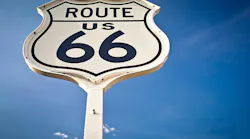
Route 66 Turns 100: The Highway That Became an American Icon
Key Highlights
- Route 66 was officially established on November 11, 1926, connecting Chicago and Los Angeles across approximately 2,400 miles.
- The highway was decommissioned in 1985 as the Interstate System replaced much of its original route.
- Arizona retains approximately 385 miles of the original Route 66, the longest preserved stretch in the country.
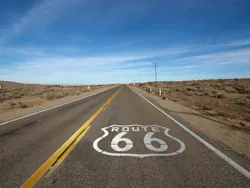
Route 66 has been part of American road travel for generations. For some, it was a route west in search of work and opportunity. For others, it meant family vacations, roadside diners and stops in small towns along the way.
Officially established on November 11, 1926, the highway is celebrating its 100th anniversary in 2026, bringing renewed attention to one of the country's most recognizable roads.
Often called the Mother Road and Main Street of America, Route 66 originally stretched approximately 2,400 miles from Chicago to Los Angeles, crossing eight states and connecting small towns with major cities along the way, according to the National Park Service.
When the highway was designated in 1926, much of its route consisted of existing roads brought together under one national designation. At the time, many communities, particularly in the West, had limited access to reliable roads. Route 66 helped change that by creating a more direct connection between rural areas and larger population centers.
A Highway That Changed the American Road Trip
During the 1930s, Route 66 became an important route for families leaving the Midwest during the Dust Bowl. As drought, crop failures and dust storms devastated agricultural communities, thousands of people traveled west in search of work and a better life.
The highway also played a role during World War II, helping move military personnel and supplies. After the war, its identity began to shift as more Americans purchased automobiles and took to the road for vacations.
Motels, gas stations, restaurants and roadside attractions sprang up along the highway to serve the growing number of travelers. Small businesses found opportunities to attract customers, while towns along the route became destinations in their own right.
Its appearances in songs, movies and television helped make Route 66 recognizable far beyond the communities it passed through, according to the National Park Service.
That popularity, however, would eventually face a major challenge.
The Interstate System Changed Its Future
As the country began building a modern interstate highway network, drivers increasingly turned to faster, more direct routes. President Dwight D. Eisenhower signed the Federal-Aid Highway Act of 1956, setting in motion the construction of the Interstate System that would eventually replace much of Route 66.
The new interstates made long-distance travel faster, but many communities along Route 66 lost the steady stream of drivers who once stopped at their businesses.
By 1985, Route 66 had been officially decommissioned as a U.S. highway. Preservation groups, local communities and government agencies later worked to protect remaining sections and landmarks, keeping parts of the historic route accessible to travelers, according to the National Park Service.
Today, portions of the original road remain drivable, although others have been incorporated into newer highways.
Arizona Takes the Lead in Centennial Celebrations
Arizona is home to approximately 385 miles of the original Route 66, the longest preserved stretch in the country. The highway passes through communities including Kingman, Seligman, Williams, Flagstaff, Winslow and Holbrook, according to the Arizona Office of Tourism.
One of the most recognizable stops is Winslow, where visitors can stand on the corner made famous by the Eagles' song "Take It Easy." Other popular destinations include the Hackberry General Store, the historic town of Seligman and Route 66 attractions throughout Kingman.
Keeping those stretches accessible requires continued work. The Arizona Department of Transportation maintains a 67-mile section of State Route 66 between Kingman and Seligman, while other portions are maintained by local governments and agencies. ADOT has also encouraged residents to participate in cleanup efforts and support preservation through a specialty Route 66 license plate, according to the Arizona Department of Transportation.
The anniversary has also brought several tributes beyond the roadway itself.
In May, the U.S. Postal Service dedicated a collection of Route 66 commemorative stamps featuring eight photographs by photographer David J. Schwartz. One of the images features a surviving Whiting Bros. Motel sign in Yucca, Arizona, offering a glimpse of the businesses that once served travelers along the highway, according to the Arizona Department of Transportation.
Arizona is also using the anniversary to encourage more people to experience the highway firsthand. The state's tourism office has developed centennial resources, including road-trip itineraries, attractions and a free Route 66 check-in challenge for visitors.
Another celebration will take place November 14-16, when the Route 66 UltraRun sends participants along 140 miles of historic highway between Seligman and Topock. The event offers a different way to experience a road traditionally associated with cars and cross-country travel, according to ADOT.
About the Author
 Karina Mazhukhina, Digital Content Specialist
Digital Content Specialist
Karina Mazhukhina has extensive experience in journalism, content marketing, SEO, editorial strategy, and multimedia production. She was previously a real-time national reporter for McClatchy News and a digital journalist for KOMO News, and ABC-TV affiliate in Seattle.
Related
 Route 66 running through downtown Sapulpa, Okla.