REPORT: What the Expiration of the IIJA Could Mean for Road and Bridge Funding
Key Highlights
- The IIJA provided $326 billion for road and bridge investments, including $273 billion distributed through formula funding.
- Maintaining IIJA funding levels through 2033 would still leave a projected $1.2 trillion gap in surface transportation investment.
- States could face an immediate 13% reduction in road and bridge funding if the IIJA’s advance appropriations are not renewed or replaced.
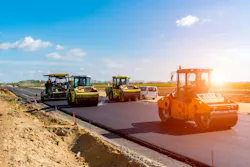
With the September expiration of the 2021 Infrastructure Investment & Jobs Act (IIJA) and little direction on the next round of federal roadway investments, states are budgeting for projects without knowing how much federal support will be available.
The Pew Research Center released a report, “What the Expiration of the Federal Infrastructure Law Could Mean for the Nation’s Roadways,” outlining the IIJA’s impact on road and bridge investments, how reduced federal funding could affect states and what funding might look like under a short-term extension.
The Infrastructure Investment & Job Acts of 2021
The IIJA provided $326 billion in federal funding for the repair, modernization, safety, resilience and asset management of the nation’s aging roads and bridges.
Some $273 billion of federal funding, or 83%, was distributed through formula funding—money allocated to states automatically based on factors such as population and roadway miles. These funds reached states through established statutory programs, such as the National Highway Performance Program, which provides states with a predictable base of federal dollars for maintenance, preservation and other priorities, according to the report.
Under the IIJA, formula funding was increased by 32% when compared with the 2015 Fixing America’s Surface Transportation (FAST) Act.
The law also increased funding for longstanding programs and created new formula programs addressing critical repairs and modernization, including bridge improvements and resilience. These programs were established because traditional funding programs were not designed to address some of these infrastructure priorities, Pew Research Center reported.
Local governments also had direct access to $53 billion in competitive grants, eliminating the need for states to serve as intermediaries for certain large-scale projects.
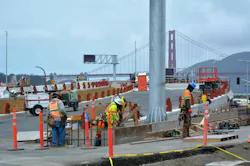
The IIJA sought to address decades of deferred maintenance that have left many of the nation’s bridges in poor condition. The law provided increased federal support for bridge construction, preservation and maintenance compared with previous infrastructure legislation.
Despite the benefits for the nation’s transportation infrastructure, IIJA funding faced several challenges. Rising construction costs reduced the purchasing power of federal funding. One analysis cited in the report estimated that increases in highway construction costs reduced purchasing power of Federal Highway Administration (FHWA) funding by $21.5 billion between late 2020 and 2022.
Labor shortages, procurement bottlenecks and supply chain disruptions also extended project timelines, meaning federal dollars bought less and took longer to spend than initially anticipated.
If the pressures on the transportation construction industry continue, state DOTs may see increased strain on their budgets as the IIJA winds down.
Congress has routinely renewed core formula programs, but the new formula and core programs established under the IIJA relied on one-time funding. Their future depends on what is included in the next surface transportation law.
How Reduced Federal Funding Could Affect States
A reduction in available federal funding could have a significant impact on state transportation budgets.
According to a 2024 report from the American Society of Civil Engineers (ASCE), maintaining IIJA funding levels through 2033 would still leave a $1.2 trillion gap between total surface transportation needs and anticipated investment.
A return to 2019 funding levels would increase that gap to $1.8 trillion, further raising the burden on state and local governments, according to Pew Research Center.
If state and local governments lose access to the IIJA’s expanded funding and eligibility, states may be forced to find new revenue sources and increase their own spending to keep the nation’s most deteriorated bridges safe and operational.
Some IIJA funding for climate-related modernization and resilience could continue under the next transportation law, but others programs may be scaled back or eliminated.
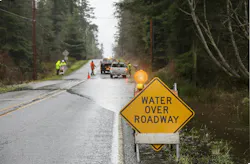
According to Pew Research Center, the Promoting Resilient Operations for Transformative, Efficient, and Cost Saving Transportation (PROTECT) Program has supported $2.3 billion in transportation resilience projects. The projects aim to protect critical roadways from flooding, storm surge and other extreme weather events, as well as create or reinforce emergency evacuation routes.
Under current federal proposals, a portion of the program would be eliminated, potentially scaling back one of the few dedicated funding sources helping states proactively strengthen transportation systems against extreme weather. Changes could also stall the implementation of state resilience improvement plans, which identify critical at-risk transportation assets and outline strategies to address vulnerabilities.
Short-Term Extension Could Leave Funding Gap
In addition to the individual programs under the IIJA, the law paired traditional road and bridge funding from the Highway Trust Fund with substantial advance appropriations for roads, bridges and other transportation investments. Those advance appropriations expire after fiscal 2026, according to Pew Research Center.
This could create challenges for state and local governments if Congress delays passing the next federal transportation law. Short-term extensions, which Congress has often used to continue Highway Trust Fund programs, may not automatically extend the IIJA’s advance appropriations.
If these advance funds are nor renewed or replaced, states could see an immediate 13% reduction in road and bridge funding, even under a short-term extension of the IIJA.
Source: Pew Reseach Center
About the Author
 Jessica Parks, Staff Writer
Staff Writer
Jessica Parks is a staff writer at Roads & Bridges with newsroom experience in Brooklyn, Long Island and the U.S. Virgin Islands, and several years spent living in Puerto Rico. She is currently based in Tulsa, Oklahoma.