Senate Passes Stopgap Transportation Extension, Pushing IIJA Deadline to December
Key Highlights
Key Findings
- IIJA deadline moves to Dec. 11 if the House approves the Senate’s stopgap bill.
- The extension is temporary, not a replacement for the IIJA or a new five-year transportation law.
- BUILD America 250 gets more time as lawmakers weigh the next long-term transportation package.
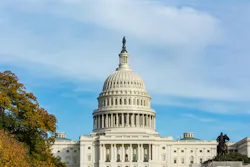
Congress has bought itself more time to decide what comes next for America’s roads, bridges and transit systems.
The U.S. Senate voted 90-6 on Aug. 8 to pass a short-term continuing resolution that would fund the federal government through Dec. 11.
Tucked into the legislation is a temporary extension of key surface transportation authorities under the Infrastructure Investment and Jobs Act, giving lawmakers about 10 additional weeks beyond the Sept. 30 deadline to work out a longer-term transportation bill, according to The Hill and Sen. Kevin Cramer’s office.
The vote is significant for the transportation industry because it acknowledges a growing reality in Washington: Congress is not expected to have a new long-term surface transportation authorization ready before the current programs expire at the end of September.
But the Senate did not simply extend the entire IIJA, also known as the Bipartisan Infrastructure Law, through December.
That distinction matters.
The IIJA is a sweeping law that includes far more than surface transportation programs. The Senate's legislation specifically extends the law's surface transportation authorities, eligibilities and requirements through Dec. 11, while providing prorated contract authority for highway and transit programs, according to the American Association of State Highway and Transportation Officials.
In other words, the measure is a temporary bridge, not a new five-year transportation package.
And before it can take effect, it still needs approval from the House, according to CBS News and The Hill.
A New Deadline for Congress
For months, the transportation industry has been watching Sept. 30 as a major deadline. That is when current federal surface transportation authorities were set to expire, putting pressure on Congress to pass the next long-term authorization, according to AASHTO.
Now, assuming the House approves the Senate measure, lawmakers would have until Dec. 11.
The Senate's continuing resolution would also keep the federal government funded through that date, a move designed to avoid another shutdown fight as lawmakers head into the fall, according to CBS News and The Hill. The bipartisan 90-6 vote sent the measure back to the House, where lawmakers will have to decide whether to accept the Senate's version, according to Sen. Kevin Cramer’s office.
For transportation agencies, contractors and others planning projects that depend on federal programs, the extension would provide temporary continuity while Congress works through the much larger question of what the next transportation law will look like.
The clock, however, has not stopped. It has simply been reset.
What Exactly Does the Extension Cover?
Calling the Senate's action an extension of the IIJA through Dec. 11 would be too broad.
The continuing resolution includes a Surface Transportation Extension Act that would temporarily extend the IIJA's surface transportation authorities, eligibilities and requirements. It also provides prorated contract authority for highway and transit programs, according to AASHTO.
That means Congress would not be replacing the IIJA or approving a new five-year reauthorization. Instead, it would keep key surface transportation programs operating while lawmakers continue negotiating a longer-term solution, according to AASHTO.
There is another important wrinkle involving transit.
The Senate measure does not include the IIJA's advance appropriations for transit, according to the American Public Transportation Association. Reporting on the legislation has also noted that while the measure would temporarily extend federal transportation and construction programs, some transit and passenger-rail appropriations are not included.
So while the stopgap would prevent a broader surface transportation funding cliff, not every funding stream tied to the IIJA is being handled in exactly the same way.
That nuance could become increasingly important as Congress works toward a final reauthorization.
Where Does BUILD America 250 Fit In?
The Senate vote also changes the immediate timeline surrounding the House's BUILD America 250 Act.
The House proposal remains a separate effort to replace the IIJA with a new long-term surface transportation authorization. But the House has not yet passed the bill, according to Roads & Bridges' previous coverage of the legislation.
Before the Senate acted, Congress faced the prospect of reaching Sept. 30 without a completed replacement. The temporary extension gives lawmakers more breathing room and, potentially, more time to determine what form the next transportation package will take.
That could mean the House advances BUILD America 250 and negotiates with the Senate. It could mean the Senate develops its own approach. Or the final legislation could emerge as a negotiated combination of competing priorities from both chambers.
What is clear is that BUILD America 250 has not become law simply because the Senate extended current surface transportation authorities.
The two actions are connected by the same looming reauthorization deadline, but they are not the same thing.
The stopgap measure deals with keeping current programs moving temporarily. BUILD America 250 is part of the debate over what comes after them.
More Time, But No Final Answer
The Senate's Aug. 8 vote effectively signals that Congress will need more than the remaining weeks of September to finish one of its biggest transportation policy decisions.
That is the real significance of the extension.
For now, lawmakers are trying to avoid a gap in key federal surface transportation programs while giving themselves additional time to negotiate the next major infrastructure package, according to AASHTO. The proposed Dec. 11 deadline would create a new pressure point, one that comes after the fall campaign season and could force Congress to confront decisions it has not yet resolved.
The House still must act on the Senate-passed measure before it can become law, according to CBS News, The Hill and Sen. Kevin Cramer’s office. But if the stopgap is approved, the transportation industry's attention will shift from whether Congress can beat the Sept. 30 deadline to what lawmakers can accomplish before Dec. 11.
That leaves BUILD America 250 in a more interesting position than before.
The bill remains on the table, but it now has a longer runway. Instead of racing to complete a five-year reauthorization in a matter of weeks, lawmakers could have roughly four months to decide whether the House proposal, a Senate alternative or a compromise between the two becomes the country's next transportation law.
Congress may have bought itself time.
It still has to decide how to use it.
Source: CBS News, The Hill, Office of Kevin Cramer, AASHTO
About the Author
 Karina Mazhukhina, Digital Content Specialist
Karina Mazhukhina, Digital Content Specialist
Digital Content Specialist
Karina Mazhukhina has extensive experience in journalism, content marketing, SEO, editorial strategy, and multimedia production. She was previously a real-time national reporter for McClatchy News and a digital journalist for KOMO News, and ABC-TV affiliate in Seattle.