Shades of Death Road has been a fixture in Warren County, N.J., for generations. Its road signs tend to be more temporary.
The 6.7-mile road winds through forests and swamps with an official name that sounds less like a thoroughfare and more like the final level of Mario Kart.
There are various theories about how the road got its name, involving everything from malaria outbreaks to highwaymen and murders. Whatever the origin, the name has made its signs irresistible to souvenir hunters. They’ve reportedly been stolen frequently enough that residents finally devised their own security system.
According to WeirdNJ.com, locals have gone “so far as to smear the pole holding the street sign” with grease or oil to thwart would-be thieves — or at least make the thefts more entertaining to watch.
A Grande Problem
Dunkin’ Donuts spent this summer tackling another crisis facing America’s transportation system: cup holders are simply not keeping pace with beverage sizes.
Earlier this year, Dunkin’ began selling 48-ounce Iced Beverage Buckets. Not cups. Buckets. With handles. And, naturally, a giant straw. The limited test was so successful that the buckets quickly sold out.
Unfortunately, more than a century of automotive innovation had overlooked one critical feature: somewhere to put three pounds of iced coffee.
Dunkin’ listened.
“During an initial alpha market test earlier this year, guests made one thing clear: they wanted a simpler way to take their Beverage Buckets on the go,” Dunkin’ stated in an August press release. “The Dunkin’ team got to work, designing a solution while the test was still underway.”
The result was a $12 custom Bucket Holder, designed to fit into an ordinary car cup holder while supporting Dunkin’s extraordinary 48-ounce bucket. It went on sale July 29 and promptly sold out.
Future automotive historians may pinpoint this as the moment the cup holder officially became load-bearing infrastructure.
Bridges to Meowhere
Meanwhile in Portland, a family spent this summer addressing America’s severe shortage of cat bridges.
Debbie and David Dicks have constructed miniature replicas of Portland bridges in their backyard so their four cats can safely travel between outdoor cat enclosures.
“I wanted our cats to be able to breathe fresh air and experience the outdoors while staying safe from harm, and for birds to be safe from our cats as well,” Debbie told The Oregonian. “But I also wanted something that gave our outdoor space some flair.”
Indeed, these aren’t just boards stretched between catios. Debbie enlisted her designer son-in-law to help turn the idea into an intricately detailed bridge system, with painfully punny names like “Pawthorne” Bridge, “Taillikum” Bridge and “CAThedral” Bridge.
When complete, Portland’s newest bridge network will span 60 feet, connect multiple destinations and serve a daily traffic volume of four.
Another Mural Victory
Finally, researchers ended decades of uncertainty by confirming that people prefer art to blank walls.
A new study out of Philadelphia found that people exposed to public art reported greater feelings of pleasure, calm and inspiration.
Philadelphia provided plenty of material to work with. Its Mural Arts Program dates back to 1984, and the city now boasts more than 4,000 murals, earning it recognition as a global mural capital.
More surprisingly, murals actually changed perceptions of the surrounding neighborhoods. Participants viewed West Philadelphia locations as safer and more interesting and reported feeling more immersed and transformed by the murals, while Center City locations were perceived as cleaner and less noisy.
The researchers concluded that public art could be a relatively inexpensive way to improve how people experience urban environments. It won’t eliminate traffic, pollution or urban neglect, but apparently staring at something beautiful while sitting in traffic is measurably preferable to staring at concrete.
So, there you have it. The future of American infrastructure is clear: paint the walls, build bridges for the cats, grease the road signs and, above all, make sure everyone has somewhere secure to put their bucket of coffee. With the hard problems finally behind us, we can get back to the potholes.
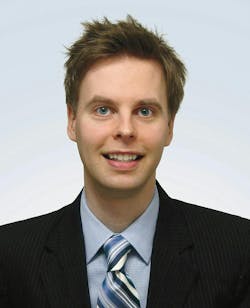
David Matthews has been chronicling the unexpectedly humorous side of transportation news for his Roads & Bridges column since 2000. The stories are all true.
About the Author
 David Matthews