Oregon’s Road Crews Face Cuts as Wildfires and Severe Weather Pile Up
Key Highlights
- ODOT faces a $200 million budget gap that could lead to nearly 550 job cuts, including 193 maintenance positions.
- Fewer maintenance crews could mean more delays and a larger backlog, with about one-third of ODOT’s 80 statewide maintenance crews potentially reduced to five workers or fewer.
- Severe weather is increasing the pressure on Oregon’s roads, from wildfires and extreme heat to landslides and flooding, making timely maintenance and emergency response more critical.
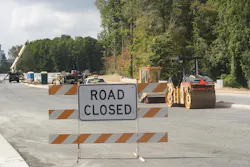
What happens when the people responsible for maintaining Oregon’s roads are also the people called upon when disaster strikes?
That question is becoming increasingly important as the Oregon Department of Transportation faces a $200 million budget gap for the 2027-29 budget cycle and considers eliminating nearly 550 positions.
The potential cuts come as ODOT crews are already being pulled away from routine maintenance to deal with wildfires, flooding and other emergencies. That could leave the agency with fewer people to handle both everyday repairs and the next major weather event, according to the Oregon Capital Chronicle.
When Maintenance Crews Become Emergency Responders
This summer, wildfires burned about 2.5 million acres across Oregon, mostly in the eastern and central parts of the state. ODOT maintenance workers helped manage traffic, coordinate evacuations, move heavy equipment and close sections of highway to create fire breaks, according to the Oregon Capital Chronicle.
Some workers were also dealing with fires near their own homes.
ODOT Chief Engineer Tova Peltz said crews have been working long hours, with workers from western Oregon brought in to support crews in the east.
“I know folks are working long hours and we’re bringing in folks from the west side of the state to support crews on the east side that have been working nonstop through the fires,” Peltz told the Oregon Capital Chronicle. “I worry that that is going to get so much worse in the future.”
That concern is amplified by the proposed staffing reductions. About 10% of the maintenance positions at risk are already vacant, but eliminating the rest would require layoffs, according to Peltz.
The cuts could leave about one-third of ODOT’s 80 statewide maintenance crews with five or fewer workers. That means fewer people available for snow removal, vegetation clearing, ditch and culvert work and pavement repairs, according to the Oregon Capital Chronicle.
A Growing Maintenance Problem
Fewer maintenance workers could also make it harder for ODOT to keep up with an aging transportation system.
Jo Sias, a civil engineering professor at the University of New Hampshire who led a 2025 study on climate change and roads, said delayed maintenance can allow problems to worsen more quickly.
“Any decreases in staffing and delayed maintenance are only going to make things get worse faster,” Sias told the Oregon Capital Chronicle.
Weather is adding to that challenge. Higher temperatures can cause asphalt to age faster, increasing cracking and rutting, while flooding can shorten pavement life by as much as 16 months, according to the 2025 study.
Oregon is already seeing how extreme heat can disrupt maintenance. High pavement temperatures shortened ODOT’s chip-sealing season this year, pushing some work into the agency’s existing backlog, according to the Oregon Capital Chronicle.
Wildfires Can Trigger Another Road Problem
The effects of severe weather can also continue long after an emergency ends.
Paul Loikith, an associate professor of weather and climate science at Portland State University, told the Oregon Capital Chronicle that Oregon is experiencing more days above 90 degrees, a trend expected to continue.
More wildfires can increase the risk of landslides because heavy rainfall can destabilize areas where fires have destroyed vegetation.
Landslides already affect about 7% of Oregon’s highway system, or nearly 500 miles of road, according to ODOT. Vulnerable areas include U.S. Highway 101, the Columbia River Gorge and Cascade Mountain passes.
ODOT spends about $2.5 million a year on landslide mitigation and another $18.1 million on landslide-related repairs, according to the Oregon Capital Chronicle.
The Funding Problem Behind the Cuts
ODOT’s budget shortfall is largely tied to inflation and declining gas tax revenue as more drivers switch to electric vehicles, according to the Oregon Capital Chronicle.
The agency has already cut more than $500 million in spending since 2019 through measures such as moving workers into state-owned buildings, expanding technology use and eliminating vacant executive positions.
Without new revenue, nearly 550 filled and vacant positions could still be eliminated, representing about 11% of ODOT’s workforce, according to the Oregon Capital Chronicle.
The funding situation worsened after Oregon voters rejected most of a transportation revenue package approved by lawmakers in 2025. The package would have generated about $4.3 billion over the next decade through measures including higher gas taxes and vehicle-related fees, but voters rejected those increases in a May referendum, according to the Oregon Capital Chronicle.
ODOT also has limited flexibility to fill the gap. State law restricts the agency from moving money between divisions without legislative approval, while federal transportation funding cannot be used for maintenance, according to the Oregon Capital Chronicle.
What Happens Next?
The debate over ODOT’s funding is expected to continue into the 2027 legislative session.
A 12-member group of business and transportation stakeholders appointed by Gov. Tina Kotek has been working on recommendations for addressing the agency’s funding shortfall. The group plans to present those recommendations to lawmakers before the session, according to the Oregon Capital Chronicle.
For Oregon drivers, the issue goes beyond the number of jobs at ODOT. Fewer maintenance workers could mean more delayed repairs and fewer crews available when the next wildfire, flood, landslide or winter storm hits.
Source: Oregon Capital Chronicle
About the Author

Karina Mazhukhina, Digital Content Specialist
Digital Content Specialist
Karina Mazhukhina has extensive experience in journalism, content marketing, SEO, editorial strategy, and multimedia production. She was previously a real-time national reporter for McClatchy News and a digital journalist for KOMO News, and ABC-TV affiliate in Seattle.