How Transportation Infrastructure Is Powering America's Energy and AI Future
Key Takeaways
- A Transportation Construction Coalition report highlights transportation's role in supporting U.S. energy production and AI infrastructure.
- Projects in Alaska, West Virginia and Virginia demonstrate how infrastructure investments strengthen key economic corridors.
- With the IIJA expiring Sept. 30, the future of similar transportation investments remains uncertain.
The nation’s transportation network is playing an increasingly important in supporting U.S. energy production, artificial intelligence infrastructure and long-term economic competitiveness.
Ahead of the Sept. 30 expiration of the Infrastructure Investment and Jobs Act (IIJA), the Transportation Construction Coalition released a study highlighting transportation’s role in supporting mobility, supply chains and economic opportunity nationwide.
Their report examines three transportation systems that illustrate how infrastructure investments are helping support energy production and the nation’s growing AI industry.
Alaska’s Dalton Highway
The Dalton Highway — a 414-mile roadway stretching from Livengood to Deadhorse on the Arctic Ocean — is the only surface route connecting Alaska’s road system to the North Slope energy region.
Built in 1974, the highway serves an energy industry that has produced more than 18 billion barrels of oil and generated nearly $274 billion since Alaska achieved statehood, according to the report.
Most traffic along the route is commercial, with trucks hauling fuel, equipment and supplies needed to support North Slope operations.
Like much of the nation’s infrastructure, however, the highway is showing its age.
Through the IIJA’s Highway Formula Program, Alaska is investing $74.5 million to improve safety and reliability by addressing permafrost damage, replacing falling culverts and reducing snow drifting that can make travel hazardous.
Operating in one of the country’s harshest environments, the roadway features narrow lanes, limited shoulders, drainage issues, sharp curves and steep grades. Long stretches also sit only slightly above the surrounding terrain, making them especially vulnerable to drifting snow.
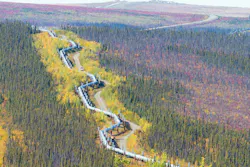
Oil and gas account for roughly one-quarter of Alaska’s jobs and about half of the state’s economy, underscoring the Dalton Highway’s importance. Improvement will also support future North Slope oil development that could move hundreds of thousands additional barrels through the Trans-Alaska Pipeline each day.
West Virginia’s Statewide Bridge Program
As AI infrastructure expands, its share of U.S. electricity demand is projected to grow from 4.4% in 2023, to nearly 12% by 2028, according to the report.
West Virginia is pursuing a major energy expansion to help power that growth, with transportation infrastructure serving as the backbone for building, maintaining and expanding new energy projects.
With nearly one if five of the state’s approximately 7,200 bridges considered structurally deficient, West Virginia is investing $548 million through the Bridge Formula Program to replace, rehabilitate and preserve bridges statewide.
Virginia’s I-64 Improvements
Virginia’s Interstate 64 is one of the state’s most important economic corridors, connecting Richmond, Hampton Roads, the Port of Virginia and Naval Station Norfolk, while also serving the state’s rapidly growing digital infrastructure sector.
According to the report, the Port of Virginia provides more than 565,000 jobs and $63 billion in economic activity, while Virginia’s AI industry generates $9.1 billion annually and continues expanding beyond Northern Virginia along the I-95 and I-64 corridors.
To support that growth, Virginia is combining a $25 million Rural Surface Transportation Grant with hundreds of millions of dollars in highway formula funding to widen I-64 between Richmond and Hampton Roads.
The project will add a third lane in each direction, strengthen shoulders, rehabilitate bridges and modernize highway operations.
Infrastructure Investment Fuels Growth
Together, the projects in Alaska, West Virginia and Virginia demonstrate how transportation investments support the nation’s energy production, technological innovation and economic competitiveness.
With the IIJA set to expire Sept. 30 and a long-term surface transportation reauthorization still awaiting congressional action, the future of projects like these remains uncertain.
About the Author
 Jessica Parks, Staff Writer
Jessica Parks, Staff Writer
Staff Writer
Jessica Parks is a staff writer at Roads & Bridges with newsroom experience in Brooklyn, Long Island and the U.S. Virgin Islands, and several years spent living in Puerto Rico. She is currently based in Tulsa, Oklahoma.