The Challenges of Entering a New Transportation Market
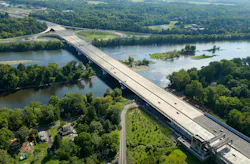
Entering a new market is often viewed as a growth opportunity. Winning road, bridge and transportation infrastructure work in a new region can expand a contractor's footprint, diversify their portfolio and position the company for long-term success. But while securing a project in a new market is a significant milestone, delivering that work introduces a different set of challenges—many of which may not be fully understood at the outset.
In practice, the risks associated with entering a new market are not limited to estimating or competition. They are operational. And if they are not accounted for early, they can impact project performance, schedule reliability and financial outcomes.
For highway and bridge contractors, these challenges often become apparent only after construction begins. Local labor markets, subcontractor capabilities, utility coordination requirements, owner expectations and regulatory processes can differ significantly from those experienced elsewhere.
The challenge for contractors is that these operational differences rarely translate into a single, easily identifiable risk. Instead, they can compound across workforce planning, subcontractor coordination, regulatory compliance and project oversight. For road and bridge contractors, accounting for these factors before work begins is essential to establishing realistic schedules, controlling costs and protecting project margins.
Workforce Availability and Productivity
Labor is one of the first areas where the realities of a new market can diverge from a contractor’s expectations.
Even when qualified labor is available, productivity assumptions may not align with actual performance. Differences in experience levels, local practices and workforce dynamics can all influence how work is executed. These challenges can be especially pronounced on major bridge replacements, highway reconstruction projects and design-build transportation programs that require specialized craft labor, experienced superintendents and teams capable of managing complex field operations.
Building a workforce in a new market presents an additional challenge: trust. Skilled workers are often hesitant to leave established employers for a contractor that is new to the region. As a result, attracting experienced labor can take time, and the most qualified workers are not immediately available to new entrants.
In some cases, contractors may attempt to accelerate hiring by offering higher compensation to attract experienced workers. While this approach can provide short-term relief, it is not a sustainable strategy and can introduce long-term cost pressures.
Production rates that were reliable in one region may not translate directly to another. Projects may require more time and supervision than originally anticipated. These impacts are often subtle early in a project, but they accumulate—and over time, they directly affect schedule and cost.
Subcontractor and Supplier Relationships
Established markets benefit from established relationships. In a new market, contractors are often working with paving subcontractors, bridge subcontractors, utility contractors, trucking companies, aggregate suppliers, concrete producers and asphalt suppliers for the first time. While these partners may be capable, their performance, reliability and coordination approach are not yet fully understood.
Just as importantly, trust has not yet been established. In mature relationships, there is confidence that issues will be handled fairly and collaboratively. In new markets, that confidence must be built. Until it is, communication may be more cautious, coordination more deliberate and resolution slower.
Pricing can also vary from expectations, particularly when local labor markets, material availability and supplier capacity differ from those in more familiar regions. Without established relationships, coordination requires more effort, more oversight and more time. Those demands are not always visible early—but they are felt in execution.
Understanding Local Transportation Market Dynamics
Every transportation market operates differently. Federal agency requirements, state department of transportation (DOT) standards, local permitting processes, inspection procedures, environmental commitments and utility coordination requirements can all influence how a road or bridge project progresses. Even minor differences in how work is reviewed or approved can affect sequencing, traffic impacts and schedule performance.
Contractors entering a new market often assume that processes will align with prior experience. In reality, those differences shape how work gets done—and how quickly it moves.
Understanding these dynamics is critical, but it is rarely immediate. It is learned through execution.
Road and Bridge Projects Present Unique Challenges
Road and bridge construction projects often amplify the challenges associated with entering a new market. Traffic maintenance requirements, utility relocations, environmental permitting, local material availability and owner-specific specifications can vary between jurisdictions.
Contractors who have successfully delivered bridge replacements or highway reconstruction projects in one state may discover that construction standards, inspection procedures and stakeholder expectations differ substantially in another.
Those differences are rarely visible during pursuit but often become apparent during execution. The most successful transportation contractors recognize that every market has its own operating environment and adjust accordingly.
New Owner and Stakeholder Interfaces
Projects in a new market often involve new owners, agencies and stakeholders. Road and bridge projects frequently require coordination with federal agencies, state DOTs, local municipalities, utility owners, railroads, permitting agencies and community stakeholders.
Each organization brings its own expectations, communication style, priorities and decision-making process. Aligning with those expectations takes time, particularly when teams are unfamiliar with how decisions are made, how issues are escalated and where authority ultimately resides.
Decision timelines, approval pathways and risk tolerance can all differ from what was assumed during planning. When they do, they influence coordination, sequencing and the ability to maintain consistent progress. These dynamics are not inherently problematic, but they require active management. Without it, they become a source of inefficiency.
Coordination and Oversight Requirements
Delivering road and bridge construction work in a new market requires a higher level of coordination and oversight.
Relationships are new. Processes are still being understood. Expectations are still being defined. As a result, project teams spend more time aligning stakeholders, clarifying requirements and managing interfaces.
In some cases, this also requires asking experienced personnel to relocate or bringing in new team members who may not yet be familiar with company processes and expectations. Both approaches introduce additional challenges in maintaining consistency and performance. This effort can be difficult to quantify during estimating, particularly without prior experience in that market. However, it has a measurable impact during execution. In familiar markets, coordination supports the work. In new markets, coordination often defines it.
Looking Ahead
As federal and state infrastructure investment continues to drive demand for highway, bridge and transportation construction projects, many contractors will continue pursuing opportunities in new geographic markets.
But success in a new market is not defined by winning work. It is defined by delivering that work effectively in an unfamiliar environment. A former mentor once put it simply: it's not how much revenue a project generates—it's how much of that revenue is ultimately retained.
Growth without performance does not create long- term value. Understanding the operational challenges associated with new markets—and planning for them early—is what separates projects that simply get built from those that are delivered safely, efficiently and profitably.
Shawn Samek, CCM, DBIA, is a project manager with Trumbull Corporation and deputy project manager for Long Bridge Rail Partners on the $695 million Long Bridge South Project in Washington, D.C.