Seattle and Tampa Infrastructure
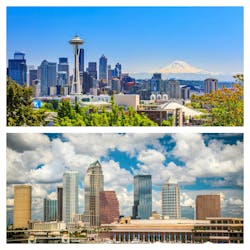
By Karina Mazhukhina, Digital Content Specialist
Though I’ve only been Roads & Bridges’ digital content specialist for a month, my experiences living in places like Seattle and Tampa have given me fresh insight into the industry and the infrastructure that connects neighborhoods, businesses, and people.
In both cities, from floating bridges in Seattle to sprawling highways in Tampa, it’s clear that geography, weather, and population growth challenge these roads and bridges every day. How each city responds ripples through traffic patterns and daily life.
This is especially evident in the Seattle area, where I lived for 16 years, because the links between infrastructure and communities are impossible to ignore. Bridges span Puget Sound, Lake Washington, and the Ship Canal, so getting from one neighborhood to another usually means crossing one of them.
One of the most well-known is the State Route 520 floating bridge, stretching more than 7,700 feet across Lake Washington from Seattle to Redmond. One morning, I got stuck in a major backup. What should have been a 10–15-minute commute turned into over an hour, with cars inching forward and frustrated drivers honking around me.
Other bridges, like the Interstate‑90 floating bridge and the Ballard and Fremont bridges, are just as important for keeping downtown connected to neighborhoods, businesses and industrial areas. Because of their heavy use, these key crossings have started to show their age, making upkeep a constant challenge.
To address these issues, the city launched major infrastructure projects, including replacing the aging and seismically vulnerable Alaskan Way Viaduct with the State Rout 99 tunnel. While the tunnel improved safety, its construction caused years of disruption.
Interstate 5 also requires frequent maintenance, particularly at the Ship Canal Bridge, where lane closures and ongoing work slow daily commutes. Even smaller projects, like repaving streets or servicing the drawbridge over the Ship Canal, continue to affect travel throughout the city.
So, it’s no wonder Seattle drivers face heavy delays. In 2025, drivers spent an average of 68 hours in traffic, costing about $1,250 in lost time and productivity — one of the highest totals in the country.
Part of the challenge comes from Seattle’s weather and geography. The city receives 37-39 inches of rain a year, and that causes occasional landslides. Earthquakes are a long-term concern, as well.
Because of steep terrain and limited space, projects often have to juggle several goals at once, like repairing bridges while also improving transit, bike lanes and sidewalks. It can be frustrating for drivers, but it shows the city is trying to modernize despite these geographic and environmental challenges.
The Infrastructure Behind Tampa’s Rapid Growth
Living in Tampa, I've started seeing transportation in a whole new way. The land is flat, wide and open, and the road network reflects that.
Highways stretch out, arterials are wide and driving is the default way to get almost anywhere. Instead of squeezing roads between hills and water, Tampa builds outward. For a former Seattleite, it can feel oddly freeing at first, but over time, familiar congestion slowly creeps in.
Tampa’s biggest infrastructure challenge isn’t age. It’s growth. Roads that once handled traffic comfortably are now packed during rush hour as the region continues to boom.
A lot of infrastructure work focuses on widening roads, improving interchanges and managing traffic flow. Bridges remain important, especially structures like the Howard Frankland Bridge, which carries thousands of cars across Tampa Bay every day.
Take the Interstate‑275 corridor, for example. It runs north-south through the city and connects key neighborhoods, the airport and downtown. During rush hour, traffic on I‑275 can slow to a crawl.
Other major roads, like Dale Mabry Highway and the Selmon Expressway, play similar roles in keeping the city connected. Even minor projects, like repaving streets or fixing traffic lights, can slow travel and make already busy roads feel more crowded.
All of this adds up: in 2024, the average Tampa Bay driver spent about 64 hours stuck in traffic, translating to roughly $1,340 lost in time and productivity. That’s enough to make the city one of the more moderately congested metro areas in the U.S.
Like Seattle, weather and geography play a big role in how Tampa builds and maintains its infrastructure. Hurricanes threaten lives and the stability of the region’s roads and bridges.
The city’s flat terrain and network of rivers, bays and canals mean flooding is always a concern, especially during heavy rain or hurricanes.
Roads, bridges and drainage systems have to be designed to handle sudden storms, and ongoing maintenance is critical to prevent backups, washouts or long-term damage. For residents and commuters, this can mean detours, slowdowns or even temporary closures whenever the weather turns severe.
Living through the challenges in both cities has helped me understand how roads and bridges shape the way people get around. Seattle feels tight and busy, with streets that seem to move with the city’s rhythm, while Tampa stretches wide and open, with highways that give a sense of space that feels almost endless.
About the Author

Karina Mazhukhina, Digital Content Specialist
Digital Content Specialist
Karina Mazhukhina has extensive experience in journalism, content marketing, SEO, editorial strategy, and multimedia production. She was previously a real-time national reporter for McClatchy News and a digital journalist for KOMO News, and ABC-TV affiliate in Seattle.