Coyotes Get Early Look at World’s Largest Wildlife Crossing in California

The Wallis Annenberg Wildlife Crossing will officially open Dec. 2, connecting habitats divided by U.S. 101

Key Takeways

  • The Wallis Annenberg Wildlife Crossing spans 10 lanes of U.S. 101 and is scheduled to open Dec. 2.
  • The crossing is designed to reconnect habitats and help California’s isolated mountain lion population diversify.
  • More than 50 cameras, thermal imaging and GPS tracking will help researchers monitor wildlife activity and movement.

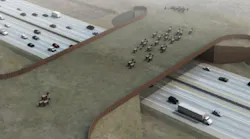
The world’s largest wildlife crossing—the Wallis Annenberg Wildlife Crossing in Los Angeles—will officially open to four-legged traffic on Dec. 2, but that hasn’t stopped some curious coyotes from checking it out early.

The overpass spans the 10 lanes of U.S. Highway 101 in Liberty Canyon, a roadway that has long fragmented animal populations in the Santa Monica Mountains, according to the project website. With the construction of the wildlife crossing, animals will now have a safe passage through an area that once served as a nearly impenetrable barrier.

Of the several animal species native to the area, the crossing can serve as a lifeline to the endangered mountain lion population, which has been suffering from the effects of inbreeding, according to reporting from the Los Angeles Times.

With the land bridge in place, mountain lions will have the opportunity to diversify their populations by seeking mates in the Simi Hills and beyond.

Coyotes Explore Crossing Ahead of Opening

Despite its Dec. 2 opening, two large animals have already been spotting checking out the new space. The first of two coyotes appeared on trail cameras early in the morning on Oct. 28.

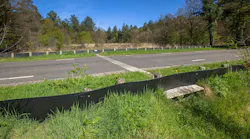
At the time, the coyote was unable to make a complete passage over the unfinished land bridge because the soil had not been built up enough to connect the two structures—one spanning the highway and another crossing an adjacent road. The structures are connected by a graded slope, the Los Angeles Times reported.

The sighting prompted crews to begin adding soil to fully connect the structures, potentially allowing larger animals to make a complete crossing.

Smaller animals, including the western fence lizard, were spotted on the crossing before the first coyote sighting.

Cameras and Tracking Technology Will Monitor Wildlife

As of early November, six cameras had been installed along the trail. More than 50 cameras are planned to capture still photos, along with four thermal cameras will be installed to record animal movement, according to the Los Angeles Times.

Images and videos will not be posted live but will be shared with the public.

In addition to cameras, researchers will use GPS radio tracking on the area’s bobcats, coyotes, mountain lions, deer and gray foxes to monitor their movement.

Deer and mountain lions are also in the process of having a device known as biologgers implanted to track physiological data, including body temperature, heart rate and fat reserves. Researchers can use the data to analyze animals’ stress levels and determine whether their heart rates rise when traveling across the land bridge, the Los Angeles Times reported.

Sources: Wallis Annenberg Wildlife Crossing, Los Angeles Times


About the Author

Jessica Parks, Staff Writer

Jessica Parks, Staff Writer

Staff Writer

Jessica Parks is a staff writer at Roads & Bridges with newsroom experience in Brooklyn, Long Island and the U.S. Virgin Islands, and several years spent living in Puerto Rico. She is currently based in Tulsa, Oklahoma.

Sign up for our eNewsletters
Get the latest news and updates