Wyoming Wildlife Crossings Expected to Reduce Collisions by up to 90%
Key Takeaways
- The highway is seeing the installation of several underpasses, an overpass and improved fencing.
- Construction launched in September 2025 and will be completed across three phases.
- Drivers should expect delays of up to 20 minutes through active work zones.
Drivers traveling along a 30-mile stretch of U.S. Route 189 in Wyoming should expect delays as work intensifies on a large-scale wildlife crossing project designed to improve safety for both motorists and animals.
The Kemmerer South Wildlife Crossings project launched in September 2025 with early work that included installing 20 miles of posts for deer fencing and preparing detours around future underpass construction, according to the Wyoming Department of Transportation (WYDOT).
Project Aims to Reduce Wildlife Collisions
Once complete, the corridor between Evanston and Kemmerer will include seven wildlife underpasses, one overpass and upgraded fencing along both sides of the highway.
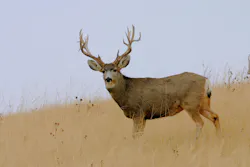
The route cuts through a major migration corridor for mule deer and pronghorn, which cross the roadway during seasonal migrations and winter movement. According to The WYldlife Fund, the highway sees an average of 80 reported deer-vehicle collisions annually — though the actual number is likely higher.
The new crossings are expected to reduce wildlife crashes in the area by 80-90%.
Delays Expected as Three-Phase Construction Targets High-Risk Areas
WYDOT officials say crews are returning to continue installing cattle guards and fencing, with milling operations and underpass construction expected to begin in April.
Motorists will be detoured onto gravel routes around active work zones, which will be spread out across multiple miles throughout the summer construction season. Delays are projected to reach up to 20 minutes.
The project will be completed in three phases through October 2027, according to The WYldlife Fund's project website.
- Phase one focuses on areas with the highest concentration of wildlife collisions, including converting two existing underpasses and building four new structures.
- Phase two will expand deer fencing and direct wildlife toward five existing crossings, while adding gates and “jump out” escape structures.
- Phase three includes constructing a wildlife overpass designed to reconnect a ridge disrupted by the original highway construction, along with barrier fencing to guide animal movement.
Funding Comes from Federal, State and Local Partners
The project is supported by a mix of federal, state and local funding, including a $24.3 million grant from the Federal Highway Administration, $4.2 million in WYDOT funds and $8.8 million from 15 different partners and nonprofits.
The WYldlife Fund also contributed $900,000 and continues to support similar efforts statewide aimed at reducing wildlife collisions.
Wyoming experiences an estimated 6,000 big game collisions annually, resulting in $20-23 million in wildlife-related costs and an additional $24-29 million in personal injury costs.
Sources: WYDOT, The WYldlife Fund
About the Author

Jessica Parks, Staff Writer
Staff Writer
Jessica Parks is a staff writer at Roads & Bridges with newsroom experience in Brooklyn, Long Island and the U.S. Virgin Islands, and several years spent living in Puerto Rico. She is currently based in Massachusetts.