Two Bridges, Two Strategies: How San Luis Obispo County Kept Rural Communities Connected
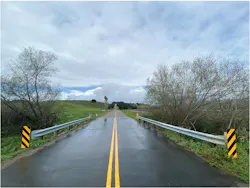
For most motorists, crossing a bridge is an afterthought. Few notice the structure beneath their tires or consider what would happen if it suddenly became unusable.
For residents of Tassajara Canyon and Corbett Canyon in San Luis Obispo County, Calif., those bridges are anything but ordinary. They provide the only practical routes to homes, farms, businesses, schools, emergency services and U.S. Route 101 (or U.S. Highway 101). Keeping them in service is essential for the communities that rely on them every day.
When inspections showed that Tassajara Bridge 1 and Corbett Canyon Bridge 2 had reached the point where routine maintenance was no longer enough, the county moved forward with two rehabilitation projects. Although each bridge required a different construction strategy, both had the same objective: extend the service life of aging infrastructure while limiting disruptions for the public.
"The successful delivery of both projects required careful planning and disciplined execution," said Mark Tabares, major maintenance section supervisor for San Luis Obispo County Public Works. "We were working within tight schedules, limited space, and challenging site conditions."
The Community’s Needs
Tassajara Bridge 1 carries a single-lane roadway through Tassajara Canyon, providing the only route into and out of the area. Residents, school buses, delivery vehicles, utility crews and emergency responders all depend on the crossing.
Years of daily traffic and weather exposure had taken a toll on the timber bridge. The deck showed signs of deterioration, several structural components required reinforcement and the existing railings no longer met current safety standards.
Engineers determined that the bridge could be rehabilitated rather than replaced, allowing the county to preserve much of the existing structure while extending its service life. The work focused on replacing deteriorated deck components, strengthening key structural members, upgrading the railing system and improving long-term durability.
Because closing the bridge would isolate the canyon, maintaining emergency access remained a priority throughout the project.
Pre-Construction Planning
The project's success was largely determined long before equipment arrived on site.
Engineers completed a structural assessment to identify which components could remain in place and which required replacement. Geographic Information System (GIS) mapping and site imagery helped verify field conditions, identify constraints and refine construction plans before work began.
Maintenance staff, bridge engineers and environmental personnel reviewed the project during the planning process, allowing construction sequencing to be developed around the site's limitations rather than reacting to problems in the field.
"We coordinated with our environmental team early to address concerns," said Jorge Torres, engineer II with San Luis Obispo County. "Once we agreed on the approach, we were able to move forward."
The planning effort also identified opportunities to use prefabricated bridge components, reducing installation time and improving quality control.
Tight Constraints
Limited staging space created one of the project's biggest obstacles.
Located adjacent to Highway 101, the bridge offered little room to store equipment or materials. Deliveries had to arrive when crews were ready to install them, minimizing congestion and keeping the work area organized.
At the same time, Tassajara Canyon Road had to remain available for emergency response if needed. Construction activities were carefully sequenced so crews could restore access quickly in the event of an emergency.
"We worked with Caltrans to close the highway shoulder so crews could safely work on the deck," Torres said. "We also kept residents informed throughout construction so there were no surprises."
Bridge repairs included replacing sections of the timber deck, installing new steel railings, strengthening structural members and completing erosion-control work. Several operations occurred simultaneously, requiring continuous communication between inspectors, contractors and county staff.
To simplify decision-making in the field, the county assigned a single coordinator to oversee daily operations and resolve issues as they arose.
A Longer Service Life
While the rehabilitation preserved much of the existing bridge, new materials were selected to reduce future maintenance.
The replacement deck used pressure-treated timber that matched the appearance of the original bridge while providing greater resistance to weathering. Galvanized steel hardware replaced older fasteners to improve corrosion resistance, and prefabricated components shortened installation time while reducing material waste.
Rather than rebuilding the bridge from scratch, the county concentrated on extending the life of an existing asset through targeted improvements.
Keeping Residents Informed
Because Tassajara Bridge serves as the canyon's only access point, public communication remained an important part of the project.
Electronic message boards were installed about 10 days before construction began, and the county issued regular updates through its communication channels so residents could plan around temporary closures.
The roadway closed during active construction hours to provide a safe work zone, but contingency plans remained in place to restore emergency access if necessary.
Weather conditions were monitored throughout construction to avoid delays and protect materials during installation.
Despite the restricted work area and logistical challenges, crews completed the rehabilitation with limited disruption to the surrounding community.
The experience also provided valuable preparation for another bridge project nearby. While Tassajara required maintaining access throughout construction, Corbett Canyon Bridge 2 presented a different challenge: replacing much of the bridge deck and reopening the roadway before the end of a single workday.
One Day to Rebuild
Unlike Tassajara Bridge, where crews worked around the need to maintain access, Corbett Canyon Bridge 2 required a different approach. The bridge carries commuters, agricultural traffic, commercial vehicles and emergency responders between rural communities and the city of San Luis Obispo. A prolonged closure would have disrupted thousands of daily trips, making a conventional construction schedule impractical.
County engineers set an ambitious goal: complete the rehabilitation in a single day.
Meeting that deadline required months of preparation before construction began.
Engineers from the Transportation Bridge Section completed structural evaluations, verified field conditions using GIS and GPS data, and developed a construction sequence that accounted for every phase of the work. Maintenance staff and environmental personnel reviewed the plan before construction began, reducing the likelihood of delays once crews arrived on site.
The bridge itself presented another consideration. Unlike a modern concrete bridge, Corbett Canyon Bridge 2 is a timber girder structure with a wood plank deck covered by asphalt. Rehabilitating that type of bridge requires specialized repair methods and careful sequencing to protect the structure during construction.
Crews planned a complete deck replacement, localized structural repairs, surface milling and repaving within a single work window.
Every Step Matters
Once the roadway closed, the schedule left little room for delays.
Crews first milled the asphalt surface before removing the timber deck by hand. Damaged bridge members were replaced, new pressure-treated Douglas fir decking was installed, protective matting was placed over the bridge, and paving crews immediately followed with a new asphalt surface.
Each operation depended on the previous one being completed on time. Any delay would have affected every crew working behind it.
"There was no room for drift in the schedule," said Mark Tabares. "We used short-interval planning and constant communication to stay aligned as conditions changed."
By late afternoon, traffic was moving across the bridge again.
Managing Traffic
Traffic control became one of the most visible parts of the project.
Corbett Canyon Road carries several thousand vehicles each day, so the county fully closed the roadway from early morning through late afternoon while directing motorists along established detours. Flaggers managed traffic before and after construction hours to keep vehicles moving safely around the work zone.
Public outreach began well before construction started. Electronic message boards, press releases and social media updates gave residents and commuters time to adjust their travel plans before the closure took effect.
"We focused on keeping traffic moving safely while giving crews a defined work window," said Mike Tabares, roads maintenance manager. "That required communication between maintenance, construction, and traffic operations throughout the project."
Against the Conditions
The compressed schedule was only part of the challenge.
Construction took place during extreme summer heat, requiring crews to begin work early and follow scheduled hydration breaks throughout the day. Supervisors monitored conditions closely to maintain a safe work environment without affecting production.
The site also offered little staging space. Equipment, materials and paving operations had to be timed carefully so work continued without unnecessary interruptions.
Maintaining that pace required constant communication between county personnel, contractors, inspectors and equipment operators.
Extending the Structure’s Life
Although the rehabilitation was completed in a single day, the improvements were designed to provide years of additional service.
Replacement members were built from pressure-treated Douglas fir, selected for its durability in timber bridge applications. Asphalt was placed over a protective matting to shield the deck from moisture, while screws replaced traditional bridge spikes to improve deck stability and reduce future maintenance requirements.
Whenever possible, usable bridge materials were salvaged and reused, supporting the county's approach of preserving existing infrastructure before full replacement becomes necessary.
Preparation Made the Difference
Completing the project within a single workday was the result of preparation rather than speed alone.
Construction sequencing, material deliveries, inspections, traffic control and paving operations had all been planned well before the first lane closure. Once work began, crews followed that sequence while adjusting to field conditions as needed.
"If conditions shifted, we adjusted immediately," Mark Tabares said. "The key was keeping communication clear, so problems didn't affect the rest of the schedule."
That flexibility allowed crews to finish the rehabilitation without extending the closure.
Keeping Rural Communities Connected
Although Tassajara Bridge 1 and Corbett Canyon Bridge 2 required different construction strategies, both projects addressed the same need: preserving transportation links that residents depend on every day.
For most drivers, the work behind those projects will go unnoticed. They'll cross the bridges without thinking about the months of engineering, planning, inspections, environmental review, traffic management, and construction that made those crossings possible.
For San Luis Obispo County, that's the measure of success. The bridges remain open, the communities stay connected, and two aging structures are prepared to serve the public for years to come.
About the Author
 Karina Mazhukhina, Digital Content Specialist
Karina Mazhukhina, Digital Content Specialist
Digital Content Specialist
Karina Mazhukhina has extensive experience in journalism, content marketing, SEO, editorial strategy, and multimedia production. She was previously a real-time national reporter for McClatchy News and a digital journalist for KOMO News, and ABC-TV affiliate in Seattle.