The Impact of Speeding in Work Zones
By Ryan Dobbins, Contributing Author
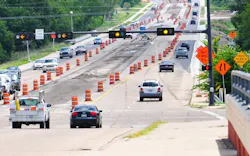
Speeding in a work zone can turn a controlled plan into uncontrolled chaos. As construction season ramps up, National Work Zone Awareness Week urges us to slow down for workers on foot who are close and exposed to traffic.
In 2022, almost 900 people died in work zone crashes, according to Federal Highway Administration (FHWA) data. Tragically, this research points to a clear pattern behind these accidents: they happen most often when drivers are speeding or not paying attention to changing road conditions.
In fact, speed was a factor in 34% of fatal work zone crashes in 2022. It’s a sobering reminder that “a few miles over” can be the difference between a close call and death.
Speeding increases the odds of a crash in a work zone and the odds of the most severe outcome: a struck-by event (any violent contact between a person and a moving vehicle or object).
Consider that crash energy rises with the square of speed, meaning that a small increase in speed drives a much larger increase in impact energy. In a work zone, that extra energy becomes longer stopping distance, harsher secondary impacts and a higher chance that a vehicle breaches the space intended to protect workers.
Data from the Center for Construction Research and Training (CPWR) emphasizes how serious and common these events are in construction. In 2020, struck-by incidents caused 150 deaths and 14,000 nonfatal injuries, and the direct workers’ compensation costs tied to serious nonfatal claims totaled $1.4 billion.
The National Institute for Occupational Safety and Health (NIOSH) highlights how struck-by prevention usually isn’t a rules problem, but a follow-through problem caused by real-world pressures.
In a survey by the Centers for Disease Control and Prevention (CDC), workers identified four barriers to preventing incidents:
- Lack of pre-task planning (30%).
- Too much emphasis on production (22%).
- Lack of training on hazard identification and prevention (20%).
- Lack of management commitment (12%).
To help mitigate the risks of speeding in work zones, agencies and contractors should build practical controls into their Traffic Control Plan (TCP) and enforce them with field discipline:
- Use a clear advance warning area and a well-built transition area (tapers) so drivers get unambiguous cues to slow and shift before they reach workers.
- Treat buffer space as recovery room for an errant vehicle: it should remain empty (no standing, parking or storing equipment or materials in it).
- Insist on a hazard assessment/pre-job safety briefing before work starts, so the team identifies speeding risks (sightlines, traffic flow, active driveways, night work, weather) and adjusts controls accordingly.
- Use a qualified traffic protector (a flagger or observer) and ensure visual/audible traffic control personal protective equipment (PPE) is in play so someone is continuously watching conditions and calling out changing risks.
- Require strict adherence to the TCP and keep work areas clear so drivers aren’t reacting to surprises. Speeding becomes more dangerous when the zone is inconsistent.
- Reinforce field behaviors that reduce struck-by exposure when traffic is moving too fast: keep heads on a swivel, treat any reversing path as a “no-walk” area, and maintain deliberate communication (including eye contact) around equipment.
When you combine a clear plan, disciplined setup, trained observers and consistent behaviors, you shrink the window where speeding can overwhelm your controls. The goal is simple: preserve time, space and predictability so workers can do their jobs safely.
Ryan Dobbins is AWP Safety’s vice president of environmental, health and safety (EHS), focused on advancing injury prevention through proactive, data-informed safety leadership and stronger alignment between operational execution and worker protection.