Brutal Winter Tested Budgets and Project Timelines
Key Takeaways
- Record snowfall disrupted material supply chains and construction schedules nationwide.
- Emergency road repairs and snow operations repeatedly pulled crews and equipment from active projects.
- Depleted snow budgets and added infrastructure wear are squeezing the 2026 construction season.
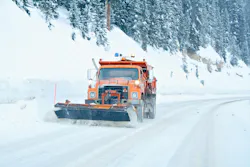
A large swath of the United States saw unprecedented levels of snow this winter, affecting the movement of materials, equipment, job sites and our roadways.
In February, the blizzard of 2026, named Winter Storm Hernando by The Weather Channel, dropped a record-breaking amount of snow in the northeast, with some parts of Massachusetts and Rhode Island seeing more than 3 feet. Providence, R.I., reported a whopping 37.9 inches of snow, while Boston saw 17.1 inches. New York City reported the same storm dropping 19.7 inches in Central Park.
These snow totals were on top of an additional foot of snow already on the ground from an earlier storm pounding the northeast in January.
The January snowstorm also dropped record snowfalls across the Midwest, with the National Weather Service reporting up to 18 inches of snowfall in some areas that typically only see light snow during the winter months.
Despite multiple blizzards and sustained snowfall, impacts varied widely depending on location, preparedness and project type.
Movement of Construction Materials Frozen
Washington, D.C. and at least 16 states announced states of emergency during the January storm, according to multiple reports, declarations that are often accompanied by bans on nonessential travel.
These bans included commercial vehicle travel in several instances, impacting all non-exempt freight and effectively halting the movement of construction materials — as deliveries of steel, rebar, concrete additives, cold-weather curing materials and heavy equipment parts rely almost entirely on commercial trucking.
Many major freight corridors were closed for commercial travel across several states during the late January snowstorm. Massachusetts instituted a travel restriction for all trucks across the state, Pennsylvania and New Jersey shuttered numerous interstates to commercial vehicles, and Connecticut prohibited commercial vehicle travel across all of its highways.
Accio reported that these January closures, in addition to snow accumulation blocking many secondary routes, led to 48-to-96-hour delays.
Connecticut, Massachusetts and New Jersey instituted similar commercial vehicle travel bans ahead of the February blizzard, while New York implemented restrictions to commercial travel along Interstate 84, a major northeast freight corridor, Time Magazine reported.
Snow-related closures were not isolated to the northeast corridor — South Dakota also closed Interstates 29 and 90 during mid-March as heavy snow and strong winds led to snow-covered roads, blocked bridges and underpasses, and reduced visibility, according to reporting from South Dakota Searchlight.
Heavy loads are still restricted in some areas as rapid snowmelt has left roadways and bridges in fragile condition.
South Dakota and Michigan have reduced weight limits on specific roadways, with Michigan imposing weight restrictions of up to 35% on roadways deemed seasonal. South Dakota has limited weights to as low as 6 tons on specific highways across the state, with only two highways having restrictions still in effect as of March 30.
Together, travel bans, closed freight corridors and spring weight restrictions created staggered material delays that in some cases extended beyond individual storm events — even in regions where job sites themselves were able to reopen quickly.
Work Zones Impacted
Bans on travel for nonessential workers and significant snowfall temporarily sidelined many jobsites, particularly during major storms, though work often resumed once sites could be safely accessed and cleared.
One Massachusetts-based contractor told Roads & Bridges that while some crews were sidelined during peak storm days, work often resumed quickly after snow events.
“We were unable to work the day of the major storms and usually spent the day after clearing the site,” said Chris Keppeler, vice president of project management at MAS Building & Bridge. “There were also a few shifts lost due to high winds or extreme cold, but overall, the total delays were manageable.”
The day‑to‑day impacts varied significantly by jobsite and level of preparedness. “With the heavy equipment onsite, we can typically clear snow and return to work within a day or two of a major storm, and most often within hours of small/mid‑size events,” Keppeler said.
Snowfall was not the main cause of delay, Keppeler said, as “larger disruptions were generally tied to major storms, extreme cold or high winds, rather than snowfall alone.”
Safety is often the single biggest factor determining whether work can proceed during snowstorms — a factor that can also be mitigated through proper site preparation, such as pre-planned snow storage and accessway treatment.
“Safety-wise, slips and falls are a serious concern, and we focus on salt and de-icing of accessways and work areas throughout the winter. Traveling to and from the jobsite is also dangerous in major storms. It's unnecessary to put our people on the road when major storm events are forecasted,” Keppeler said.
Even brief stand‑downs during major storms, however, can compound across multiple events and pressure downstream schedules.
Work Zone snow accumulation must be cleared before many tasks can resume, according to Horst Construction’s website, and some tasks are better off postponed until snow and ice melt, especially work that must be conducted high above ground level.
While some work can still be completed in the wintertime, they may take more time than in the summer months and often prove more difficult with fluctuating weather patterns. For example, grading and ground compaction are impacted as subgrade ice forms in freezing temperatures, which leads to shifts in the land once thawed, according to Horst Construction.
Cold-weather concreting proved especially challenging this winter, as pours exposed to sub‑40 degree temperatures require additional protection and face heightened risk from rapid temperature swings.
Contractors try to prepare for this within their schedules, according to Keppeler, and they typically plan to conduct non-weather sensitive tasks in the wintertime such as demolition, pile driving and drilling.
“A lot of projects have winter shutdowns built into the schedule for weather sensitive work, which is where the major cost impacts lie,” Keppeler said, adding that these are tasks typically dealing with concrete or asphalt. When asphalt and concrete work must continue during the winter, “there are measurable costs to cover and heat [these] operations."
Even when work could resume quickly, contractors say winter operations still carried measurable cost and scheduling implications.
“There are impacts and increased cost to clear snow and protect materials, but this is typical for winter operations,” Keppeler said, noting that many projects build winter shutdowns into schedules for weather-sensitive work. Decisions on whether to continue work often depend on contract requirements, schedule pressure and available resources.
One of the areas MAS Building & Bridge saw the most impact were projects on or over frozen water that even included saltwater in some locations, creating additional costs for access and posing additional safety risks that needed to be accounted for.
Following a snowstorm, labor shortages often result in crews being removed from certain job sites to complete repair and recover work, CMiC Global’s website states. When coupled with jobsites limiting activities due to weather-related safety conditions, this can cause heavy pressures on project schedules.
Early Pothole Season
Pavements cracked and crumbled, as pothole season came early and hit hard, driven by relentless freeze-thaw cycles that left some municipalities struggling to keep up, according to AAA Northeast and NBC Boston. The heavy snowfall also led to increased plow usage causing further damage to roadways.
Those early-season potholes don’t just frustrate drivers — they also force agencies into emergency response mode. In Boston, for example, public works officials said they had to dispatch crews citywide between storms to patch the sudden surge in road failures. In New York City, winter damage prompted the deployment of more than 80 DOT crews in a single-day pothole repair “blitz,” a level of mobilization that inevitably pulls labor and equipment away from scheduled construction work.
With potholes posing safety hazards and generating thousands of complaints, crews often have no choice but to pause active projects and redirect resources toward immediate roadway stabilization — slowing progress and tightening already-strained timelines.
Damaging Infrastructure and Equipment
Manpower wasn’t the only resource redistributed during this unprecedented winter; snow removal efforts also required the reallocation of heavy equipment from work zones.
Snowplowing places exceptional strain on vehicles and machinery, as extended operating hours, constant hydraulic movement, vibration and repeated exposure to corrosive salt and brine accelerate wear on engines, hydraulics, electrical systems and undercarriages.
Each additional storm compounds those impacts, shortening maintenance windows and increasing downtime once equipment returns to normal construction capacity.
For example, the Connecticut Department of Transportation deployed 80 pieces of equipment and 125 operators and mechanics to assist Massachusetts and Rhode Island following the February blizzard, temporarily diverting heavy assets typically used for construction and maintenance work.
Transportation agencies reported that repeated snowstorms, aggressive deicing techniques and freeze-thaw cycles this winter accelerated deterioration in vulnerable concrete infrastructure. Federal and state research shows that bridge decks with exposed joints, cracks or unsealed surfaces are particularly susceptible to chloride infiltration and early-stage damage — conditions that can necessitate corrective repair or rehabilitation when discovered during post-storm inspections.
The Concrete Repair Authority lists bridge decks undergoing freeze-thaw cycles with de-icing as “the highest-frequency repair category.” The Minnesota Department of Transportation describes the premature deterioration of concrete bridge as one of the most serious and costly problems highway agencies face, as it often triggers the need for early repair and rehabilitation.
While the industry has yet to see the impacts of this winter on bridges undergoing construction, the combination of record snow, heavy salting and the repeated freeze-thaw cycle may have contributed to setback that will become clearer during post-winter inspections.
Snow Removal Budgets Depleted
The heavy amounts of snowfall hit snow removal budgets hard, with many northeastern states depleting their allotted accounts for snow removal as early as February.
CNHI reported that two Massachusetts cities overspent their snow removal budgets by millions of dollars as repeated storms and steady precipitation required frequent plowing, salting and other storm-response services. Overnight storms also played a role in higher costs as cities needed to pay employees for overtime hours and bring in outside contractors. The city of Haverhill, located in northeastern Massachusetts, spent about 46% of its $1.21 million snow budget by Jan. 7.
Not only did it deplete its budget, but the city also overran its spending by $960,000. This forced the municipality to dip into its budget reserve account, which only had a balance of $743,000 — prompting the city’s mayor to freeze all discretionary spending through the end of the fiscal year.
The early depletion of snow removal budgets — with some southern New England towns and cities spending their entire budget ahead of the February blizzard — forced municipalities to search elsewhere for funding. Some tapped into their rainy-day funds and others are seeking federal funds to replenish their budgets, according to reporting from NBC 10. Officials have raised concerns about how this will impact emergency responses later in the year, as the funds are also used for flooding and hurricane clean-ups.
The state of Michigan said snow removal costs will likely impact their summer maintenance budgets, as spending was 35% above average this winter, Click On Detroit reported. However, a spokesperson for the Michigan Department of Transportation assured the public that safety and planned projects would not be impacted.
Looking Ahead
The full impact of the 2025–26 winter on road and bridge programs will come into clearer focus as agencies complete post‑winter inspections and finalize seasonal budgets.
While contractors were often able to adapt to storm‑by‑storm disruptions, transportation agencies now face the challenge of balancing depleted snow‑removal funds, elevated maintenance needs and a compressed window for spring paving and construction work.
Taken together, this winter underscored how quickly weather‑driven operational pressures can cascade across construction schedules, infrastructure conditions and public‑sector budgets.
About the Author
 Jessica Parks, Staff Writer
Jessica Parks, Staff Writer
Staff Writer
Jessica Parks is a staff writer at Roads & Bridges with newsroom experience in Brooklyn, Long Island and the U.S. Virgin Islands, and several years spent living in Puerto Rico. She is currently based in Tulsa, Oklahoma.