Oklahoma Turnpike Authority Seeks New Interstate Status
Key Takeaways
-
The Oklahoma Turnpike Authority voted to pursue interstate designations for the Creek and Muskogee turnpikes, which would become Interstate 644 and Interstate 343 if approved.
-
OTA leaders say interstate status signals that the roads meet the highest safety and design standards, though the designation does not bring additional federal funding.
-
A bill introduced by State Sen. Shane Jett would end cross-pledging, a long-standing practice that uses revenue from busy turnpikes to support less-traveled routes.
-
The Turnpike Authority argues cross-pledging has helped Oklahoma build infrastructure faster and reinvest in aging roads without increasing the burden on taxpayers.
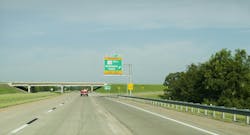
Oklahoma’s turnpike system is in focus as officials push to upgrade two major roadways to interstate status while a separate debate unfolds at the State Capitol over how toll roads are funded.
The Oklahoma Turnpike Authority (OTA) voted on Feb. 3 to pursue interstate designations for two eastern Oklahoma routes: the nearly 33-mile Creek Turnpike in south Tulsa and the 52-mile Muskogee Turnpike, which stretches from Tulsa to Interstate 40 near Webbers Falls, according to Oklahoma Voice.
If approved, the Creek Turnpike would become Interstate 644 and the Muskogee Turnpike would be redesignated as Interstate 343.
Both roads are currently classified as state highways, said Darian Butler, OTA’s engineering director. OTA leaders say the interstate label signals that the turnpikes meet the highest roadway standards, a point echoed by board member Dana Weber, who described the designation as recognition of the system’s quality.
“It is the highest, most prestigious number that you can assign a roadway,” OTA Executive Director Joe Echelle told Oklahoma Voice. He added that the authority’s turnpikes already meet interstate-level standards nearly all the time. The agency will now coordinate with the Federal Highway Administration to complete any changes required for approval.
Those changes are typically minor, Echelle said, such as removing a tree that sits too close to the roadway or repainting lane striping. Once approved, the roads will carry the familiar red and blue interstate shield on maps and signs.
“You know that is controlled access,” Echelle told the outlet. “It is high speed. It should be the safest route you are going to take. We want to show Oklahoma off that we have all of these interstate-type roadways.”
Drivers may not see new signage for several months. Trenton January, OTA’s chief engineer, said the interstate designation does not bring additional federal funding but serves as a signal to travelers about road quality. Many drivers prefer interstate routes because they are designed for uninterrupted travel without the stops that can come with some state highways.
January added that five of the authority’s 12 turnpikes already carry interstate numbers. Most recently, the John Kilpatrick Turnpike in Oklahoma City was redesignated as Interstate 344, and the Kickapoo Turnpike east of the city became Interstate 335.
Debate grows over how Oklahoma’s turnpikes are funded
At the same time, the OTA is facing scrutiny over its financing model. According to KFOR News 4, State Sen. Shane Jett, R-Shawnee, has introduced a bill that would end a long-standing practice known as cross-pledging, which allows toll revenue from heavily traveled turnpikes to support less-used routes.
Under the current system, busy roads such as the Turner Turnpike generate more toll revenue than needed for their own construction and maintenance. That surplus helps cover costs for turnpikes with lower traffic volumes like the Chickasaw Turnpike.
When Oklahoma first created its turnpike system, tolls were supposed to be removed once a road was paid off, and cross-pledging was not allowed. The Legislature changed that rule in 1955.
As a result, tolls remain in place on some roads that were paid off decades ago while the authority continues expanding the network. Jett argues that the change broke an earlier promise to drivers.
“They said Turner Turnpike is our cash cow, and it’s going to pay itself off, and we don’t want to lose that revenue stream,” Jett told KFOR News 4. “So we’re going to build other roads that don’t have the traffic to sustain it and then require Turner Turnpike to pick up the tab… Those around in the forties and fifties who remember hearing their grandparents talking about it, we need to keep the promises we made and be transparent and accountable.”
Jett said his proposal would stop the authority from continuing to share debt between turnpikes. “By removing that cross-pledging, it prevents them from continuing to extend the debt so they can issue the tax-free bonds for high-net-worth individuals like not you and me,” Jett told the news station. He added that frustration over toll roads crosses party lines and pointed to collaboration with Sen. Mary Boren, D-Norman.
“My colleague on the other side of the aisle, Senator Mary Boren from Norman, she and I have worked on a number of bills that we have agreement on,” Jett told the station. “Because at the end of the day, Oklahomans, regardless of your party affiliation, want to be respected.”
The Turnpike Authority is defending the current approach. In a statement to KFOR News 4, an OTA spokesperson said cross-pledging has historically allowed Oklahoma to build infrastructure much faster than relying only on state and federal tax dollars. The practice also helps the state reinvest in older sections of the system, the spokesperson said.
“Historically, cross pledging the turnpike system provided the state with the ability to construct necessary infrastructure far faster, often by decades, than if the Legislature had relied solely on federal and state tax dollars,” the spokesperson told KFOR News 4. “It also ensures the state can continue to reinvest in the oldest portions of the turnpike system to meet the needs of today’s motorists.”
The spokesperson added that earlier legislative decisions enabled the authority to expand the system without burdening taxpayers while keeping tolls comparatively low.
“Decisions by previous legislatures have given OTA the ability to build needed state infrastructure without burdening taxpayers while keeping Oklahoma’s tolls among the lowest in the nation,” the spokesperson said.
As the interstate designations move forward and lawmakers consider changes to funding, the future of Oklahoma’s turnpike network is expected to remain a key topic during the legislative session.
Sources: Oklahoma Voice and KFOR News 4
About the Author

Karina Mazhukhina, Digital Content Specialist
Digital Content Specialist
Karina Mazhukhina has extensive experience in journalism, content marketing, SEO, editorial strategy, and multimedia production. She was previously a real-time national reporter for McClatchy News and a digital journalist for KOMO News, and ABC-TV affiliate in Seattle.