From Intern to Leader with Skanska’s Dianna Barba
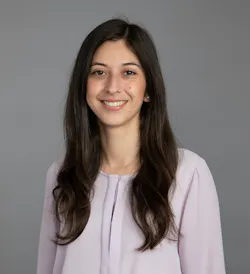
As transportation agencies and contractors across the country grapple with workforce development and long-term project delivery, engineers like Dianna Barba offer a look at what it takes to grow into leadership roles on some of the nation’s most complex infrastructure projects. In this written Q&A, Barba reflects on her nearly decade-long career at Skanska, the mentorship that shaped her path and lessons learned from LA Metro’s Purple (D Line) extension and other major builds.
R&B:Your career with Skanska spans nearly a decade and includes major projects like the Purple (D Line) Extension and the Sixth Street Viaduct. Looking back, what experiences or moments were most pivotal in shaping you as an engineer and leader?
DB: Over the past decade with Skanska, several experiences have been pivotal in shaping me as an engineer and leader. Early in my career, I participated in Skanska’s Core Competency Training Program (CCTP), a two-year rotational program for recent graduates that exposes participants to a variety of project types and roles. Through CCTP, I worked on rail, bridge and highway projects in Los Angeles and Washington, gaining a broad foundation across different projects and scales, including exposure to both Skanska-led and joint venture teams, as well as small and large projects.
One of the most defining moments came when I took on responsibility for managing the instrumentation program on LA Metro’s Purple D Line extension project in Los Angeles. At first, I knew very little about instrumentation, but I grew to become familiar with the nuances and intricacies associated with managing an entire instrumentation program on a 1.6 billion dollar project, including what each instrument was, their function, contractual requirements for the program, managing subcontractors performing installation, data analysis and interpretation, ensuring the owner’s needs were met, and much more. I went from feeling like I was way in over my head with my new assignment, to feeling like I had mastered my role. Thanks to this opportunity, I now feel like I can conquer any challenge that comes my way. You do not grow without fear; do things that scare you. You’ll be surprised by what comes out of those situations.
During my six years on the project, I transitioned through multiple roles and advanced from Field Engineer to Project Engineer, gaining experience in instrumentation management, change management, design coordination with Parsons Transportation Group, and construction engineering, specifically temporary structures design.
In addition to LA Metro’s Purple D Line project, I contributed to other major projects, including the I-5/SR-16 HOV Connectors, and other notable projects throughout California. These opportunities allowed me to expand my technical skills across a variety of construction and design challenges, while also growing as a leader.
R&B: You started at Skanska as an engineering intern and later completed the Core Competency Training Program. How did that early mentorship and structured professional development influence the trajectory of your career?
DB: During my time in the CCTP program, I was assigned my first mentor, Larry Martocci, who had a big impact on the start of my career in construction. Early on, he encouraged me to step out of my comfort zone and fully embrace everything the program offered. One piece of advice I remember clearly was to get to know the craft, offer help whenever possible, and build relationships with experienced engineers.
Working closely with those engineers was eye-opening. Many had worked on previous rail projects in Los Angeles, including the Red and Gold Lines, and the knowledge they shared was invaluable. By spending time with them, asking questions, and offering help whenever possible, I was able to grow both as an engineer and as a person. Let humility guide you and take every opportunity to learn from those around you.
In addition to Larry, I encountered mentors and leaders more organically as I took on new responsibilities. When I began managing the instrumentation program on the LA Metro Purple D Line project, I was a 25-year-old engineer with two years of experience, stepping into a role that was new to me and overseeing a significant contract and multiple subcontractors. At that time, my exposure to the project had been limited, and much of the work was unfamiliar.
It was during this period that I met Meraj Ahmed, a highly experienced engineer with over 35 years in the industry. I first saw his expertise and approachable nature when the previous engineer turned to him with a question. Seeing how easily and kindly Meraj answered made me realize he was someone I could rely on for guidance. At first, I was hesitant to ask questions, but my need to learn quickly outweighed my fears. Meraj never made me feel inexperienced or inadequate; instead, he encouraged me to ask questions and offered guidance generously.
Having him as a mentor gave me the confidence to navigate unfamiliar responsibilities and take meaningful steps in my career. From contract questions to communicating strategically with subcontractors, Meraj’s guidance was invaluable. Over time, he formally became my manager, and for the next six years (and even today) he has been someone I can turn to for advice on work or personal matters. Meraj became more than a mentor; he became a father figure to many of us who sought his guidance. Sometimes, the most important mentorships are the ones you find unexpectedly, and those relationships often leave the deepest impact.
R&B: From your perspective, how does having a strong foundation in structural engineering enhance leadership on construction projects, especially ones as complex as LA’s transit expansions?
DB: Working on large-scale projects provides a wide range of opportunities. Because these projects often span eight to ten years or more, you are able to see how a project evolves from start to finish while exploring different roles along the way. Whether it is working in the field alongside the craft, managing designers or subcontractors, or learning project controls such as cost, schedule, and change management, there are many paths to gain meaningful experience.
Through my time on large-scale projects, along with the rotations I completed during the CCTP program, I was able to build a well-rounded foundation. I had the opportunity to contribute to different projects while also shifting roles within the same project, which allowed me to develop a broader perspective and continuously build on my experience.
For those in similar positions, I would encourage taking full advantage of the opportunity to experience a project from different perspectives. I spent six years on the LA Metro Purple D Line project, and also had a rotation there earlier in my career. Being able to see a project of that scale progress over time, while taking on different responsibilities, was an invaluable learning experience. Exploring different roles can help you avoid feeling limited to one path, while also allowing you to develop new skills. Although transitioning into a new role can feel unfamiliar at first, those moments often lead to the most growth.
Another important piece of advice is to spend time in the field whenever possible. Even on long- duration projects, the site is constantly changing. Making an effort to visit regularly provides a better understanding of the work and helps connect the broader scope of the project to what is happening on the ground.
R&B: Civil engineering — especially in the field — is still a male‑dominated environment. What strategies have helped you navigate and succeed in that space, and what changes have you seen over the course of your career?
DB: I would advise young engineers entering the industry to take full advantage of networking opportunities. Get to know as many people as possible, build connections, and form genuine friendships. The world of heavy civil construction is surprisingly small. Over time, as people move between companies and roles, you will find that these connections span a variety of positions, organizations, and locations, and they can provide valuable insight and opportunities for your growth.
At the same time, do not build connections solely for career advancement. Be authentic and be yourself. Some of these relationships will become lifelong friendships. Considering how much time we spend at work, often more than with family, it is important not only to focus on your tasks but also to enjoy your time on projects. These friendships often last well beyond your time on a specific project, company, or even in the same city or country. I have been fortunate to form friendships that have spanned all of these, and I would encourage others not to let these opportunities pass by.
Another important piece of advice is to embrace diversity. Being different is a strength. Bringing together people from various backgrounds, cultures, races, genders, income brackets, and beliefs fosters creative solutions and broadens perspectives in engineering. Be proud of where you come from, who you are, and what you stand for. Simply being yourself can make a difference.
Engineering expertise provides a strong foundation in construction because it helps you understand the intricacies of what is being built, giving you insight into how and when changes may be needed. At the same time, fostering inclusion means giving women the opportunity to be in the field if they want to be. Creating an environment where women can pursue field roles without barriers is critical because women are equally capable in these positions. Men and women bring different skills to the table, and both should be acknowledged and supported. The industry should continue to hire and empower qualified women, ensuring that everyone who wants to be in the field has the chance to contribute.
R&B: For young women considering careers in construction or engineering, what advice would you give them about finding mentors, building confidence, and advancing in this industry?
DB: A key piece of advice I would offer to young women engineers is to ask questions and speak up. People are generally willing to help, but it requires the courage to seek that support. Companies do not expect you to come in knowing everything, and there is always a learning curve. Even if your organization does not have a formal training program, it is important to take ownership of your development and communicate what you need to learn and grow.
Do not be afraid to express uncertainty. It is an essential part of learning and gaining clarity. In a male-dominated industry, it can feel intimidating to speak up or ask questions, but self-doubt should not hold you back. At times, you may find yourself in roles where you have limited experience. In those moments, asking questions and being proactive in your learning will make all the difference. People want to see you succeed, but they can only support you if you are open about where you need guidance.
Another important lesson is the value of showing up and being present. In meetings, it can sometimes feel easy to sit back and just observe, but there is real value in being engaged, listening closely, and contributing when you can. Taking an active role, even in small ways, helps build confidence over time and shows your willingness to learn and be part of the conversation.
About the Author
 Jessica Parks, Staff Writer
Jessica Parks, Staff Writer
Staff Writer
Jessica Parks is a staff writer at Roads & Bridges with newsroom experience in Brooklyn, Long Island and the U.S. Virgin Islands, and several years spent living in Puerto Rico. She is currently based in Tulsa, Oklahoma.