Your Burrito Robot Might Be Mapping the Future of City Sidewalks
Key Highlights
- Delivery robots are collecting real-time information on damaged sidewalks, curb ramps, and difficult intersections as they navigate city streets.
- Serve Robotics says its fleet has completed more than 100,000 deliveries across major U.S. cities while gathering millions of miles of navigation data.
- Cities and researchers see potential transportation benefits, but critics warn the robots can create accessibility issues, sidewalk congestion, and privacy concerns.
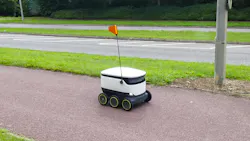
Food delivery robots are becoming a more common sight in cities across the country, rolling down sidewalks with burritos, coffee, and takeout orders packed inside.
But the robots are doing more than delivering meals. Some cities are now exploring how information collected by the machines could help identify sidewalk hazards, dangerous intersections, and other infrastructure problems.
Some transportation officials believe the robots could offer a new way to better understand how people move through urban areas and where pedestrian infrastructure needs improvement, according to Government Technology.
The robots, operated by companies like Serve Robotics, rely on cameras and sensors to navigate sidewalks, avoid obstacles, and cross streets safely. As they move through neighborhoods, they can detect issues like damaged curb ramps, uneven pavement, sidewalk obstructions, and difficult crossings.
In West Hollywood, California, transportation officials are already looking at whether that information could help identify areas where pedestrians face higher risks.
“What’s safer for robots is, of course, safer for pedestrians,” Kelly Jones, government affairs manager for Serve Robotics, said during a transportation panel highlighted in the article.
The idea is straightforward: if robots repeatedly struggle at certain crossings or routes, cities may be able to spot problem areas before they lead to injuries or complaints.
Serve Robotics now operates more than 1,000 delivery robots serving over 2,500 restaurants in cities including Los Angeles, Miami, Dallas, Atlanta, and Chicago, according to a case study from NVIDIA.
The company says its robots have completed more than 100,000 deliveries while collecting millions of miles of street-level navigation information used to improve mapping and mobility systems.
For transportation departments that already struggle to monitor sidewalk conditions block by block, the robots could offer a constant stream of real-world observations without sending crews out to inspect every corridor manually.
Some researchers also believe the technology could help cities better understand walkability and accessibility. A recent academic paper published on arXiv found that sidewalk robots can capture useful information about pedestrian movement, sidewalk quality, and accessibility barriers while traveling through urban areas. Researchers noted that robot navigation patterns often mirrored how people move through crowded or uneven sidewalks.
Still, not everyone is convinced the robots belong on public sidewalks.
Critics have raised concerns about accessibility, congestion, and pedestrian safety, especially for people using wheelchairs or mobility devices. Some cities have already faced complaints about robots blocking sidewalks, getting stuck, or bumping into pedestrians.
In Chicago, recent incidents involving delivery robots crashing into bus shelters and colliding with pedestrians reignited debate about whether cities are moving too quickly with the technology.
There are also broader questions about privacy and how much information these machines should collect while operating in public spaces.
Even so, many transportation agencies appear interested in the potential benefits. As cities look for new ways to track sidewalk conditions and improve pedestrian infrastructure, these small delivery robots may end up serving a much larger purpose than simply delivering dinner.
What started as a simple food delivery service could eventually become another tool cities use to design safer, more walkable streets.
Sources: Government Technology, Serve Robotics, NVIDIA, arXiv
About the Author
 Karina Mazhukhina, Digital Content Specialist
Karina Mazhukhina, Digital Content Specialist
Digital Content Specialist
Karina Mazhukhina has extensive experience in journalism, content marketing, SEO, editorial strategy, and multimedia production. She was previously a real-time national reporter for McClatchy News and a digital journalist for KOMO News, and ABC-TV affiliate in Seattle.