How Cities Are Using AI and Smart Tech to Improve Traffic and Project Delivery
Key Highlights
- Cities are deploying AI-powered traffic systems to manage congestion ahead of major events like the World Cup.
- State DOTs are testing real-time warning systems to reduce crashes involving slow-moving vehicles.
- Digital design tools are helping agencies streamline project delivery and reduce costly construction issues.
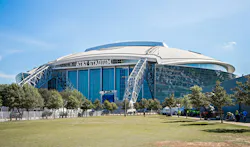
Cities across the country are utilizing technology solutions to run operations more efficiently from planning to on-the-road applications.
North Texas Cities are using AI to Help with Traffic Ahead of World Cup
The Dallas Morning News
As the World Cup is expected to bring waves of visitors to cities across the U.S., two northern Texas cities are turning to AI to better manage traffic at major intersections.
NoTraffic, an Israeli-based traffic management system, has been installed on traffic lights in Arlington and Dallas. Arlington first deployed the system to help manage during the 2023 World Series parade according to The Dallas Morning News.
The system uses data and live-stream data to detect vehicle types, cyclists and pedestrians creating signal timing plans in real time to reduce congestion.
In Arlington, the software calculates how many vehicles and pedestrians are moving through intersections in the city’s entertainment district and automatically adjusts signals to keep traffic flowing. Ahead of the World Cup, officials plan to introduce new features along the Matlock Road corridor that will further refine signal timing based on traffic volume and vehicle classification.
NoTraffic’s VP of Public Sector told The Dallas Morning News that the company does not retain personal information, such as facial recognition data or license plate numbers.
In Dallas, the system was installed at two private locations last month as part of an evaluation process to determine whether it should be expanded to additional intersections ahead of tournament matches.
Iowa DOT Testing Slow-Moving Vehicle Warnings on Des Moines Bypass
Iowa Department of Transportation (Iowa DOT)
Farm equipment traveling at significantly lower speeds — sometimes as low as 14 mph — can create dangerous conditions on high-speed highways.
Iowa DOT is testing a system along the Iowa 5/ U.S. 65 bypass near Des Moines to reduce crash risk involving slow-moving vehicles.
The pilot uses roadside sensors and real-time detection feeds to identify slow-moving vehicles and relay that information to flashing beacons and Dynamic Message Signs, alerting drivers to hazards ahead.
The agency is also working with equipment manufacturers to explore a system that would transmit telematics data directly from DOT-owned vehicles to trigger warnings in real time.
Bye-Bye Blueprints, Hello High-Tech Highways
Texas Department of Transportation (TxDOT)
TxDOT is taking a leap into the digital age, with a shift from traditional 2D paper plans to 3D design environments for road projects.
This approach allows engineers to create “digital twins” — 3D models that help identify potential issues before boots hit the ground.
According to the agency, digital delivery provides a clearer, data-driven view of projects at every state, which can reduce change orders, streamline construction and improve transparency.
TxDOT is currently piloting the approach on projects statewide and plans to award at least one digital delivery project in each of its 25 districts by the end of 2027.
About the Author
 Jessica Parks, Staff Writer
Jessica Parks, Staff Writer
Staff Writer
Jessica Parks is a staff writer at Roads & Bridges with newsroom experience in Brooklyn, Long Island and the U.S. Virgin Islands, and several years spent living in Puerto Rico. She is currently based in Tulsa, Oklahoma.