Beyond the Video Wall: Rethinking the Traffic Management Center
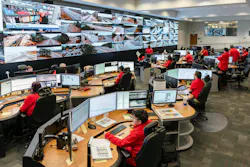
Many of the nation's traffic management centers (TMC) were built around a familiar toolkit: cameras, detectors, dynamic message signs, radios and incident logs. Operators watched the network, spotted problems and dispatched a response.
That model still works, but the job around it has grown. Agencies now juggle probe and connected-vehicle data, signal performance measures, work zone feeds, weather data and third-party sources, often in systems that don't talk to each other. Meanwhile, many of the experienced operators who know how to piece that information together are nearing retirement.
Federal funding has given agencies a chance to modernize, though with the Infrastructure Investment and Jobs Act (IIJA) authorizations running on a short-term extension, the window for planning around that money is less certain than it was.
Lee Woodcock, a senior project director at AtkinsRéalis, has spent more than 30 years in intelligent transportation systems (ITS) and traffic operations, working with agencies in the United Kingdom, the Middle East and North America. In this email Q&A, he explains where legacy TMCs fall short, what a practical modernization roadmap should include, what a modern TMC looks like from the operator's seat and how leaders can move a program from plan to implementation.
R&B: You argue that many traffic management centers were built for a transportation environment that no longer exists. What has changed, and where are you seeing the biggest gaps between today’s traffic management needs and the capabilities of legacy TMCs?
Lee Woodcock: The fundamental shift is that traffic management has moved from a largely reactive, asset-based operating model to a real-time, data-rich, multimodal and increasingly predictive environment. Many legacy TMCs were designed around cameras, dynamic message signs, detector feeds, radio communications and incident logs. That model worked well for the challenges of its time: observe the network, detect incidents, dispatch response, and inform travelers.
But the operating environment has changed dramatically. Agencies are now managing more complex networks, higher public expectations, more frequent disruptions, work zones, extreme weather events, freight demands, special events, emergency response coordination, and the early impacts of connected and automated mobility. At the same time, the volume of available data has exploded—probe data, connected vehicle data, work zone data, signal performance data, third-party mobility data, weather feeds, transit information, emergency response systems and asset condition data.
The biggest gap I see is not simply that legacy systems are old. It is that they were not architected for this level of integration, automation or decision support. Operators are often surrounded by data but still lack a single, trusted operational picture. They may have multiple systems open, but those systems do not always talk to each other. They may know what is happening on the network but not have the tools to understand what is likely to happen next or what intervention will create the best outcome.
Another major gap is workforce and process. Many TMCs still depend heavily on experienced operators knowing where to look, who to call and how to interpret fragmented information. That institutional knowledge is incredibly valuable, but it is also fragile. As agencies face retirements, staffing challenges and growing operational complexity, they need systems that capture, support and scale that expertise—not systems that rely on people working around technology limitations.
So, the issue is not that legacy TMCs have failed. In many cases, they have performed remarkably well. The issue is that the mission has outgrown the architecture. Modern traffic management now requires integrated data, predictive analytics, automated workflows, coordinated response, cybersecurity, performance management, and executive-level visibility. Many legacy TMCs were never designed for that.
R&B: For transportation agencies that know their traffic management systems need to be modernized but don't know where to begin, what should the first steps be? What should a comprehensive TMC modernization roadmap address?
LW: The first step is not to start with technology. It is to start with purpose. Agencies need to be very clear about what they want the TMC to achieve over the next five, ten and fifteen years. Is the priority incident clearance? Work zone safety? Freight reliability? Regional coordination? Resilience? Connected vehicle readiness? Traveler information? Emergency response integration? The roadmap has to begin with operational outcomes, because those outcomes should drive the technology, not the other way around.
The next step is an honest baseline assessment. Agencies need to understand what they have today: systems, data sources, communications infrastructure, staffing model, standard operating procedures, cybersecurity posture, maintenance arrangements, vendor dependencies, asset condition, and funding constraints. A lot of agencies have built TMC capability incrementally over many years, so the current environment can be a patchwork of strong assets, aging platforms, manual workarounds and undocumented dependencies.
From there, a good modernization roadmap should address several things. First, it should define the future operating model. That means describing how operators, supervisors, maintenance teams, emergency responders, regional partners and executives will interact with the TMC. Second, it should set out the systems and data architecture. That includes how existing systems will be integrated, what platforms need to be modernized, how data will be governed, and how the agency will move toward a more open, scalable and interoperable environment.
Third, it should identify quick wins as well as long-term investments. Agencies need early progress to build confidence and provide visible value, but they also need a deliberate path toward a modern operating environment. Fourth, it should address people and process. Modernization is as much about change management as it is about software and hardware. Operators need training, supervisors need new performance measures, executives need clear decision points, and procurement teams need to understand how technology delivery is changing.
Finally, the roadmap has to be fundable and implementable. It should align projects to grant opportunities, capital programs, lifecycle replacement cycles and procurement realities. The best roadmap is not a glossy vision document. It is a practical implementation plan that helps leaders make decisions, sequence investment and move from intent to delivery.
R&B: What does a modernized TMC actually look like from an operator's perspective? How should technologies such as connected-vehicle data, sensors, artificial intelligence and integrated data platforms change the way transportation agencies monitor and manage their networks?
LW: From an operator’s perspective, a modernized TMC should feel less like managing a wall of disconnected systems and more like working from a trusted operational intelligence platform.
Today, many operators have to assemble the picture themselves. They may look at cameras, incident feeds, maps, weather systems, CAD information, social media, maintenance status, work zone schedules and traveler information tools separately. A modernized environment should bring that information together and present it in a way that is intuitive, prioritized and actionable.
The goal is not to overwhelm operators with more data. It is to help them make better decisions faster. Connected vehicle data can provide earlier awareness of hard braking, speed drops, queue formation, weather-related friction issues or unexpected roadway conditions. Sensors and field devices can validate what is happening on the ground. Integrated data platforms can combine those sources with historical patterns, planned events, work zones and emergency response information. Artificial intelligence can then help identify anomalies, predict likely impacts, recommend response plans, and reduce the burden of routine monitoring.
For example, instead of an operator discovering congestion after it has already formed, the system could identify the early indicators of a developing incident, correlate them with nearby camera views and responder locations, estimate the likely network impact, and suggest the appropriate response workflow. Instead of manually updating multiple traveler information channels, the system could help generate consistent, verified information across signs, 511, mobile applications and partner systems.
But I want to be careful here: AI should not replace the operator. It should elevate the operator. The operator remains accountable for judgment, context, public safety and coordination. The technology should reduce noise, surface risk, automate routine tasks, and allow people to focus on the decisions that genuinely require human expertise.
A modernized TMC is really about moving from situational awareness to operational intelligence. It gives agencies the ability not just to see the network, but to understand it, anticipate it and manage it more proactively.
R&B: Federal funding has created an opportunity for agencies to modernize their traffic management systems, but developing a technology plan is only part of the challenge. What do transportation leaders need to do to build the organizational support, make the case for investment and successfully move a modernization program from planning to implementation?
LW: Transportation leaders need to treat TMC modernization as a strategic business case, not just a technology upgrade.
The funding environment has created a real opportunity, but agencies still have to compete for attention, political support, internal resources and implementation capacity. A successful modernization program needs a clear narrative: why this matters, why now, what risks are being addressed, what benefits will be delivered, and what happens if the agency delays.
The strongest cases link modernization directly to outcomes that matter to decision-makers and the public: reduced incident duration, improved safety, better work zone management, more reliable travel, stronger emergency response, improved freight movement, better use of existing infrastructure, and more transparent performance reporting. Leaders need to translate technical needs into operational and public value.
They also need to build a coalition. A TMC touches many parts of an agency and many external partners: operations, ITS, maintenance, planning, safety, emergency management, law enforcement, transit, freight, local governments, MPOs, procurement, IT and cybersecurity. If modernization is owned only by a small technology group, it will struggle. It needs executive sponsorship and broad organizational alignment.
Another critical piece is sequencing. Agencies should avoid trying to do everything at once. A strong implementation program breaks modernization into manageable phases: stabilize critical assets, integrate priority data sources, address cybersecurity and resilience, improve operator workflows, deploy decision-support tools, and then scale toward more advanced capabilities such as predictive analytics and connected vehicle integration.
Leaders also need to address procurement and delivery models. Traditional procurement cycles can be too slow for modern technology environments. Agencies may need more flexible contracting, systems integration support, lifecycle funding, vendor management strategies and performance-based delivery models.
Most importantly, leaders need to give their teams confidence. Modernization can feel overwhelming because the technology landscape is moving quickly. But agencies do not need to leap from legacy systems to some perfect future state overnight. The right approach is evolutionary: protect what works, retire what is no longer sustainable, integrate what can be integrated, and build a deliberate path toward a future-ready TMC.
The agencies that succeed will be the ones that combine vision with execution. They will have a clear roadmap, a compelling business case, a realistic funding strategy, engaged stakeholders, and a governance model that keeps the program moving from planning into implementation. That is where leadership matters most.
About the Author
 Gavin Jenkins, Head of Content
Gavin Jenkins, Head of Content
Head of Content
Gavin Jenkins is an award-winning journalist based in Pittsburgh. His work has appeared in The New York Times, The Washington Post, The Atlantic, VICE, Narrative.ly, Prevention, the Pittsburgh Tribune-Review and Beijing Review.
In 2020, two stories he wrote for Pitt Med Magazine earned three Golden Quill Awards from the Press Club of Western Pennsylvania. “Surviving Survival” won Excellence in Corporate, Marketing and Promotional Communications – Written, Medical/Health, while “Oct. 27, 2018: Pittsburgh’s Darkest Day, and the Mass Casualty Response” won Excellence in Written Journalism, Magazines – Medical/Health, as well as the Ray Sprigle Memorial Award: Magazines, a Best in Show award.
After graduating from the University of Pittsburgh at Johnstown in 2003, he covered sports for the Bedford Gazette, in Bedford, Pa., and the Martinsville Bulletin, in Martinsville, Va. In 2006, he returned to Pittsburgh to write for Trib Total Media. Based out of the Kittanning Leader Times, he worked for the Trib for two years, and then he moved to Shenzhen, China, to teach English and freelance. After two years in China, he earned an MFA in nonfiction from the University of Pittsburgh.
When he's not at work, he's usually playing with his border-collie mix, Bob.