Revolutionizing Disaster Preparedness
By Shawn Wilson, Contributing Author
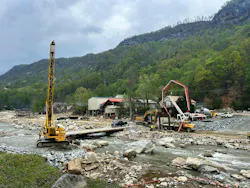
In late 2024, Hurricane Helene delivered a devastating and unexpected blow to Asheville, N.C., a community once promoted as a “climate haven” safely tucked into the Blue Ridge Mountains.
Rainfall far exceeded modeled expectations; hillsides failed, lifelines washed out, equipment had to be relocated in hours rather than days, and power crews worked by flashlight to restore essential services.
Catastrophic events like Helene — as well as Hurricanes Debby and Milton, which pounded the East Coast within a three-month period — serve as stark reminders that transportation systems are foundational to public safety and economic stability.
When roads close, supply chains halt. When pump stations fail, neighborhoods flood. When debris blocks evacuation routes, lives are at risk.
When the skies clear, every moment is critical to survival and recovery.
As I have witnessed firsthand in Louisiana and across the Southeast, it is the infrastructure we depend on — not the infrastructure we aspire to — that determines a community’s resilience. In times of extreme duress, communities endure or fail based on how well their existing infrastructure performs. If what’s on the ground is weak, outdated, poorly maintained or designed to accommodate obsolete conditions, the community will suffer and lives are put at risk.
What transportation leaders build today will define whether their next disaster disrupts systems for days or weeks.
While no technology can eliminate disaster risk, data-driven planning and emerging digital tools — soon accelerated by artificial intelligence (AI) — can dramatically shrink recovery timelines by helping agencies anticipate vulnerabilities, pre-position resources and coordinate across state lines more efficiently.
Sudden Priority Shifts
Helene’s toll on North Carolina illustrated how disasters ripple far beyond physical damage. Billions in losses forced the state to shift resources from planned capital projects to emergency-driven priorities.
“I’ve never experienced anything quite like it,” said Chris Peoples, chief operating officer for North Carolina Department of Transportation (NCDOT). “We’ve had major hurricanes impact us before but never the total devastation and loss of infrastructure like this.”
Unfortunately, this type of rapid reprioritization happens often in transportation systems.
When a storm hits, transportation leaders often face a harsh reality: planned improvements pause as resources divert to urgent repairs. Without warning, long-promised infrastructure upgrades are delayed indefinitely, if not cancelled altogether.
That cascade degrades long-term system performance, increases maintenance backlogs and strains already limited funding. It risks undermining public confidence as the people impacted by the reprioritization, rather than the disaster, do not appreciate the urgency of the decision.
Despite the scale of recent disasters, U.S. fatality numbers are often surprisingly low. Anything above zero is tragic, but the relatively low totals aren’t accidental. Resilient systems with reliable egress routes, hardened communications and consistent power continuity have repeatedly proven their value in protecting lives.
In normal conditions, the public often overlooks the importance of investing in “what‑if” scenarios that don’t produce visible, day‑to‑day improvements. Yet the moment a disaster hits, the value of those investments becomes unmistakable.
Beyond emergency impacts, disasters derail capital programs, defer maintenance and undercut local prosperity — more reasons for preparedness and disciplined use of data matter long before landfall.
Emergency Fuels Improvement
After each major disaster, agencies uncover opportunities to convert emergency lessons into permanent system and operational improvements. These betterments often include:
- Elevating roadway segments known to flood repeatedly,
- Armoring slopes,
- Raising electrical cabinets above high water marks,
- Widening cleared right-of-way (ROW) to reduce treefall blockages,
- Modernizing aging pump stations,
- Improved communication strategies.
A clear example comes from Louisiana. Along the Acadian Thruway corridor in Baton Rouge, a low‑lying underpass had become notorious for flooding — so much so that it regularly appeared on emergency repeat‑impact lists.
After multiple storm events, transportation leaders recognized that repairing it “as it was” simply reset the clock for the next failure.
Similar opportunities exist in every state. Today’s transportation leaders increasingly recognize that betterments — design and operational changes that increase resilience — are essential, cost‑effective and expected by the public and federal partners.
Hurricane Helene and the Carolinas
While North Carolina and South Carolina suffered major impacts from Helene, their experiences diverged in ways that reveal important operational lessons. North Carolina endured widespread infrastructure damage, while South Carolina faced extensive debris removal and operational disruptions but fewer structural failures.
The contrast underscores how disasters can strain systems in different ways. North Carolina is now advancing several design-build recovery projects, many with WSP support, translating on‑the‑ground emergency experience directly into long‑term resilience improvements.
South Carolina’s response highlights the value of nimble operations — rapid debris clearance, sustained pump functionality and maintaining high‑ground alternatives to keep mobility intact. Additionally, they are strengthening cross-state collaboration in the Southeast.
Across the region, agencies leveraged the Emergency Management Assistance Compact (EMAC) to mobilize technical and operational personnel, equipment and commodities — meals, water, generators and cots — in record time. Multi‑state convoys reinforced a central truth of disaster operations: no state responds alone. Mutual aid is essential to modern recovery and resilience.
Federal partners supported 108 generator pre-installation inspections and deployed more than 25 generators across hard-hit counties. Inspection teams arrived within 24 hours, enabling the region to restore power and stabilize critical facilities quickly. Helene demonstrated:
- The value of pre-disaster thinning of tree canopies, practices for years in North Carolina and Louisiana.
- The need for redundant communications pathways, including satellite radio for long-haul truck drivers.
- The role of regional surge/traffic planning, especially in mountainous terrain with limited rerouting options.
Ultimately, Helene delivered a clear message: assumptions about geographic, climatic or operational safety are no longer sufficient. Preparedness must evolve.
The question isn’t just “how?” It’s “how quickly we can evolve to meet what’s coming next?”
Disaster-Ready Preparedness
Agencies strengthen preparedness by stockpiling reserve fuel, planning alternate fueling pathways and establishing backup power options so electric buses and critical operations can be restored quickly, even when the grid fails.
As South Carolina learned during Helene, fuel resiliency depends on identifying tanker access routes and secondary fueling sites before a storm, ensuring those resources remain reachable when primary systems fail.
Preparedness also requires knowing where assets will go when facilities are threatened. A relocation playbook gives agencies a pre-planned, documented blueprint for moving fleets, equipment and operations to safe, high-ground locations.
By considering historic flood behavior, ingress/egress constraints and staffing needs, the playbook removes improvisation and supports rapid, coordinated protection of essential assets.
Agencies across the country already use these strategies. Houston Metro, for example, stages its fleet along elevated freeway segments during floods, allowing buses to stay clear of rising water and return to service quickly once conditions allow.
Many agencies now maintain year‑round agreements with stadiums, schools and private-sector partners to secure high‑ground staging areas for vehicles, equipment and crews.
Clear activation criteria keep the playbook actionable. Examples include:
- Forecasted river crest expected to inundate the bus yard within 24-48 hours,
- Local emergency management issuing a flood or evacuation warning,
- Anticipated grid outages beyond 12 hours,
- EMAC activation requiring pre-scripted resource requests (PSRRs) and mission‑ready packages (MRP’s).
Not all benefits are structural. Some strengthen the way we communicate during fast-moving events.
As Louisiana’s secretary of transportation, long-haul truck drivers told me that satellite radio was the most effective way to reach them before entering danger zones. That insight led us to partner with satellite broadcasters to send alerts across multiple states, reaching drivers in Texas and Mississippi before they encountered detours in Louisiana.
These relationships matter, and they scale.
“In the immediate aftermath of Helene, we knew North Carolina was going to need all the resources we could muster,” Peoples said. “Florida and Kentucky were there for us in a major way.”
In collaboration with the American Association of State Highway and Transportation Officials (AASHTO), WSP is helping states develop PSRRs that allow them to mobilize quickly.
When Florida requests a debris team after a hurricane, for instance, Louisiana can respond immediately with a fully documented MRP that includes equipment, staffing, housing and capabilities pre‑approved for Federal Emergency Management Administration (FEMA) review.
Finally, preparedness must account for personnel. Go bags, contingency dorms, repurposed facilities, and pre‑positioned declarations, contracts and supplies ensure that crews can work extended hours under difficult conditions. It’s not glamorous, but sustaining the workforce is central to any effective emergency response.
Embracing Intelligent Mobility
Intelligent mobility is central to how states prepare for and respond to emergencies. WSP’s Intelligent Mobility flipbook highlights how connected systems, real‑time data and integrated operations allow agencies to see conditions as they unfold, anticipate disruptions and act faster when minutes matter most.
During emergencies, these capabilities enable coordinated evacuations, dynamic traffic management, cross‑jurisdictional communication and faster restoration of mobility. They help states protect lives, maintain access for first responders and accelerate recovery when infrastructure is under stress.
Supporting intelligent transportation systems is critical to realizing these benefits. Agencies need modernized infrastructure to fully capitalize on technology advances, along with resilient communication networks that remain operational when conditions deteriorate.
As traffic management continues to evolve, many agencies are now in the early stages of applying AI and predictive analytics to proactively and consistently manage traffic, strengthening emergency response today while building resilience for what comes next.
Where AI Fits
As agencies master the fundamentals of preparedness, the next leap in resilience will come from data and automation. This is where AI is already shaping what is possible. Several promising use-cases are taking shape.
Drones, LiDAR and AI for pre- and post-storm assessment: Drones equipped with LiDAR can rapidly scan corridors before and after storms, identifying the following:
- Tree canopies likely to fall,
- Real-time debris accumulations,
- Sudden erosion or scour,
- Hidden structural risks.
AI models can then predict blockage probability and guide where to clear or harden ROW in advance, prioritizing the most critical areas first, reducing closures and speeding debris removal. Several DOTs, including North Carolina and Louisiana, have incorporated pre‑ and post‑storm LiDAR scans into debris modeling.
Weather integration for evacuations: Advanced weather prediction tools, including systems pioneered in Canada and deployed in Georgia, feed directly into Transportation Management Centers (TMCs).
These tools support decisions about safety, timing and routing of mass evacuations, hard shoulder running and ramp metering and surge/traffic coordination.
Rapid-intensification storms make enhanced TMC capability and associated public information more critical each year.
Mining “institutional memory” using large language models (LLMs): Every agency has decades of project worksheets, inspection reports, tidal models and maintenance logs — records that capture where vulnerabilities repeat. Understandably, only long-tenured staff remember these patterns, and once they leave the agency, that valuable institutional memory often leaves with them.
But LLMs can analyze decades of data, identify trends and highlight often overlooked details, such as: underpasses that typically flood after six or more inches of rain, bridges most susceptible to icing, or corridors where minor design changes could eliminate chronic issues.
This is where AI will have immediate payoff: Moving agencies away from identifying problems to focusing their time and energy on identifying and planning solutions.
Intelligent Transportation Systems (ITS) for multi state events: States like Nevada and Colorado are exploring how to integrate traffic operations across borders during mass exodus scenarios. AI-assisted decision tools could soon use ITS technology to coordinate ramp metering, detours and motorist assist patrols across entire regions, extending beyond state boundaries.
Practices to Adopt
AI’s integration into our current practices will be gradual. As it develops, agencies need to pursue federal guidance, common data standards and trusted deployment frameworks. Conversations with federal partners such as FEMA and the U.S. Army Corps of Engineers are underway, but this is a long-term transformation.
In the meantime, forward-thinking agencies can develop practices that not only help address today’s emergency response concerns but set the stage for incorporating AI tools into those practices when the time is right.
- Codify pre-scripted resource requests: Accelerate FEMA approval and interstate aid mobilization by documenting needs before disaster strikes.
- Deliver betterments during routine work: Elevate cabinets, move bridge electronics to higher locations, armor slopes and redesign vulnerable segments during standard overlay cycles when strategic planning can take precedence over urgent action.
- Build multi-venue relocation networks: Formalize relationships with stadiums, schools and high-ground corridors, and rehearse annually.
- Harden communications across borders: Satellite radio agreements, statewide alerts and cross-border messaging systems will alert drivers about deteriorating conditions wherever they are, before they reach state lines.
- Pilot AI on historic data: Start small by analyzing two corridors that face variable conditions — such as one flood-prone, one ice-prone — and measure improvements in response time and closure reduction.
- Develop multi-state DOT emergency networks: Tennessee, Louisiana and Alabama pioneered deployment of DOT emergency teams with a multi-state focus. These models mirror the utility industry’s storm response approach and are increasingly essential as disasters intensify. Agencies now understand that interstate DOT support is not optional; it is strategic.
Preparing for What’s Next
Helene’s impact on Asheville is a clear reminder that assumptions about safety must evolve. Climate extremes, rapid intensification and shifting hazard zones mean that preparedness must become smarter, faster and more coordinated.
Today’s toolkit includes proven practices, partnerships and data that build a reliable foundation for emergency response. Tomorrow’s expansion of AI will strengthen that foundation, revealing system vulnerabilities with unprecedented accuracy.
In the end, disaster response is not just about rebuilding infrastructure. It’s about serving people. The more we learn, plan and innovate, the more resilient and prepared communities will be.
Shawn Wilson, PhD, is senior vice president and Intelligent Mobility and National Highways Business Leader at WSP in the U.S. He served as secretary of the Louisiana Department of Transportation and Development from 2016 to 2023. He was the first African-American AASHTO president and earned the organization’s George S. Bartlett Award in 2024.