How Blyncsy’s AI Dashcam Technology Is Transforming Roadway Inspections
Key Takeaways
- Blyncsy uses AI-powered analysis of dashcam imagery to identify roadway hazards such as guardrail damage, debris and pavement marking degradation in near real time.
- Through Hawaii DOT’s “Eyes on the Road” program, the technology has reduced statewide roadway inspection cycles to every 12 hours, significantly improving response times.
- By replacing manual inspections with AI-driven monitoring, agencies can reduce inspection costs by up to 96% while improving worker safety and asset management.
By Jessica Parks, Staff Writer
Blyncsy is an AI-powered roadway intelligence platform that analyzes dashcam imagery to address complex challenges across the transportation sector.
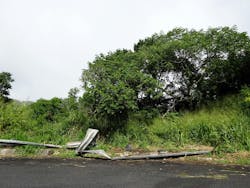
The software, part of Bentley Systems’ Asset Analytics portfolio, collects data from dashcams traveling on public roadways and uploads imagery to the cloud to detect roadway conditions and hazards — such as guardrail damage, debris and pavement marking degradation.
The technology most recently drew attention through a partnership with the Hawaii Department of Transportation (HDOT), where its AI-driven tools help identify roadway hazards across the state’s several islands, significantly reducing response times.
“Things like guardrails damage, for example, are safety critical, and DOT can now roll a truck very quickly and do that fairly immediately,” said Mark Pittman, founder of Blyncsy and Bentley Systems’ Director of Transportation AI.
Under HDOT’s “Eyes on the Road” program, the agency issued 1,000 free dashcams to drivers, expanding roadway monitoring coverage as Blyncsy’s AI surveys footage for anomalies and triggers a response when hazards are detected.
Officials distributed the dashcams across all Hawaiian Islands to maximize coverage and monitor as many roadways as possible.
Hawaii’s geography has made it an ideal pilot location, as many roads are remote or difficult to access, historically leading to long inspection gaps.
The introduction of Blyncsy’s technology has reduced the state’s inspection interval to every 12 hours, which Pittman said may be among the highest standards globally.
“We inspect all state roadways every 12 hours and report on that,” he said. “I suspect Hawaii DOT now has the highest standard of care from an inspection perspective for their state guardrail system in the world.”
These technology-driven solutions translate into significant cost-savings and safety improvements for transportation agencies by reducing the need for manual inspections and keeping workers out of active roadways.
“We're dropping the costs with dashcam inspections by 96% compared to human inspections,” Pittman said.
Pittman founded Blyncsy as a privacy-conscious company while attending law school. It was later acquired by Bentley Systems, a move that accelerated the platform’s ability to scale and integrate with other Bentley technologies.
Bentley’s backing has supported Blyncsy’s global expansion, with deployments now spanning Australia, New Zealand and Europe.
“We’ve got deployments from Alaska’s remote wilderness environments to the densest roadways in Florida,” Pittman said.
Blyncsy is also planning an integration with Google Street View, allowing agencies to evaluate how infrastructure has changed over time using historical imagery.
“We are working with Google to ingest Google Street View as the first named partner in the industry to do that,” Pittman said, “and kind of leveraging that technology to understand what is the built environment and how it's changing.”
Beyond state DOTs, Blyncsy supports smaller municipalities and private-sector clients, where early detection can prevent minor issues from becoming major expenses.
“If you get a small pothole in the winter … fixing that pothole might cost you $10,” Pittman said. “If that pothole gets too large … that could be tens of thousands of dollars of expense.”
AI also helps agencies manage data more efficiently. While dashcams collect 30 frames per second, Blyncsy’s software distills footage down to the most relevant images needed for assessment, Pittman said.
Blyncsy emphasizes privacy protections for participants. Civilian drivers opt in voluntarily, while commercial fleets contribute data as part of safer roadway operations.
“No one benefits more than the heavy users to contribute to the system,” Pittman said.
Images are anonymized and only transmitted once vehicles reach public roadways.
“The data goes through anonymization by our third parties … we don’t get full video,” Pittman said. “We get a couple of frames from every camera.”
Using imagery from multiple vehicle types provides additional context without requiring field inspections.
“The semi-truck sits higher; the passenger vehicle sits lower,” Pittman said.
Human verification remains part of the process, with Blyncsy staff reviewing alerts before they are sent to agencies.
As transportation agencies face growing budgetary and environmental pressures, Pittman expects AI-driven solutions to continue expanding.
“We have incredible infrastructure and environmental pressures, and we're trying to stretch that and use these types of digital applications to inspect our assets and drive analytics,” he said. “You're going to see much more of that from us.”