People Aren’t Cones: The Human Reality in Work Zones
Key Highlights
- People Aren’t Cones℠ emphasizes the human factor behind every active work zone.
- High-visibility yellow PPE helps workers stand out from surrounding work zone equipment and devices.
- Setup and teardown create some of the highest-risk moments in traffic control operations.
- Short-term work zones require constant adaptation to changing traffic and roadway conditions.
- Driver behavior directly influences safety outcomes in dynamic work zone environments.
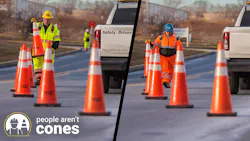

Work zone safety is often discussed in terms of traffic patterns, signage, and visibility. But behind every short-term lane closure or roadside operation are trained professionals working just feet from live traffic to help protect construction crews and workers who maintain and improve the infrastructure our communities rely on every day.
Managing those environments safely requires more than temporary devices and roadway signage. It requires trained professionals who can assess conditions, communicate effectively, and make informed decisions in real time. That reality is reflected in Flagger Force’s People Aren’t Cones℠ safety awareness campaign, which reinforces a simple but important distinction: work zones do not just contain equipment. They contain people actively managing risk in real time.
In support of our company’s Safety-Driven® ethos, the People Aren’t Cones℠ campaign also reflects a broader commitment to worker visibility and recognition. Traffic control professionals at Flagger Force wear full-body, high-visibility yellow personal protective equipment (PPE) designed to help workers stand apart from surrounding orange equipment, such as cones and signage, and be more clearly recognized as people rather than objects within the work zone. That visibility is reinforced by ongoing training and field experience that help traffic control professionals recognize hazards early, adapt to changing roadway conditions, and maintain safer operations throughout the work zone.
Understanding the human reality behind active traffic control operations requires a closer look at how short-term work zones actually function in the field.
Work Zones Are Dynamic Environments
Work zones are often perceived as structured and predictable. Cones, barrels, signs, and lighting create a clear path for drivers to follow. Once those elements are in place, the environment can appear controlled.
In many short-term operations, however, crews do not have the benefit of permanent barriers or positive protection separating them from live traffic. Conditions can change quickly depending on traffic flow, driver behavior, roadway configuration, weather, and the movement of workers and equipment.
Additionally, some of the most dangerous moments occur during setup and teardown, when workers are actively entering or exiting the roadway before traffic control is fully established. During these periods, traffic patterns are still shifting, drivers may not immediately recognize changing conditions, and workers often have limited protection from moving traffic.
This is especially true in short-term operations like those Flagger Force supports every day across the East Coast and in the Midwest. Our traffic control professionals are trained to continuously read the roadway, monitor driver behavior, and adjust to changing conditions in real time. A driver who hesitates, accelerates unexpectedly, or ignores instructions can change the situation instantly. Equipment helps guide traffic, but it does not react. People do.
That difference is what allows a work zone to function in an unpredictable and inherently dangerous environment. Safety depends not only on the equipment used to establish a work zone, but on how effectively workers and drivers respond to changing conditions around them.
The Reality in the Field: Risk Isn’t Evenly Distributed
One of the most important realities in traffic control is that risk is concentrated, not constant. Field experience and data both show that the most serious incidents occur during the setup and teardown periods.
Once a work zone is fully established to standards, traffic management and flow become more predictable, and workers are better protected.
During setup and teardown, however, that structure is still taking shape or being removed. Crews may be entering or exiting the roadway. Devices are being placed or collected. Traffic is still moving at speed, and drivers are encountering those changes with little advance notice. In many cases, they are reacting rather than anticipating.
During these moments, clearly defined responsibilities, communication, and experienced traffic control professionals become especially important to maintaining safe operations. Workers are operating in close proximity to live traffic while also focusing on the task at hand. At the same time, drivers are processing new information and making decisions quickly, increasing the potential for error on both sides.
The Impact of Speed, Distance, and Recognition
At high speeds, time and distance work against both drivers and those working near the roadway. At 65 miles per hour, a vehicle travels roughly 95 feet per second (about the length of a basketball court). That limits the time a driver has to see a change in the roadway, understand it, and respond appropriately.
From a traffic control standpoint, that makes recognition critical. Seeing a work zone is one step. Understanding what is happening within it is another matter. Drivers who recognize a person in the roadway will typically respond differently than those who only register shapes or objects, slowing down, increasing following distance, and proceeding more cautiously.
This is where visibility and recognition come together. High-visibility yellow apparel, movement, and positioning all help reinforce that distinction, but they are only effective if drivers are paying attention and processing what they see in time to act.
For traffic control crews working in these environments, that reality shapes every decision. They are constantly evaluating traffic flow, watching for subtle changes in driver behavior, and adjusting positioning to maintain a safe buffer around active work.
Driver Behavior in Real Time
Drivers are an active part of the work zone environment. Their decisions directly influence how safely traffic control operations function. When drivers are attentive and responsive, work zones operate more predictably. When attention drops or decisions are delayed, the environment becomes less stable and higher risk.
This is particularly important during setup and teardown, when drivers may not expect a work zone and have less time to adjust. Familiar routes can increase this challenge. Drivers who travel the same roadway regularly are more likely to operate on routine and less likely to anticipate changing conditions.
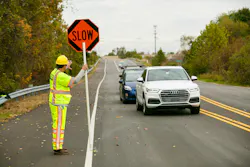
The People Aren’t Cones℠ campaign message reinforces an important reality: when drivers clearly recognize workers as people, their behavior often changes. They slow down, increase following distance, and pay closer attention to instructions from traffic control professionals. For trained traffic control professionals, those driver responses directly influence how effectively crews can maintain safe spacing, traffic flow, and roadway awareness throughout an operation.
Looking Ahead: What Needs to Change
Improving work zone safety requires a more complete understanding of how risk develops and where it is most concentrated.
For industry professionals, that means continuing to evaluate how work zones are planned and executed, with a focus on minimizing exposure during setup and teardown. It also includes reinforcing clear responsibilities so that critical tasks do not compete for attention during high-risk moments and designing work zones that communicate effectively. Drivers should be able to quickly interpret what is happening and understand how they are expected to respond, even in short-term or changing conditions.
For drivers, improving work zone safety comes down to consistent behavior behind the wheel. Slowing down, eliminating distractions, maintaining a safe following distance between vehicles, and following the direction of traffic control professionals all contribute to a safer environment for everyone on and around the roadway.
Work zone safety is not defined solely by devices, signage, or roadway layouts. It is shaped by how people respond to changing conditions in real time. Improving safety requires continued focus on visibility, training, communication, and driver awareness, especially during the highest-risk moments of setup and teardown. Because behind every work zone are professionals working to help others get home safely.