Wisconsin Officials Warn Drivers to Slow Down After 13 Snowplows Are Hit
Key Takeaways
- Thirteen county snowplows have been struck by vehicles this winter, with many of the crashes happening when plows were hit from behind.
- Several incidents forced plows out of service, limiting counties’ ability to clear snow and ice during active storms.
- Transportation officials say speeding for conditions, following too closely and attempting to pass plows are major contributors to these preventable crashes.
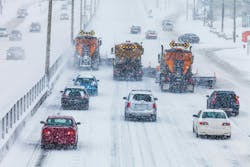
Wisconsin officials are urging drivers to slow down and give snowplows more room after 13 county snowplows have been struck by vehicles so far this winter.
Many of the crashes were rear-end collisions that damaged equipment, sidelined plows and put operators at risk while crews worked to clear winter roads, according to the Wisconsin Department of Transportation (WisDOT).
“Road and weather conditions can change quickly during Wisconsin winters and snowplow operators brave winter’s worst to keep our roads safe and passable,” WisDOT Secretary Kristina Boardman said in the news release. “We all want it to make it safely to our destination, so let’s take it slow on the road and please give space to snowplows.”
The crashes have been reported in Calumet, Jackson, La Crosse, Marinette, Outagamie, Portage, Sauk, Shawano, Waukesha, Winnebago and Wood counties. Several of the more serious incidents occurred in Calumet, Marinette, Portage, Shawano, Waukesha and Wood counties, according to the Wisconsin County Highway Association (WCHA).
“Every time a snowplow is hit, it puts operators at risk and takes critical equipment off the road,” WCHA Executive Director Patrick Vander Sanden said in the release. “These crashes are preventable. Drivers need to slow down, stay back and be patient.”
Calumet County Highway Commissioner Chad Scheinoha told Fox 11 News that speed during active snowstorms is a major factor in many crashes.
“When you think about the speed limit, if you’re out on a county trunk highway and the speed limit is 55 and it’s actively snowing, it’s going to take you considerably longer to stop if there’s snow on the road than it would be if there was no snow on the road,” Scheinoha told the station. “So, I’d like to say during an active snow event, when it’s snowing, you should never be driving the speed limit. Always less.”
Scheinoha described two recent incidents. One Calumet County plow was rear-ended near Sherwood on Highway 55, though both drivers were uninjured. In Shawano County, a semi-truck struck a plow from behind on Highway 29 a few weeks ago. The plow driver was not hurt, but the semi driver suffered serious injuries, according to Fox 11 News.
Snowplows can weigh up to 15 tons when fully loaded with salt and can throw snow and debris far from the blade. Scheinoha told Fox 11 News that drivers should give plows plenty of space in all directions.
“There’s times when our staff is plowing on a highway and the snow on the right side of the plow or the left side — if the plow has a left wing — could be flying up to 50 feet or more off of that plow,” he said. “There’s a very good chance if someone’s going to pass that plow, even if it’s in a separate lane of traffic, that something could fly off that blade and hit someone.”
According to WisDOT, snowplows travel below typical traffic speeds so crews can effectively spread salt or liquid brine and clear snow and ice. Following too closely or attempting to pass an active plow increases the risk of a crash. Plows use flashing amber or green lights to improve visibility in winter weather.
Transportation officials say most winter crashes occur because drivers are traveling too fast for conditions. WisDOT reminds motorists that posted speed limits are intended for ideal conditions, not snowy or icy roads. Drivers should leave extra braking distance, avoid distractions and stay at least 200 feet behind a working plow. If you can see the plow’s mirrors, the operator can see you.
Passing a plow should be done cautiously. Snow clouds created during plowing can reduce visibility, and road conditions ahead of the plow are often worse. WisDOT also cautions drivers of four-wheel and all-wheel-drive vehicles not to be overconfident, since those vehicles still require significant stopping distance on slick roads.
Before traveling, drivers can check conditions at 511wi.gov or through the free 511 Wisconsin mobile app, which provides live traffic camera feeds and incident updates. During major storms, WisDOT recommends postponing travel when possible to avoid stranded vehicles that can interfere with snow removal.
Wisconsin has partnered with its 72 county highway departments for more than 100 years to maintain state, U.S. and interstate highways. During winter, county crews handle plowing, salting and brine application, while WisDOT works with counties year-round to improve safety practices and test new equipment.
Officials say giving snowplows extra space is one of the simplest ways drivers can help keep winter roads safer for everyone.
Source: WisDOT and Fox 11 News
About the Author

Karina Mazhukhina, Digital Content Specialist
Digital Content Specialist
Karina Mazhukhina has extensive experience in journalism, content marketing, SEO, editorial strategy, and multimedia production. She was previously a real-time national reporter for McClatchy News and a digital journalist for KOMO News, and ABC-TV affiliate in Seattle.