The Roads That Built America
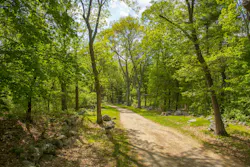
Before highways stretched across the country and before cars became the primary way Americans traveled, roads were the connections that held communities together.
They carried mail between colonial cities, moved settlers into new territories and opened trade routes across a growing nation.
Some of these routes have disappeared. Others still carry travelers today. But each one played a role in how America expanded, connected and changed over time.
As the United States celebrates its 250th birthday, Roads & Bridges looks back at nine roads that left a lasting mark on the country.
Boston Post Road
Long before email and instant communication, getting a message from one city to another could take days or even weeks.
The Boston Post Road helped change that.
Established in the 1600s, the route connected Boston, New York and other major colonial communities. It became one of the country's earliest mail routes, carrying letters, newspapers and important information between growing settlements.
The road also helped commerce move between cities at a time when travel was difficult and slow.
Parts of the original route still exist today, winding through communities that grew around one of America's first major transportation corridors.
Bay Road and Battle Road
Some roads are remembered because of where they went. Others are remembered because of what happened along the way.
Bay Road was one of the early routes connecting communities in colonial Massachusetts. Nearby, Battle Road became part of the opening moments of the American Revolution.
On April 19, 1775, British troops marched from Boston toward Concord, where they encountered colonial militia. Fighting broke out along the route, marking the beginning of the war for independence.
Today, visitors can walk portions of Battle Road within Minute Man National Historical Park and follow the path where the first battles of the Revolution took place.
King's Highway
Before the United States existed, the colonies were already beginning to connect.
The King's Highway, established in the late 1600s, linked communities along the Atlantic Coast from Boston to Charleston, South Carolina.
The route was used by merchants moving goods, postal riders delivering messages and travelers moving between colonies that were still separate political communities.
The King's Highway did not just make travel easier. It helped create connections between colonies that would eventually become one nation.
Many modern roads follow portions of the original route.
National Road (Cumberland Road)
When construction began on the National Road in 1811, the United States was still a young country looking west.
The road started in Cumberland, Maryland, and eventually extended into Illinois, giving settlers, businesses and travelers a reliable route into the frontier.
It was the first major highway funded by the federal government and helped establish a new approach to transportation investment.
Communities along the route grew as travelers passed through, and the road became a model for future infrastructure projects.
Sections of the historic route remain today, offering a glimpse of what early American travel looked like.
Santa Fe Trail
The Santa Fe Trail was not built as a traditional road. It was a network of paths across the plains that connected Missouri with Santa Fe, New Mexico.
Beginning in 1821, traders used the route to move manufactured goods west and bring back valuable products from the Southwest.
The journey was challenging. Wagons traveled through remote landscapes, crossing rivers and dealing with unpredictable weather.
The trail became one of the most important trade routes in early American history, connecting communities and expanding commerce across the Southwest.
Oregon Trail
Few routes represent westward migration more than the Oregon Trail.
Beginning in the 1840s, hundreds of thousands of settlers traveled the roughly 2,000-mile route toward Oregon and other western territories.
The journey was difficult. Families faced harsh weather, disease, difficult terrain and long stretches away from established communities.
For many travelers, the trail represented opportunity and the hope of starting a new life.
Although the journey was dangerous, the Oregon Trail became one of the best-known routes of America's westward expansion.
Natchez Trace
The Natchez Trace began long before the arrival of automobiles.
The route developed from trails used by Native Americans and later became an important path for traders, soldiers and settlers moving through the South.
In the early 1800s, thousands of "Kaintucks" used the Trace to return home after floating goods down the Mississippi River.
Today, the Natchez Trace Parkway preserves much of the historic route, allowing visitors to experience a corridor that has been used for transportation for thousands of years.
Lincoln Highway
By the early 1900s, the automobile was beginning to change how Americans traveled.
The Lincoln Highway, dedicated in 1913, became the nation's first transcontinental automobile route. Stretching from New York City to San Francisco, it showed that long-distance travel by car was no longer just a dream.
Communities along the route built gas stations, restaurants and lodging to serve travelers. The highway also helped build support for a better national road network.
Decades later, the ideas behind routes like the Lincoln Highway helped pave the way for the Interstate Highway System.
Route 66
Few roads have become as famous as Route 66.
Opened in 1926, the highway stretched from Chicago to Los Angeles and passed through eight states.
For many Americans, Route 66 represented freedom and adventure. It carried families moving west during the Dust Bowl, vacationers exploring the country after World War II and generations of travelers looking for something beyond the ordinary.
Although much of the original highway was replaced by newer interstates, Route 66 remains a cultural landmark.
Its roadside diners, gas stations and small-town attractions continue to draw visitors from around the world.
The Roads That Tell America's Story
America's transportation network did not appear overnight.
It was built one road at a time, with each route serving a different purpose. Some carried mail. Some opened new trade opportunities. Others helped people move across a growing country.
Many of these roads no longer serve as major travel routes, but their impact remains.
They can still be found in historic districts, scenic byways and preserved trails across the country. More importantly, they tell the story of how Americans traveled, settled and connected with one another over the past 250 years.
The roads may have changed, but their place in American history remains.
About the Author
 Karina Mazhukhina, Digital Content Specialist
Karina Mazhukhina, Digital Content Specialist
Digital Content Specialist
Karina Mazhukhina has extensive experience in journalism, content marketing, SEO, editorial strategy, and multimedia production. She was previously a real-time national reporter for McClatchy News and a digital journalist for KOMO News, and ABC-TV affiliate in Seattle.