1,099 Lane Changes Raise Red Flags at Ohio Toll Plaza
Key Highlights
- Investigators found 1,099 last-minute lane changes in three weeks
- NTSB recommends closing manual toll lanes at Ohio Turnpike plazas
- The investigation also raised concerns about emergency access and seat belt use
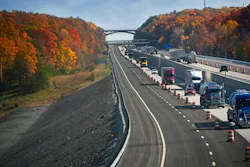
Drivers made more than 1,000 last-minute lane changes at an Ohio Turnpike toll plaza in just three weeks. One of those maneuvers ended in a deadly crash, prompting the National Transportation Safety Board to call for changes to how toll plazas handle traffic.
The crash happened Aug. 15, 2024, at the Swanton Township Toll Plaza. An SUV traveling through a high-speed electronic toll lane suddenly slowed and moved across traffic toward the manual toll booths. A truck struck the SUV from behind and overturned, according to the NTSB.
Two passengers in the SUV were killed. The SUV driver and another passenger suffered serious injuries, as did the truck driver. The truck was carrying sulfonic acid, which spilled after the rollover, although no injuries were reported from exposure to the chemical, according to the NTSB.
The Problem With Mixing High and Low Speeds
The NTSB investigation focused on the layout of the toll plaza and the different speeds of traffic moving through it.
The plaza had high-speed electronic toll lanes next to separated, low-speed lanes for drivers paying manually. That setup created significant speed differences and gave drivers a reason to cross between the two areas, according to the NTSB.
Investigators reviewed video from three weeks of toll plaza activity and found 1,099 last-minute lane changes, averaging about 52 per day. They also observed vehicles illegally crossing the marked area separating the high- and low-speed tolling lanes, according to the NTSB.
The agency determined that the combination of high-speed electronic lanes and low-speed manual lanes increased the risk of a serious crash.
NTSB Wants Fully Electronic Tolling
The NTSB is now recommending that the Ohio Turnpike and Infrastructure Commission permanently close its low-speed manual tolling lanes and move to fully electronic tolling at its toll plazas.
The agency is also asking the Federal Highway Administration to develop guidance on the safety benefits of fully electronic tolling, according to the NTSB.
Ohio would not be the first state to make the switch. Illinois and Pennsylvania already use fully electronic tolling on their portions of Interstate 80, according to the NTSB.
Emergency Response Was Another Issue
The investigation found another potential safety problem at the toll plaza: emergency responders did not have direct access to the toll road.
That lack of access delayed their response to the crash. The NTSB determined the delay likely would not have changed whether the victims survived, but said limited emergency access could create problems during future incidents, according to the NTSB.
The agency is recommending that the Ohio Turnpike evaluate whether additional emergency access points are needed at toll plazas and add them where appropriate.
Seat Belts Also Came Into Focus
The investigation also found that the occupants of the SUV were not wearing seat belts.
The NTSB said seat belt use could have prevented the deaths and injuries in the crash. The agency is reiterating a 2014 recommendation calling on Ohio to require enforcement of seat belt use for all vehicle occupants, according to the NTSB.
The NTSB issued recommendations to the Federal Highway Administration, the state of Ohio, the Ohio Turnpike and Infrastructure Commission, Springfield Township and the International Bridge, Tunnel and Turnpike Association following the investigation.
Source: NTSB
About the Author
 Karina Mazhukhina, Digital Content Specialist
Karina Mazhukhina, Digital Content Specialist
Digital Content Specialist
Karina Mazhukhina has extensive experience in journalism, content marketing, SEO, editorial strategy, and multimedia production. She was previously a real-time national reporter for McClatchy News and a digital journalist for KOMO News, and ABC-TV affiliate in Seattle.