Are Drivers More Distracted During March Madness? The Data Says Yes
Key Highlights
- Cambridge Mobile Telematics found increased phone use among drivers in most March Madness host cities.
- The largest spikes occurred during first- and second-round games, particularly in the evening.
- Distraction levels declined during the Sweet 16 and Elite 8 as fewer games were played.
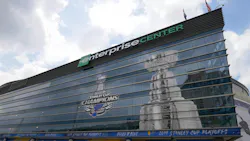
March Madness host cities saw spikes in drivers’ phone usage during first- and second-round games, according to data released by Cambridge Mobile Telematics (CMT).
Focused on roads surrounding tournament arenas, the study compared phone-tapping events per 100 miles during game days to similar days in surrounding weeks.
Significant increases in distracted driving were recorded in six of the eight host cities during the first and second rounds, though the timing varied by location, the data shows.
First Round Games
During the first round — when games are more spread out throughout the day — Buffalo, New York, and St. Louis saw the largest overall increases in phone usage.
Buffalo recorded a 14.6% spike in distraction, with phone-tapping events rising from 30.9 to 35.4 per 100 miles. The biggest jump — 23.3% — was recorded during the late game window between 9 p.m. and 11 p.m., as the Michigan vs. Howard game wrapped up and Saint Louis vs. Georgia tipped off, according to CMT’s press release.
In St. Louis, the largest spike occurred earlier in the day, with distraction increasing by 17.9%, between 9 a.m. and 3 p.m., during one of the tournament’s earliest tip offs between Santa Clara and Kentucky. Overall phone usage rose by 10.5%, from 45.2 to 50 tapping events per 100 miles.
More moderate increases were reported in other first-round host cities. Portland, Oregon, saw a 5.3% overall increase, with a 15.3% spike during evening games. Oklahoma City and Greenville, South Carolina, recorded increases between 3% and 4%, with Oklahoma City seeing its largest jump — 11% — during the late evening window.
According to CMT’s press release, these spikes were largely driven by drivers checking scores, increased traffic near arenas and higher activity in downtown areas.
Second Round Games
While first-round spikes were spread throughout the day, second-round games — fewer in number — saw more concentrated increases in distracted driving, primarily during evening hours.
Six of the eight cities reported increases, with Greenville seeing the largest spike at 33.3% during the late-night game window.
CMT reported that Tampa and Philadelphia showed some of the most notable increases. Tampa’s distraction rate rose by 8.3% between 7 p.m. and 11 p.m., while Philadelphia recorded a 6.8% overall increase, including a 15.8% spike between 9 p.m. and 11 p.m.
Sweet 16 and Elite 8
Phone usage in later rounds — hosted in Houston, Chicago, San Jose and Washington, D.C. — declined compared to earlier games.
During the Sweet 16, Houston was the only city to report a notable increase, with distraction rising 6.8% overall, and a 19.2% spike during a late-night game featuring the Houston Cougars and Illinois, according to CMT’s data.
During the Elite 8, increases were minimal. Washington, D.C., and Chicago were the only cities to report rises, each seeing increases between 3% and 4%.
Sources: Cambridge Mobile Telematics
About the Author
 Jessica Parks, Staff Writer
Jessica Parks, Staff Writer
Staff Writer
Jessica Parks is a staff writer at Roads & Bridges with newsroom experience in Brooklyn, Long Island and the U.S. Virgin Islands, and several years spent living in Puerto Rico. She is currently based in Tulsa, Oklahoma.