Minneapolis Makes Concrete Last
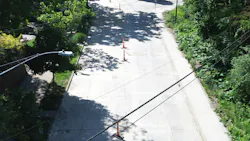
Minneapolis, with its harsh winters and frequent freeze-thaw cycles, faces persistent challenges in maintaining its road network. After decades of wear and tear, those conditions can be especially hard on concrete pavements, accelerating cracking, joint deterioration, faulting and other forms of distress. To address those issues and extend the service life of aging concrete streets, the Minneapolis Public Works Department launched an ambitious Concrete Pavement Preservation (CPP) strategy in 2016.
The strategy has produced results, and because of its success, the department has expanded its efforts citywide, most recently focusing on the Kenwood neighborhood, along Lake of the Isles and Cedar Lake in the heart of Minneapolis. The goal is to rehabilitate more concrete streets while continuing to refine the program through lessons learned and innovative techniques.
"Minneapolis has established a robust concrete pavement preservation program, delivering impressive results,” says Dan Labo, executive director at the Concrete Pavement Association of Minnesota. “By prioritizing long-term strategies over short-term fixes, the city stands in contrast to many others facing premature pavement failures. Through fiscally and environmentally sustainable practices, Minneapolis is effectively reducing maintenance and construction disruptions over the pavement lifecycle—bringing lasting benefits to both residents and local businesses."
Early Success in Waite Park
In the program’s first year, the division focused on rehabilitating six to eight miles of concrete streets in Waite Park, a largely residential neighborhood on the city’s northeast side. The work included diamond grinding to restore a smooth, safe riding surface, partial-depth and full-depth repairs to address cracking and joint deterioration, joint and crack sealing to reduce water infiltration and ADA ramp construction to improve accessibility.
The results were significant, with renewed pavements expected to gain an additional 25 years of service life, extending total pavement life to roughly 65 to 70 years. That initial phase demonstrated the cost-effectiveness and sustainability of CPP, helping build support for broader implementation. The city has expanded the initiative to additional neighborhoods, targeting roughly three to four miles of concrete streets annually.
A Preservation-First Approach
CPP techniques restore existing pavements, reducing the need to consume new aggregates and bituminous oil. This approach aligns with Minneapolis’ commitment to environmental stewardship. Advanced techniques used in the city’s CPP initiative include:
- Slab stabilization: filling voids beneath slabs to restore support.
- Dowel bar retrofitting: linking slabs to distribute loads evenly.
- Cross-stitching: reinforcing low-severity cracks to preserve aggregate interlock.
The Minneapolis Public Works Department also uses Indefinite Delivery/Indefinite Quantity contracts to provide flexibility in project scope and budget allocation. The project delivery method ensures efficient use of resources and minimizes disruptions. To keep projects coordinated, public works staff conduct preconstruction assessments, facilitate stakeholder collaboration and balance in-house work with specialized contractor services. Virtual stakeholder meetings are held weekly during the construction season.
That emphasis on coordination has become an important part of the program’s evolution. As the city has expanded its work, staff members have continued to apply lessons learned from earlier phases, including better management of urban traffic and closer alignment with utility work.
How the Program Works
A pavement preservation program’s effectiveness depends on choosing the right repair at the right time. In Minneapolis, streets are assessed before crews begin work because concrete pavements require repair methods that differ from those used on asphalt. When applied correctly, those methods can significantly extend pavement life while reducing future maintenance costs.
The department generally relies on two primary repair types: partial depth and full depth. Partial-depth repairs are used when deterioration is confined to the upper portion of the slab, typically near joints, cracks or surface defects. Full-depth repairs are used when damage extends through the slab or when structural failure makes surface treatment insufficient.
Before selecting a repair method, crews inspect the street to identify the type and extent of deterioration. Visible indicators may include cracking and sunken pavement. If distress is limited to a crack or shallow surface defect, a partial-depth repair may be sufficient. Joints wider than three-quarter inch are also candidates for milling and partial-depth repair.
Not all damage is immediately visible. To detect hidden voids beneath the pavement surface, crews use a technique known as sounding. This is when you strike the slab with a chain or hammer and listen for changes in tone that indicate hollow areas below. That process helps define the repair boundaries more accurately. In reinforced concrete streets, metal detectors are used to locate and mark rebar before removal begins.
When a street shows extensive cracking, settled panels or other significant distress, full-depth repair is often the best option. In those cases, entire panels—or portions of panels—may be removed. However, because partial panel replacement can create several smaller slabs, repair layouts must be planned carefully. New slabs should generally be no less than 6-feet wide when they are the full width of the lane. Around manholes and other appurtenances, cuts should avoid sharp angles and stay as close to 90 degrees as possible to maintain stability.
Partial-Depth Repair Process
For partial-depth repairs, crews begin by milling the pavement surface to a depth of approximately 2 to 3 inches. A 10-inch-wide milling machine fitted with teeth suitable for grinding portland cement concrete is typically used to remove the deteriorated material within the marked area. After milling, the area is checked to confirm that all unsound concrete has been removed; if necessary, a small 40-pound jackhammer is used to complete the cleanup. Crews then sound the milled surface to verify that no unbonded concrete or underlying voids remain, and the area is sandblasted to create a clean bonding surface.
A bonding grout—typically a mixture of portland cement and mortar sand blended to a thick cream consistency—is then brushed onto the prepared surface. It is important that the bonding mortar remains wet during placement. For the patch itself, the department uses a special concrete mix called 3U18, which is mixed onsite.
Before placing the patch material, crews install compressible inserts, often wax-coated cardboard, to re-establish the crack or joint and create a controlled seam between the adjoining sections. Expansion felt is not typically necessary for partial-depth repairs; it is usually reserved for full-depth repair applications where appropriate.
The patch material is placed and troweled into the milled area, with a small concrete vibrator used to consolidate the mix. Workers feather the patch edges with bonding grout to ensure a strong bond with the existing slab.
Once the surface has been smoothed and brushed, a heavy coat of curing membrane is applied. Water-based curing membranes are avoided; the specified curing compound should match project requirements. After curing, a crew places bituminous crack filler in the re-established joint.
Full-Depth Repair Process
When damage is too extensive for a surface repair, crews move to full-depth replacement. This process begins by sawing the pavement through its full depth, using a large concrete saw rated at 60 horsepower or greater.
Once the panels are cut, they are removed. Intact panels are lifted out with a boom truck, which prevents damage to the underlying soil and saves time. Severely damaged panels are carefully removed with a rubber tire excavator or other machinery.
Replacing a damaged roadway is similar to constructing a new concrete road, with some key differences. Rehabilitation work includes drilled and anchored dowels—installation of steel reinforcement bars in the adjacent concrete panels to improve load transfer.
Crews use a gang drill, or another drill capable of horizontal boring, to drill holes into the neighboring slabs. Bars are typically spaced about 12 inches apart, though placement may be adjusted to align with wheel paths. The bars are secured with non-shrink grout on the existing-pavement side, while the opposite end is greased or oiled so it will not adhere to the new concrete.
For the replacement slab, the municipality typically uses the 3R52 or 3RHE523G5 high-strength concrete mix designs. For manholes or drains, fabric is added around the casting before placing the concrete. Once the concrete is in place, additional bars are sunk into the material to reinforce the drain area, as these locations are prone to cavities and erosion. After the bleed water evaporates, the surface is troweled and broomed and a curing membrane is applied.
Final steps: Diamond Grinding
About four weeks later, after the repaired concrete had time to cure, the final step takes place: diamond grinding. This process creates a more uniform pavement surface and smooths the transition between repaired areas and existing pavement, improving ride quality for the traveling public.
Taken together, these preservation and repair practices have helped Minneapolis extend the life of its concrete streets by decades. The work not only improves pavement performance and ride quality, but it also reduces long-term costs and limits the frequency of major disruptions for residents and businesses.
As the program continues, Minneapolis is positioning itself as a leader in sustainable urban infrastructure renewal. Future phases may incorporate emerging technologies, such as smart sensors for real-time pavement monitoring, further strengthening the city’s ability to manage its network proactively.
Nick Davis is the director of technical services at the International Grooving and Grinding Association.