Make Way for Wildlife
By Alissa Fadden, Contributing Author
Right now, we’re in a unique window, perched between two of the Northeast’s most significant wildlife migration events. Behind us is amphibian migration season (March–April), during which salamanders and frogs often make perilous journeys across busy roadways, where they are often killed while attempting to reach breeding grounds.
Soon, it will be peak deer movement season (October-December), a period that drives a sharp rise in animal-related collisions and contributes to an estimated 650,000 incidents nationwide each year.
This seasonal rhythm reveals an uncomfortable truth: our road networks and wildlife migration routes are on a collision course, literally. When smaller wildlife is accounted for, an estimated 1 million animals lose their lives on U.S. roadways every day.
The human toll is significant as well — more than 200 people are killed and close to 30,000 are injured annually in animal-related collisions, costing Americans over $10 billion.
But the danger doesn’t stop at the pavement. Roads disconnect forests, rivers and wetlands, cutting off the life-lines wildlife need to survive and putting communities at risk for severe flooding.
The good news? We can fix this.
A Road Ecology Revolution
Enter road ecology: a growing field that studies how roads impact ecosystems over time and helps us design smarter infrastructure to reduce collisions and protect animals and communities.
Across the Appalachian region — a 2,000-mile chain of forested mountains, valleys, wetlands and rivers that stretches from Alabama to Canada, where millions of vehicles drive daily — scientists, engineers and municipal agencies are teaming up to transform our roads and infrastructure at a massive scale.
Their approach is being informed by road ecology so animals have the ecosystems they need, and communities are better protected from dangerous flooding and collisions.
A Connected Critter Commute
Why does this matter now? Road ecology recognizes that animals, like people, must move to find food, shelter and safety — but roads and other infrastructure often block their paths of travel.
A changing climate is exacerbating their journeys, driving animals to move north an average of 11 miles and approximately 36 feet higher in elevation each decade. When their habitats are disconnected, animals are also more vulnerable to floods, droughts and wildfires, and weather events that are intensifying each year.
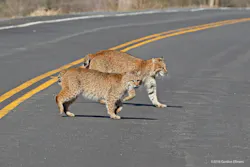
Consider New Jersey’s bobcats. Roadways are preventing bobcats in the north from reaching central and southern habitats. This isolation prevents genetic exchange, raising risks of inbreeding and disease. It’s not just big mammals being affected: each spring in New York, salamanders and frogs must cross roads to reach wetlands where they breed.
Volunteers with the New York State Department of Environmental Conservation helped oversee this seasonal journey, but more than 40% of the amphibians were still found dead.
Disconnected habitats also amplify flooding risks. When culverts are too small, they clog streams, turning storms into flood disasters.
Mark Anderson, The Nature Conservancy’s director of conservation science, calls connectivity “the backbone of climate resilience.” Linked landscapes let animals move unimpeded, rivers flow freely and ecosystems absorb shocks like floods and wildfires.
Building Bridges for All
By adopting road ecology practices, transportation and wildlife agencies are working together to transform collision zones and blocked river systems into opportunities for smarter and safer wildlife-friendly infrastructure.
They are also preventing road washouts, saving taxpayer dollars and protecting communities from dangerous flooding.
To help fuel this progress, The Nature Conservancy has partnered with agencies across eight states to develop and introduce Northeast Habitats and Highways, a new training series designed not just to share knowledge but also to inspire a cultural shift.
Modeled after Vermont’s nationally recognized program, which Jens Hawkins-Hilke, conservation planner at the Vermont Department of Fish and Wildlife has credited as “the single-most impactful thing they have done to advance connectivity planning and culture change among agencies,” the series brings together practical tools, real-world examples and government agency experts to help make wildlife connectivity a standard part of transportation planning across the region.
Making the Most of Replacements
Among the learnings shared in the training is that replacement projects for aging or flood-prone bridges and culverts offer a golden opportunity to think bigger and better for people and wildlife.
Until recently, the Bay Road culvert in Newmarket, N.H. was undersized and poorly positioned. Acting like a small waterfall, it blocked eels and other migratory fish from reaching the freshwater habitats they needed upstream and offered no dry passage for wildlife.
Rising sea levels and increased flooding also threatened to wipe out the nearby salt marsh, a critical habitat for birds like the saltmarsh sparrow.
When The Nature Conservancy partnered with the town’s Public Works Department, they discovered that flooding during storms also made the road unsafe for drivers.
Together, they installed a much larger culvert that restores tidal flow, enables fish to pass freely and creates safe under-road pathways for bobcats, deer, mink, otters and opossums, which reduces collision risks for drivers.
In Royalston, Mass., the Massachusetts Department of Transportation (MassDOT) replaced a small bridge with a larger, more wildlife- friendly design featuring dry banks, which allow animals to cross even when water levels are high.
Engineers also slowed water velocity beneath the bridge, making it easier for fish and turtles to pass through. With a wider opening and more natural light, it’s a safer, more inviting route for a variety of animals.
And, along State Route 12 in Boonville, N.Y., engineers retrofitted a 130-foot “critter shelf” into an existing culvert, creating a safe, dry walkway for mammals from bobcats and racoons to smaller species.
Inspired by a concept deployed in Montana, the shelf restores safe passage across a vital stretch of habitat by providing a dry walkway for animals without compromising the culvert’s structural integrity.
These examples demonstrate how a single infrastructure upgrade can deliver multiple benefits: safer roads, restored rivers, connected habitats and more resilient communities.
Connected Roads and Landscapes
Unlike many societal challenges, this is one we can solve today. The technology exists, and it’s already working. Wildlife crossings are reducing collisions, restoring rivers and lowering flood risks. Fewer animals on the road and fewer washouts mean fewer swerves, crashes and fatalities.
It’s so compelling that governors of eight northeastern states and several eastern Canadian Premiers recently adopted a resolution reaffirming their commitment to cross-border collaboration on transportation infrastructure that supports wildlife connectivity.
This makes clear that by working together, elected officials, conservationists and transportation professionals can build a future where infrastructure serves people and nature alike.
Where roads connect — rather than divide — the landscapes we all depend on, this future is being built right now across the Appalachians, one culvert at a time.
Alissa Fadden is a wildlife connectivity project manager in New York for The Nature Conservancy, a global conservation organization dedicated to conserving the lands and waters on which all life depends. To learn more about The Nature Conservancy’s Northeast Habitats and Highways initiative, visit nature.org/habitatsandhighways.