Diesel Prices Hit Record High as Construction Costs Face New Pressure
Key Takeaways
- Diesel reached a record $6.23 per gallon on Sept. 14, up 69% from a year earlier.
- Higher diesel prices can increase equipment, shipping and material costs for construction projects.
- Fixed, floating and collar pricing structures can give contractors different ways to manage fuel-price volatility.
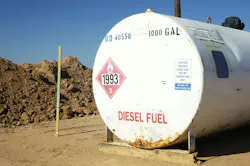
Diesel prices hit a record high of $6.23 per gallon on Sept. 14, a 69% increase from a year earlier, when prices averaged $3.69 per gallon.
Diesel is a major driver for freight, construction, agriculture and industrial activity, which can quickly cause a spike in business costs and inflation, according to an article from J.P. Morgan.
The jump is being driven by geopolitical developments and refinery outages, causing diesel prices to rise even as gasoline prices receive more attention.
Geopolitically, the ongoing conflict in Iran has raised risks around energy flows through Middle East routes. In Russia, refinery disruptions and policy responses have reduced the availability of products for export, J.P. Morgan reported. Risks related to Iran have pushed the cost of crude oil above $100 per barrel several times throughout the year.
Diesel prices can differ from gasoline because diesel comes from a different part of the barrel and requires refinery capacity that is also used for jet fuel, heating oil and other distillates. Prices are also affected by seasonal demand, such as farmers using more diesel during harvest season and rising demand for heating fuels during colder months.
The construction industry is particularly exposed to higher fuel costs, especially in the transportation sector, as the machinery used to move heavy commodities such as cement and gravel relies on diesel, according to CNBC.
With an increase in diesel prices, there is a direct impact on the operating expenses required for construction project, according to Shipley Energy. The unpredictability of fuel prices also creates budget uncertainty, making it more difficult to accurately estimate project expenses.
However, the transportation construction industry is not only impacted by the increased cost of powering heavy equipment. Higher diesel prices can also increase the costs of shipping and manufacturing building materials.
Shipping is one of the first areas that feel the impact of higher diesel prices and is often most visible in goods that are transport-heavy or operationally sensitive, such as building materials. This is because these materials may move frequently, ship in bulk or rely on tight delivery windows, according to J.P. Morgan.
Rising costs across all areas of a project can eat into profitability, particularly when projects are already contracted at a fixed price, forcing construction companies to manage fuel costs strategically, Shipley Energy reported.
The energy company recommends several pricing structures to mitigate the rising cost of diesel:
- Fixed-price contracts: The construction company and fuel supplier agree on a set price for a specified period and a specific number of gallons. This allows construction companies to accurately budget fuel expenses for the duration of the contract and avoid the impact of price fluctuations during the contract term. However, if fuel prices fall, companies could miss potential cost savings.
- Floating prices: The fuel price aligns with the market rate at the time of purchase. If fuel prices drop, the company can take advantage of lower rates. Without a long-term commitment, the company can adapt to market changes, but the unpredictability of fuel costs can make budgeting more challenging.
- Collar prices: The fuel supplier and construction company establish a range within which the fuel price can fluctuate. However, this method includes fees to ensure prices remain with the agreed-upon range.
For transportation contractors, diesel is more than a line item. As prices continue to shift, the ability to plan for fuel volatility could play a larger role in keeping projects on budget and on schedule.
Sources: J.P. Morgan, CNBC, Shipley Energy
About the Author
 Jessica Parks, Staff Writer
Jessica Parks, Staff Writer
Staff Writer
Jessica Parks is a staff writer at Roads & Bridges with newsroom experience in Brooklyn, Long Island and the U.S. Virgin Islands, and several years spent living in Puerto Rico. She is currently based in Tulsa, Oklahoma.