Maintaining the Guard to Rural America
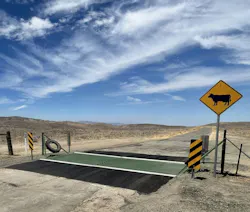
In rural communities, some of the most important transportation infrastructure is also some of the least recognized. Cattle guards are a good example. They are relatively small structures, often consisting of steel members supported by timber, concrete or other structural components, yet they perform an important function within the rural transportation network. They allow vehicles to travel continuously along public roads while restricting livestock movement into the roadway.
For San Luis Obispo County’s Public Works Department, maintaining these facilities are part of a much larger responsibility—keeping an extensive rural transportation system safe, accessible and operational despite a geographically dispersed infrastructure inventory and a limited maintenance workforce. The challenge is not simply repairing a cattle guard when something breaks; it is developing a practical maintenance strategy that allows a small workforce to inspect, prioritize, repair and monitor numerous geographically dispersed assets while continuing to respond to the county’s many other public works responsibilities.
A Unique Infrastructure Maintenance Challenge
San Luis Obispo County encompasses a large geographic area of California with extensive agricultural and ranching operations, rural residential communities, open space and remote roadways. Cattle guards are distributed throughout this network, frequently in locations that require significant travel and equipment mobilization. That geographic distribution changes the economics and logistics of maintenance.
At the same time, cattle guards do not operate in isolation. They are connected to roadway approaches, drainage systems, adjacent fencing, livestock-controlled systems and the surrounding right-of-way. Therefore, a deficiency at one location can require evaluation of several related components.
The county’s maintenance crews must look beyond the obvious defect and evaluate the overall condition and function of the facility.
Evaluating the Underlying Structural Integrity
A cattle guard can appear to be a simple structure, but its performance depends on multiple components working together. Repeated vehicle loading, livestock activity, moisture, corrosion, sediment accumulation, drainage issues, soil movement and normal deterioration can affect structural members and supporting elements over time.
During an inspection, field personnel must evaluate conditions such as:
- Deteriorated or damaged structural members
- Corrosion and section loss
- Loose, displaced, or damaged components
- Deteriorated timber or supporting materials
- Settlement or movement
- Drainage deficiencies
- Sediment and debris accumulation
- Deteriorated roadway approaches
- Unsafe riding conditions
- Conditions affecting livestock control performance
The objective is not simply to identify what is damaged. The objective is to determine the cause of the damage, its effect on the facility and the risk it creates.
Does the condition affect structural performance? Is it progressing? Does it create a safety concern? Could it result in failure if left uncorrected? Does the location provide critical access to residents, agricultural operations or emergency responders?
Those questions require field experience and technical judgement.
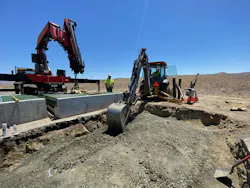
Managing a Large Inventory with a Small Workforce
It’s challenging for the county to maintain a large and geographically dispersed infrastructure inventory with a smaller workforce. Cattle guards are only one component of the county’s maintenance responsibilities. The same workforce is responsible for a broad range of transportation infrastructure while also responding to emergency situations and changing field conditions.
The solution has been to maximize the effectiveness of every available employee, vehicle, equipment mobilization and field day. Cross-training is an important part of that strategy.
Employees who can inspect infrastructure, identify deficiencies, operate equipment, perform repairs and communicate field conditions provide a greater flexibility to supervisors. Instead of relying on one employee with a specialized skill set, the maintenance team can distribute responsibility across multiple qualified personnel. This flexibility becomes particularly valuable when an emergency response or high-priority repair interrupts the scheduled work program.
Making Every Mobilization Count
One of the most effective strategies for rural maintenance is geographic coordination.
When crews are mobilized to a remote portion of the county, they can evaluate multiple cattle guards and other nearby infrastructure assets as schedules and field conditions allow. This approach reduces unnecessary repeat travel and increases the amount of productive work accomplished during each deployment.
Planning is equally important.
Before leaving the maintenance yard, crews must consider the condition of the asset, anticipated repair requirements, equipment needs, material, traffic control requirements and site-specific conditions. Proper preparation can prevent a situation in which a crew travels many miles to a remote location only to discover that a required material or piece of equipment is unavailable. In rural maintenance, preparation equals productivity.
Every successful first mobilization reduces the likelihood of a second trip and allows our limited personnel to address additional infrastructure needs elsewhere.
Prioritizing Risk
A limited workforce makes prioritization essential. Not every deficiency requires the same response or the same timeframe. The county evaluates the severity of the condition and considers the operational importance of the location when determining maintenance priorities. Factors may include the condition of structural components, traffic exposure, roadway function, agricultural access, emergency access, livestock control performance, environmental exposure and the potential consequences of failure.
A cattle guard with significant deterioration on a critical access route may require immediate corrective action. A lower risk condition may be documented and incorporated into a scheduled maintenance program. This risk-based approach allows the county to focus its resources where they provide the greatest benefit. It also transforms maintenance from purely reactive process into a more deliberate asset management strategy.
Fixing the Problem, Not Just the Symptom
Effective maintenance means understanding why a component deteriorated in the first place. Simply replacing component without addressing the underlying cause may result in premature recurrence. For example, drainage deficiencies, settlement, inadequate support or accumulated debris can contribute to deterioration and should be considered when developing a repair strategy. Depending on site conditions, corrective work includes cleaning and debris removal, component repair or replacement, drainage improvements, restoration of roadway approaches, stabilization of supporting materials or more extensive rehabilitation.
Material selection is also an important consideration. For remote infrastructure, the lowest initial repair cost does not necessarily represent the lowest overall cost. Durability, expected service life, environmental exposure, installation requirements, future inspection access and anticipated maintenance frequency should all be considered. A repair that lasts longer and reduces future mobilizations can provide significant value to a public agency operating with limited staffing.
Safety is Fundamental to Every Operation
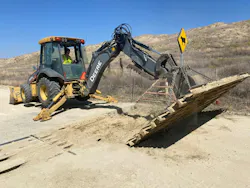
A rural location does not mean reduced safety requirements. Cattle guard maintenance can involve active roadways, heavy equipment, deteriorated structural components, uneven terrain, material handling and limited work areas. Crews must maintain appropriate traffic control protocols and protect both workers and the traveling public. Equipment operators must understand site conditions and the limitations of deteriorated structures. Components must be removed and installed using appropriate procedures and work activities must be coordinated to minimize unnecessary exposure to hazards.
The objective is straightforward: improve infrastructure without creating another safety problem. For a small workforce, this is particularly important. A preventable injury does more than affect one employee, it further reduces the agency’s ability to respond to an already demanding workload.
Core Values Driving Maintenance Excellence
Cattle guard maintenance exemplifies San Luis Obispo Public Works Department’s commitment to integrity, collaboration, professionalism, accountability and responsiveness. These principals are demonstrated through the daily efforts of the crew personnel who maintain essential rural transportation infrastructure under challenging field conditions. By combining technical expertise, proactive maintenance, planning, responsible resource management, environmental stewardship and an unwavering commitment to safety, the crew helps preserve roadway reliability, support agricultural operations, protect livestock containment and maintain access for residents and emergency responders.
Despite the challenges associated with a geographically dispersed infrastructure inventory and limited staffing, the crew continues to seek practical, sustainable solutions that improve operational efficiency and extend the service life of existing assets. This work reflects the essential role of public infrastructure maintenance in protecting public safety, supporting rural communities and preserving the long-term value of county owned transportation assets.
Lessons for Other Rural Agencies
San Luis Obispo County’s experience illustrates a broader challenge facing rural public works agencies throughout California and the nation. Infrastructure responsibilities continue to grow while available maintenance resources may remain limited. The answer is not necessarily more resources. Although adequate staffing and funding are essential, agencies can also improve performance through better deployment of existing resources.
Several practices have proven valuable:
- Know the inventory. Understanding where assets are located and their general condition allows agencies to make better maintenance decisions.
- Prioritize based on risk. Not every deficiency requires the same response. Resources should be directed toward conditions with the greatest potential consequence.
- Cross-train employees. A versatile workforce provides greater operational flexibility.
- Coordinate geographic work. Combining inspections and repairs reduces unnecessary mobilization.
- Plan before mobilization. Having the correct personnel, equipment, materials and traffic control measures improves first trip completion.
- Consider lifecycle performance. Durable repairs can reduce future maintenance demands and preserve limited workforce capacity.
- Document conditions. Consistent field information supports better long-term asset management decisions.
Cattle guards may be small when compared with bridges, highways and other transportation facilities, but their role in rural infrastructure is significant. They provide continuous access, support agricultural operations, help control livestock and contribute to the safe operation of rural roads.
For San Luis Obispo County Public Works, maintaining these assets across a large geographic area with limited workforce requires more than traditional reactive maintenance. It requires planning, technical judgment, condition assessment, risked based prioritization, cross-training, effcifient mobilization and a commitment to lifecycle performance.
The most important lesson may be that effective rural infrastructure management is not simply about the number of employees or the number of assets maintained. It is about how effectively an organization uses its people, knowledge, equipment and experience.
Mark David Tabares is a senior public works supervisor professional with 35 years of service to San Luis Obispo County, including 10 years in a supervisory role. As a Maintenance Section Supervisor, he leads field operations, coordinates crews and resources, and oversees the maintenance and preservation of county infrastructure. His leadership emphasizes operational efficiency, employee safety, and reliable public service.