What NHTSA’s New Fuel Economy Rules Could Mean for Drivers
Key Highlights
- New fuel economy rules could affect the vehicles consumers see on dealership lots and what they pay to buy and fuel them
- NHTSA projects a 34.9 mpg combined fleetwide average for new vehicles by 2031 under the final standards
- Automakers will have fewer compliance options as the rule phases out trading of CAFE credits between manufacturers
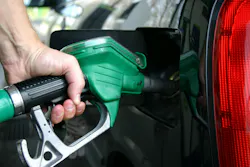
A new federal rule is changing how fuel-efficient new cars and light trucks will need to be.
The National Highway Traffic Safety Administration (NHTSA) has finalized new Corporate Average Fuel Economy (CAFE) standards for model years 2022 through 2031.
While the rules apply directly to automakers, they could eventually affect something much more familiar to drivers: the vehicles sitting on dealership lots and the amount of fuel those vehicles use.
Under the final rule, NHTSA projects that the combined fleetwide fuel economy of new vehicles will reach about 34.9 mpg in 2031.
That's significantly lower than the roughly 49.3 mpg NHTSA had projected under the previous standards.
For consumers, that difference matters because fuel economy is tied to how often drivers have to stop at the gas station. It also influences the types of vehicles manufacturers have an incentive to produce.
What Could Change for Car Buyers?
The CAFE rules don't tell consumers which vehicle they can buy. Instead, they set fuel economy requirements that automakers must meet across their fleets.
That means the impact will be indirect.
Automakers may adjust the mix of cars, crossovers and trucks they sell, as well as the technologies they use to meet the standards. Those decisions can ultimately affect vehicle prices, fuel economy and the choices available to consumers.
NHTSA estimates that the final rule could reduce technology-related costs for automakers by $15.3 billion for model year 2031compared with the previous standards.
The agency estimates that could translate into an average $1,289 reduction in new-vehicle costs for MY 2031.
That does not mean every vehicle will become $1,289 cheaper. It's a nationwide average based on NHTSA's analysis.
What About Gas Mileage?
This is where the rule could have a more direct effect on drivers.
NHTSA estimates that the final rule will lead to greater gasoline consumption than the previous standards. Through 2050, the agency projects about 122 billion additional gallons of gasoline consumption compared with the previous requirements.
For an individual driver, that could mean higher fuel costs over the life of a vehicle if the vehicle gets lower mileage than it otherwise would have.
The actual effect will depend on the vehicle someone buys, how much they drive and gasoline prices.
Why are Cars and Trucks Treated Differently?
The rules don't give every vehicle the same fuel economy target.
NHTSA calculates requirements based partly on a vehicle's footprint, meaning the area defined by its wheelbase and track width. Passenger cars and light trucks also have different requirements.
For 2031, NHTSA estimates an average requirement of 40.2 mpg for passenger cars and 26.4 mpg for light trucks.
That distinction matters because the vehicles Americans buy aren't all subject to the same fuel economy target. A small passenger car and a large pickup truck, for example, are treated differently under the CAFE system.
The rule also changes how some crossover vehicles are classified. Beginning in model year 2030, some lighter crossovers that have been treated as light trucks will move into the passenger-car category.
Automakers are Also Losing a Compliance Tool
The final rule changes the way manufacturers can use CAFE credits.
Automakers that exceed their fuel economy requirements can earn credits. Historically, manufacturers have been able to sell those credits to other manufacturers that need them to meet their requirements.
That option is being phased out.
NHTSA is ending inter-manufacturer trading of credits earned beginning with model year 2028. Credits earned through model year 2027 can still be carried forward for up to five years.
For consumers, the significance is that automakers will have less ability to rely on credits purchased from another company to meet their CAFE requirements. Their own vehicle fleets will play a larger role in determining whether they comply.
The Bigger Picture for Drivers
The easiest way to understand the new rule is this: it changes the fuel economy requirements that shape the new-vehicle market.
Drivers won't receive a new CAFE requirement when they buy a car. Instead, the effects could appear gradually through the vehicles manufacturers offer, their fuel economy and their prices.
NHTSA's analysis points to a tradeoff between the cost of meeting stricter fuel economy requirements and the amount of fuel vehicles are expected to consume.
For consumers, that makes the rule worth watching even though the regulation is aimed at automakers.
The decisions made under CAFE standards today can influence what drivers buy, what they pay upfront and how much fuel they use for years after they leave the dealership.
Source: NHTSA
About the Author
 Karina Mazhukhina, Digital Content Specialist
Karina Mazhukhina, Digital Content Specialist
Digital Content Specialist
Karina Mazhukhina has extensive experience in journalism, content marketing, SEO, editorial strategy, and multimedia production. She was previously a real-time national reporter for McClatchy News and a digital journalist for KOMO News, and ABC-TV affiliate in Seattle.