The Five Lawmakers Behind the BUILD America 250 Act
Key Highlights
- Five House lawmakers—not just Chairman Sam Graves—were the principal architects of the BUILD America 250 Act, drafting and negotiating the legislation through the House Transportation & Infrastructure Committee over roughly 18 months.
- The bipartisan bill advanced out of committee on a 62-2 vote, reflecting months of negotiations between Republican and Democratic committee leaders responsible for highways, bridges, transit, rail and transportation safety.
- As the legislation moves toward a House floor vote and eventual Senate negotiations, the positions taken by these five lawmakers will provide the clearest indication of how the bill evolves before a final surface transportation reauthorization reaches President Trump's desk.
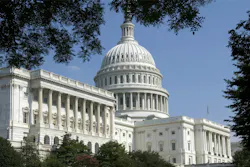
In May, the BUILD America 250 Act was approved by the House Transportation and Infrastructure Committee with a decisive 62-2 vote. The bipartisan bill would authorize roughly $580 billion in transportation funding between fiscal years 2027 and 2031.
This summer, Roads & Bridges has examined what’s in the bill, and we have outlined its journey to becoming law. The bill’s next stop is the House floor, where the full chamber must debate and vote on the legislation. House leaders have not yet announced a timetable for floor consideration.
As Congress debates the bill, key players will emerge and influence how the final funding policy is shaped. Who might those leaders be? Since the bill is still in the House of Representatives, let’s start there and save the Senate for part two. In the meantime, these are the five core members of the House who were the principal architects of the current legislation.
They oversaw negotiations and shaped the legislation within the Transportation and Infrastructure Committee. They care about the issues that impact workers, work zones and infrastructure projects. They have become influential voices on transportation policy and maintain close working relationships with state departments of transportation, contractors, engineering firms and transportation associations.
What they do and say will likely signal where negotiations are headed.
U.S. Rep. Sam Graves, R-Mo. (6th District)
Graves is the architect of the BUILD America 250 Act, and as chairman of the House Transportation and Infrastructure Committee, he has more influence over the legislation than anyone in the House.
Graves, 62, is not seeking re-election this year. He has been in office since 2001, and in that time, he has proven to be one of the infrastructure industry’s biggest allies. Known as one of the most knowledgeable transportation policymakers, he has spoken at industry events, and he has prioritized issues that contractors care about:
Faster environmental reviews
- Quicker project delivery
- Reduced regulatory burden
- Stable Highway Trust Fund funding
- Long-term authorizations instead of short-term extensions
- Freight mobility
- Formula funding for state departments of transportation
“The BUILD America 250 Act makes critical investments in America's roads, bridges, transit systems, rail transportation, and highway and motor carrier safety while restoring the focus of the federal surface transportation program to its core mission of improving mobility and moving people and goods safely and efficiently,” Graves said in a statement in May.
U.S. Rep. Rick Larsen, D-Wash. (2nd District)
Larsen, 61, is arguably the most important Democrat in the reauthorization process. He is the ranking member of the House Transportation and Infrastructure Committee, and he was the chief Democratic negotiator who worked with Graves.
"You can't have a big-league economy with little-league infrastructure,” Larsen said in statement in May.
And, like Graves, Larsen has a great relationship with industry associations, especially the American Road and Transportation Builders Association (ARTBA) and the American Association of State Highway and Transportation Officials (AASHTO).
Industry associations like Larsen because he supports predictable funding, state planning and project certainty. He also focuses on long-term authorization, Highway Trust Fund stability, freight investment and bridge funding.
Industry leaders might not always agree with Larsen, but they know they can do business with him. A surface transportation bill rarely becomes law without bipartisan support. Larsen's willingness to negotiate is one of the biggest reasons BUILD America 250 has advanced as a bipartisan measure.
U.S. Rep. David Rouzer, R-N.C. (7th District)
When the BUILD America 250 Act was released, Rep. Rouzer posted a fascinating statement on his website. In the statement, he emphasized the process ahead and bipartisan cooperation. He also highlighted the importance of project efficiency.
“The committee spent 18 months preparing the legislation and considered more than 11,000 policy requests from members of Congress and infrastructure stakeholders,” Rouzer said in the statement.
This indicates that Rouzer has spent nearly two years working with leaders from state DOTs, contractors, engineering firms, transit agencies and local governments.
Rouzer has done the work and immersed himself in the technical details of the industry.
As chairman of the Highways and Transit Subcommittee, Rouzer, 54, meets regularly with state DOTs, and he has been a champion of reducing truck bottlenecks, improving interstate reliability and investments in roadway safety.
U.S. Rep. Eleanor Holmes Norton, D-District of Columbia
Norton is the Democratic counterpart to Rouzer and serves as the ranking Democrat on the Highways and Transit Subcommittee, where she helped construct the bill.
Norton, 89, has been in office since 1991 and will not seek re-election this November. However, she is an expert on urban transportation. Although, as D.C.’s representative she does not have a vote on the House floor, and she has substantial influence.
Norton’s comments on the bill have focused on themes such as preserving federal investment, maintaining bipartisan cooperation, improving safety, strengthening transit and modernizing America’s aging infrastructure.
Throughout her career, Norton has supported designing roads for pedestrians, bicyclists, transit riders and motorists. She has pushed for safer and more accessible transportation. She also has argued that transportation investments should connect underserved communities to jobs, education and healthcare.
U.S. Rep. Daniel Webster, R-Fla. (11th District)
As one of the bill’s sponsors, Webster helped develop legislation that covered freight rail, passenger rail and railroad safety. These are issues that impact crews working on grade separations, rail bridges, intermodal terminals and multimodal freight corridors.
Webster, 77, serves as chairman of the Railroads, Pipelines and Hazardous Materials Subcommittee. He has championed the improvement of efficiency and safety for the nation’s multimodal freight networks.
Those who are interested in multimodal infrastructure should probably listen to what Webster says in the coming months. His fingerprints will be on many of the rail and safety provisions.
Webster is not typically the public face for transportation legislation, but he is respected in the industry for his command of technical issues. Many see him as a detail-oriented, consensus-minded leader.
He has supported modernizing transportation systems through innovation, especially in regard to efficiency measures that reduce delays without imposing unnecessary regulatory burdens
Policy Wonks
There are certainly more famous members of the House than the five on this list. But, Graves, Larsen, Rouzer, Norton and Webster are among the five House members who played the largest roles in developing the House version of the legislation.
Graves was the chief architect. Larsen was the lead negotiator. Rouzer was the principal author. Norton helped shape priorities, and Webster focused on safety, as well as rail’s role in the bill.
If BUILD America 250 becomes law, these five lawmakers will have played central roles in shaping the House version of the legislation.
About the Author
 Gavin Jenkins, Head of Content
Gavin Jenkins, Head of Content
Head of Content
Gavin Jenkins is an award-winning journalist based in Pittsburgh. His work has appeared in The New York Times, The Washington Post, The Atlantic, VICE, Narrative.ly, Prevention, the Pittsburgh Tribune-Review and Beijing Review.
In 2020, two stories he wrote for Pitt Med Magazine earned three Golden Quill Awards from the Press Club of Western Pennsylvania. “Surviving Survival” won Excellence in Corporate, Marketing and Promotional Communications – Written, Medical/Health, while “Oct. 27, 2018: Pittsburgh’s Darkest Day, and the Mass Casualty Response” won Excellence in Written Journalism, Magazines – Medical/Health, as well as the Ray Sprigle Memorial Award: Magazines, a Best in Show award.
After graduating from the University of Pittsburgh at Johnstown in 2003, he covered sports for the Bedford Gazette, in Bedford, Pa., and the Martinsville Bulletin, in Martinsville, Va. In 2006, he returned to Pittsburgh to write for Trib Total Media. Based out of the Kittanning Leader Times, he worked for the Trib for two years, and then he moved to Shenzhen, China, to teach English and freelance. After two years in China, he earned an MFA in nonfiction from the University of Pittsburgh.
When he's not at work, he's usually playing with his border-collie mix, Bob.