What Transportation Leaders Are Saying About the BUILD America 250 Act
Key Takeaways
- The proposed BUILD America 250 Act would invest $580 billion in surface transportation infrastructure over multiple years.
- Industry groups said the legislation would provide long-term certainty for states and local governments planning major infrastructure projects.
- Supporters also highlighted the bill’s focus on innovation, workforce development and modernizing U.S. transportation infrastructure.
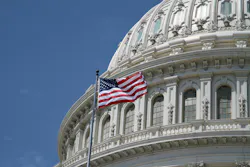
The proposed BUILD America 250 Act — a multiyear surface transportation package investing $580 billion — has garnered broad support from lawmakers and industry leaders.
The bipartisan legislation, agreed upon by Rep. Sam Graves (R-Mo.), chairman of the Committee on Transportation and Infrastructure, and Rep. Rick Larsen (D-Wash.), a ranking member of the committee, heads to markup in committee today.
The Infrastructure Investment and Jobs Act currently authorizes federal surface transportation programs through Sept. 30, when lawmakers must pass a new multiyear bill.
As transportation funding has not kept pace with the growing cost of repairing and modernizing the nation’s infrastructure, the BUILD America 250 Act represents the largest investment in the country’s bridges and allocates a new revenue stream towards the Highway Trust Fund for the first time in three decades, according to a committee press release.
Additionally, the bill aims to encourage innovation and efficiency for transportation projects, provides a framework for autonomous commercial vehicles and includes investment and reforms for passenger rail networks.
Larsen described the bill as a good step forward for the transportation industry, despite it not meeting all his priorities at an Infrastructure Week conference hosted by United for Infrastructure.
“While the BUILD America 250 Act doesn’t include all my priorities, this legislation moves us forward on creating good-paying transportation jobs, growing and supporting our economy, and helping safely transport people and goods across this country,” Larsen said in the event’s press release.
Many industry groups lauded the legislation for its much-needed investment in transportation infrastructure and innovative approach to funding.
Sean O’ Neill, Senior Vice President, American Cement Association: “Not only will this critical work erase years of uncertainty regarding the upkeep and future construction of essential roads, bridges and highways, but it will jumpstart the overall transportation infrastructure market… spurring the creation of new jobs and growing the demand for all domestic construction materials, including cement and concrete.”
Laura O’Neill Kaumo, President and CEO, American Concrete Pavement Association: “In particular, ACPA strongly supports the bill’s historic investment in bridge infrastructure, continued focus on core highway programs, efforts to streamline project delivery, and policies that strengthen the long-term solvency of the Highway Trust Fund.”
David Bauer, President and CEO, American Road & Transportation Builders Association: “Consistent, long-term funding, combined with well-crafted policy structures, positions the BUILD America 250 Act to support transportation systems across the country.”
Marsha Anderson Bomar, President, American Society of Civil Engineers: “ASCE believes people who use and benefit from roadways should help bear the costs associated with them, and we support the bill’s proposed registration fees of $130 for electric vehicles and $35 for plug-in-hybrid vehicles to ensure these vehicle owners pay for their use of the nation’s roads. We would also like to commend the bill’s $50 billion investment in bridges. Bridges earned a C on ASCE’s 2025 Report Card, holding steady with the category’s 2021 Report Card grade.”
Audrey Copeland, President & CEO, National Asphalt Pavement Association (NAPA): “The federal government has a critical role in our nation's highway network, and this bill delivers the certainty our industry needs to keep innovating, investing, and building. Our roads depend on the skilled workforce, continuous innovation, and quality materials the asphalt pavement industry provides. With its novel electric vehicle user fee and streamlined permitting reforms, this legislation ensures we can continue delivering the infrastructure that keeps America and its economy moving. We urge Congress to pass this bill swiftly so President Trump can sign it into law.”
Nile Elam, NAPA Vice President of Government Affairs: “The BUILD America 250 Act, with a $580 billion topline infrastructure investment and an array of meaningful policy reforms, reflects the deeply thoughtful work of House Transportation & Infrastructure Committee Chairman Sam Graves, Ranking Member Rick Larsen, their staffs, and the Committee members who worked tirelessly to introduce this bipartisan package. From protections for roadway workers to the first new Highway Trust Fund revenue stream in decades, this bill reflects the comprehensive, forward-thinking approach our infrastructure demands. We thank them for their work, and we will continue our collaboration with stakeholders to pass this bill out of the House as quickly and with as much bipartisan support as possible.”
Miami Mayor Eileen Higgins: “We know that our infrastructure needs investment, and the Infrastructure Investment and Jobs Act gave us the opportunity to repair what we have and build what we need. It is great to see that the BUILD America 250 Act is building upon the IIJA and moving that forward. From a local government perspective, making sure we have a consistent, reliable source of funding allows us to plan.”
Other industry groups remarked upon the legislation’s sweeping policy reform aimed at streamlining transportation projects and dedication to technology.
Russell R. McMurry, commissioner of Georgia Department of Transportation and president of American Association of State Highway and Transportation Officials (AASHTO): “The BUILD America 250 Act reflects many of AASHTO’s core policy principles such as streamlining programs with common objectives, enhancing the efficiency of environmental review and permitting processes to expedite project delivery, and upholding formula-based federal funding to states and other initiatives supported by the long-standing user pay model that supports the Highway Trust Fund.”
Kevan Stone, Executive Director and CEO, National Association of County Engineers: “The bill is especially valuable because it supports the kind of practical reforms county road professionals need most: clearer federal processes, better coordination, stronger safety programs, and a more workable path for delivering projects. Provisions related to permitting streamlining, categorical exclusions, interagency coordination, safety data, and infrastructure finance can help reduce administrative burdens and improve the ability of local governments to advance road and bridge projects in a timely manner.”
The bill’s commitment to improving road and work zone safety has also been widely praised by industry groups.
Stacy Tetschner, President and CEO, American Traffic Safety Services Association: “The inclusion of roadway worker and work zone safety provisions should be especially commended. Roadway workers routinely face significant risk when installing and maintaining critical safety hardware and devices on our Nation’s roads and are often vulnerable to speeding and distracted drivers navigating through work zones.”
One transportation group, Transportation for America, were not as optimistic about the proposed legislation, remarking that it is “an extension of the status quo.”
“While others may focus on the marginal improvements or negative changes in this transportation reauthorization proposal, it is still best understood as an extension of the status quo, which is failing to deliver on our core priorities of safety, state of repair, and making substantial investments beyond new highways,” the organization said in a press release. “As with the IIJA before it, the BUILD America 250 Act fails to orient this broken program toward the measurable outcomes that are promised over and over to the American taxpayer.”
After today’s markup, the bill will move to a committee vote before advancing to the full House of Representatives. If approved by the House, the Senate will consider its own version, with any differences resolved in conference before the final bill is sent to President Donald Trump for signature.
Sources: House Committee on Transportation and Infrastructure, Transportation for America, United for Infrastructure
About the Author
 Jessica Parks, Staff Writer
Jessica Parks, Staff Writer
Staff Writer
Jessica Parks is a staff writer at Roads & Bridges with newsroom experience in Brooklyn, Long Island and the U.S. Virgin Islands, and several years spent living in Puerto Rico. She is currently based in Tulsa, Oklahoma.