Clock Ticking on Highway Bill as Committee Markup Slips
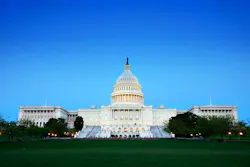
The House Transportation and Infrastructure Committee was expected to mark up the next surface transportation reauthorization bill in April, but that timeline has slipped, with action now anticipated for this month.
After a markup session, the Committee will vote to report the bill to the full House of Representatives. Once the bill passes the House, the Senate will advance its own version, with differences resolved in conference before the final bill is sent to President Donald Trump.
The bill funds America’s highways, roads, bridges, multimodal systems and safety programs. The current surface transportation law was embedded in the Infrastructure Investment and Jobs Act, and it expires on Sept. 30.
Committee Chair Sam Graves (R-Mo.) and ranking member Rick Larsen (D-Wash.) have not been able to see eye-to-eye, according to E&E news by Politico, and now there are growing concerns that the legislation, which is also called the highway bill, won’t be finished by Sept. 30.
Industry leaders are advocating for a roadmap to ensure the bill is completed. The Transportation Construction Coalition (TCC) has released principles for the bill’s reauthorization.
The TCC is a partnership of 34 national associations and construction unions with a market interest in federal transportation programs. TCC members include the American Traffic Safety Services Association (ATSSA), the American Road & Transportation Builders Association (ARTBA) and the Associated General Contractors (AGC) of America.
The goal of these principles is to provide states, local governments and industry stakeholders with the long-term stability needed to effectively plan, contract and complete transportation projects in a way that is safe, efficient and cost-conscious.
“The next surface transportation reauthorization bill is critical to ATSSA’s core focus of advancing roadway safety and protecting the men and women who work daily to provide safe thoroughfares for the motoring public,” said ATSSA President and CEO Stacy Tetschner in a statement. “The nine principles laid out by this 34-member coalition are fundamental for the next multi-year funding for transportation, which is essential to address the nation’s aging infrastructure and the critical role our transportation network plays in establishing a stronger supply chain.”
The TCC emphasized the broad public impact of federal infrastructure investment.
“Americans see and feel the value of federal transportation investments every day, from safer school drop-offs and shorter commutes to high-quality construction jobs that revitalize communities,” the TCC said in a joint statement this week. “Our industry is ready to keep delivering these results to every congressional district across the nation. These principles offer a clear framework for Congress to keep America moving for the next five years and beyond.”
If Congress fails to reauthorize the surface transportation bill on time, it could create significant uncertainty for state and local transportation agencies and potentially delay or disrupt major infrastructure projects nationwide.
The coalition’s updated principles are intended to guide lawmakers toward a more predictable and effective funding framework by:
- Preserving and strengthening current funding levels, with adjustments for inflation to ensure continued purchasing power, while also improving project delivery processes so that funds are deployed more quickly and efficiently.
- Enhancing work zone and roadway safety by increasing investment in programs designed to protect both highway workers and the traveling public during construction activities.
- Ensuring long-term fiscal stability by updating federal user-fee systems—such as fuel taxes or vehicle-miles-traveled approaches—to create a more reliable and sustainable source of infrastructure funding going forward.
In March, Graves told the National Association of Manufacturers (NAM) that it would be “unacceptable” to let the current highway bill expire on Sept. 30 without reauthorization.
“I’m committed to getting the next surface bill done on time and preventing potential project delays and uncertainty that can result from a lapse in long-term funding,” Graves said in a Q&A.
The key takeaway is that the reauthorization delay does not signal failure—it signals negotiation. The issues slowing the bill are the same ones that will define it: how to fund the system, how quickly projects can move from concept to construction and how narrowly or broadly federal dollars should be targeted. When the bill does emerge from committee, it will offer the clearest picture yet of how lawmakers intend to shape the future of America’s roads and bridges.
About the Author
 Gavin Jenkins, Head of Content
Gavin Jenkins, Head of Content
Head of Content
Gavin Jenkins is an award-winning journalist based in Pittsburgh. His work has appeared in The New York Times, The Washington Post, The Atlantic, VICE, Narrative.ly, Prevention, the Pittsburgh Tribune-Review and Beijing Review.
In 2020, two stories he wrote for Pitt Med Magazine earned three Golden Quill Awards from the Press Club of Western Pennsylvania. “Surviving Survival” won Excellence in Corporate, Marketing and Promotional Communications – Written, Medical/Health, while “Oct. 27, 2018: Pittsburgh’s Darkest Day, and the Mass Casualty Response” won Excellence in Written Journalism, Magazines – Medical/Health, as well as the Ray Sprigle Memorial Award: Magazines, a Best in Show award.
After graduating from the University of Pittsburgh at Johnstown in 2003, he covered sports for the Bedford Gazette, in Bedford, Pa., and the Martinsville Bulletin, in Martinsville, Va. In 2006, he returned to Pittsburgh to write for Trib Total Media. Based out of the Kittanning Leader Times, he worked for the Trib for two years, and then he moved to Shenzhen, China, to teach English and freelance. After two years in China, he earned an MFA in nonfiction from the University of Pittsburgh.
When he's not at work, he's usually playing with his border-collie mix, Bob.