DOT Roundup: NY Work Zone Cameras, a $24.8B Tennessee Plan and Mississippi’s ‘Big Fix’
Key Highlights
- New York expands work zone speed cameras to help protect highway crews and curb speeding.
- Tennessee advances a $24.8 billion I-24 proposal that could also support transportation investments statewide.
- Mississippi prepares for a $400 million interstate overhaul covering bridges, pavement and traffic technology.
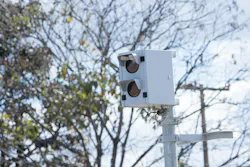
New York is expanding the use of speed cameras in work zones, while Tennessee advances a massive $24.8 billion transportation proposal and Mississippi prepares for a major interstate overhaul.
Here’s a look at three recent DOT developments.
New York Expands Work Zone Speed Cameras
In New York, drivers are getting another reason to ease off the gas when passing through road construction.
The state Department of Transportation is adding four speed enforcement cameras to its fleet in Central New York, with the units being deployed at work zones along state highways, according to reporting by WKTV.
The cameras use radar to detect vehicles traveling at least 11 mph over the posted speed limit. If a violation is detected, an operator reviews the information before a ticket is issued. Fines start at $50 and do not add points to a driver's license.
The expansion is significant because the cameras can now be used in any work zone on a state highway, rather than being limited to controlled-access highways under the previous program, according to the New York DOT.
The goal is to protect workers in areas where barrels and cones may leave crews closer to moving traffic. Last year, New York recorded 366 work zone crashes, resulting in 58 injuries and two deaths among state highway employees.
The cameras are already making an impact. New York DOT reported that the systems had been deployed 141 times so far this year and generated more than 22,000 notices of liability. Data from 2025 showed a 30% reduction in speeding violations in areas where the cameras were used.
Tennessee Moves Forward With $24.8B I-24 Proposal
Tennessee is taking a major step toward one of the largest public-private transportation investments in the country.
The Tennessee Department of Transportation is advancing a proposed $24.8 billion public-private partnership for the I-24 Southeast Choice Lanes project. If finalized, the investment could also create a new source of funding for transportation improvements across the state, according to TDOT.
The proposal would be the largest P3 investment ever offered for an interstate Choice Lanes project in the United States.
TDOT is working to finalize an agreement with selected partner DriveTN. The department also plans to hold community meetings in September to give residents more information about the proposal and answer questions about what comes next, according to TDOT.
The meetings are scheduled for Sept. 8 at the Nashville Public Library Pruitt Branch and Sept. 9 at the Smyrna Event Center. Both will run from 12:30 p.m. to 6 p.m.
Mississippi Gets Ready for Its ‘Big Fix’
Drivers around Jackson, Mississippi, are in for plenty of construction, but the state says tackling the work all at once could save time and money in the long run.
The Mississippi Department of Transportation has announced The Big Fix, a roughly $400 million project focused on Interstate 20 and Interstate 55 in the Jackson area. The project will rehabilitate 36 bridges, resurface 32 miles of roadway and add technology aimed at improving safety and traffic management, according to MDOT.
Construction is expected to begin in September and continue for about two and a half years. Most closures will take place at night or on weekends, but drivers will eventually face two major I-20 shutdowns.
The westbound lanes are expected to close for 45 days during summer 2027, followed by a 45-day eastbound closure in summer 2028, according to MDOT. About 110,000 vehicles travel through the area each day, making the project a significant undertaking for commuters and freight traffic.
MDOT officials said the decision to tackle the work as one large project rather than breaking it into smaller pieces should help get the job done faster and avoid repeatedly disrupting drivers. The agency expects the work to wrap up toward the end of 2028.
About the Author
 Karina Mazhukhina, Digital Content Specialist
Karina Mazhukhina, Digital Content Specialist
Digital Content Specialist
Karina Mazhukhina has extensive experience in journalism, content marketing, SEO, editorial strategy, and multimedia production. She was previously a real-time national reporter for McClatchy News and a digital journalist for KOMO News, and ABC-TV affiliate in Seattle.