State DOTs Take On Big Challenges From A $2.3B Bridge To Wrong-Way Alerts
Key Highlights
- A $2.3 billion I-10 bridge project in Louisiana is underway, expected to boost capacity, create over 16,000 jobs, and improve a key energy corridor
- Pennsylvania is testing new technology that detects wrong-way drivers in real time and could expand statewide if successful
- Missouri is seeing a rise in work zone crashes, with distracted driving and speeding continuing to be the biggest risks for road workers
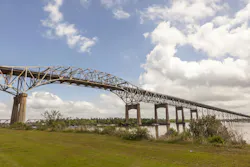
State transportation agencies are taking on a mix of big construction projects and day-to-day safety challenges. From a major bridge replacement in Louisiana to new technology in Pennsylvania and ongoing work zone concerns in Missouri, here’s a look at what’s happening.
Lake Charles, Louisiana: Major I-10 Bridge Project Breaks Ground
Construction is now underway on the long-awaited I-10 Calcasieu River Bridge replacement in Lake Charles, according to the Louisiana Governor’s Office. Gov. Jeff Landry joined federal, state, and local leaders to kick off the $2.3 billion project, which will replace the current bridge built in the 1950s.
The new bridge is designed to better handle today’s traffic and freight needs. It will include three lanes in each direction, which should help reduce congestion and improve safety. The existing bridge will stay open during construction, with some upgrades to keep traffic moving until the new bridge is expected to open in 2031.
The project includes much more than just the bridge:
- Rebuilding 5.5 miles of I-10
- Adding one lane in each direction to reduce bottlenecks
- Building a new elevated interchange at Sampson Street to avoid train delays
- Adding an eastbound service road between PPG Drive and Sampson Street to improve traffic flow
- Upgrading the I-210 westbound ramp for safety and capacity
According to the Louisiana Department of Transportation and Development, the project also includes:
- $10 million for pedestrian and bicycle improvements
- A 50-year maintenance plan for the bridge and roadway
- A public-private partnership model to speed up construction
The state will keep a 15% share of toll revenue, which will go toward future transportation projects. Officials say this corridor is important for moving oil and natural gas to Gulf Coast ports. According to estimates, the project could bring:
- $3.29 billion in economic impact
- More than 16,000 jobs
- $1.9 billion in labor income
Pittsburgh, Pennsylvania: New Tech Targets Wrong-Way Drivers
A new system is being tested along Route 28 near Pittsburgh to help stop wrong-way drivers, according to reporting by CBS News. This is the first time the state is using this technology on a large scale.
The system is designed to catch drivers who enter ramps going the wrong way and alert them quickly. It works by:
- Using thermal cameras to detect vehicles, even in low visibility
- Tracking the direction a vehicle is traveling
- Sending instant alerts through a cellular network
- Activating flashing warning signs to warn the driver
The system covers all 23 ramps along Route 28 from Harmar to Anderson Street near the North Shore. Crews have already tested it with temporary ramp closures, and according to PennDOT, it is working as expected. Once testing is finished, it will run 24 hours a day.
Engineers say future upgrades could allow the system to warn other drivers if a wrong-way vehicle is ahead. The agency will review the results before deciding where to expand the technology next.
St. Louis, Missouri: Work Zone Safety Concerns Grow
According to the Missouri Department of Transportation and reporting from First Alert 4, crashes involving truck-mounted attenuators, or TMAs, are increasing. These are the protective devices attached to the back of work trucks to absorb crash impacts and protect workers.
MoDOT owns more than 500 TMAs and has been working to make them more visible. Still, crashes are going up. According to state data:
- 34 TMA crashes were reported in 2024
- 50 crashes were reported in 2025
- Nearly half of the 2025 crashes happened in the St. Louis area
So far this year:
- 21 attenuator trucks have been hit statewide
- 6 of those crashes happened in the St. Louis metro
Officials say most of these crashes are caused by distracted driving or driving too fast for conditions.
The overall safety picture is also concerning. According to MoDOT:
- 24 people were killed in Missouri work zone crashes in 2025
- Distracted driving was linked to at least half of those deaths
- More than 437 work zone crashes were reported
TMAs are meant to take the impact of a crash and protect workers. Their use has increased in recent years, especially after a 2021 crash in St. Louis County that killed two road workers, Kaitlyn Anderson and James Brooks, and seriously injured another worker. According to First Alert 4, that crew did not have an attenuator truck behind them at the time.
Since then, MoDOT has added more TMAs across the state, where there are about 1,000 work zones on any given day. Families of victims continue to push for more protections, saying that more TMAs could help prevent future tragedies.
Even with these efforts, officials say driver behavior is still the biggest issue. According to MoDOT and victims’ families, slowing down and staying alert in work zones can make the biggest difference.
Sources: DOTD, CBS News, FirstAlert4
About the Author
 Karina Mazhukhina, Digital Content Specialist
Karina Mazhukhina, Digital Content Specialist
Digital Content Specialist
Karina Mazhukhina has extensive experience in journalism, content marketing, SEO, editorial strategy, and multimedia production. She was previously a real-time national reporter for McClatchy News and a digital journalist for KOMO News, and ABC-TV affiliate in Seattle.