U.S. Transportation Secretary, Maryland Governor Push to Fast-Track Major Bridge Projects
Key Highlights
-
Duffy and Moore met on Thursday, January 15, 2026, to fast-track rebuilding the Francis Scott Key Bridge in Baltimore and the American Legion Memorial Bridge on the Capital Beltway.
-
The American Legion Bridge carries heavy daily traffic, and officials hope faster work and new financing tools, like public-private partnerships, will ease congestion for commuters.
-
The Key Bridge, which collapsed in March 2024, now has updated costs of about $5 billion and a revised completion date of 2030; leaders are working to share costs fairly and keep construction moving.
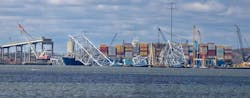
U.S. Transportation Secretary Sean Duffy and Maryland Governor Wes Moore are moving to break through delays and accelerate work on two of the region’s most critical bridges: the Francis Scott Key Bridge in Baltimore and the American Legion Memorial Bridge on the Capital Beltway.
During their meeting on Thursday, January 15, 2026, the two leaders focused on speeding up reconstruction efforts amid rising costs, heavy congestion, and growing pressure from commuters and taxpayers. The meeting marked a renewed push to move both projects forward after months of scrutiny and debate.
In a joint statement, Duffy and Moore said major infrastructure projects should not be so difficult to build, especially when they are essential to the economy and daily travel. Both leaders said they made meaningful progress and agreed to fast-track reconstruction efforts for the two bridges.
For the American Legion Memorial Bridge, which carries Interstate 495 between Maryland and Virginia, officials focused on finding faster ways to bring relief to one of the most congested traffic corridors in the country. The bridge is a daily bottleneck for hundreds of thousands of drivers traveling through the D.C. region.
To shorten construction timelines, Duffy and Moore discussed using innovative financing tools, including a public-private partnership. The approach could allow the project to move more quickly while delivering long-awaited traffic relief for commuters in Maryland, Virginia, and Washington, D.C.
The leaders also said they made progress on how rebuilding costs for the Francis Scott Key Bridge will be shared. Their goal, they said, is to ensure the plan is fair to taxpayers while keeping the project moving forward without unnecessary delays. Teams from both the state and federal governments will continue working through final details to keep costs down and timelines realistic.
Why These Projects Matter
The Francis Scott Key Bridge collapsed in March 2024 after a container ship struck one of its support piers, cutting off a vital freight and commuter route in the Baltimore area. Since then, rebuilding plans have evolved and grown more expensive.
Early estimates put the cost at about $1.9 billion, with completion expected by 2028, according to WBAL News Radio. Updated projections now place the price closer to $5 billion, with construction likely extending to 2030. Officials have blamed the increase onchanges needed to meet federal safety standards, as well as higher prices for materials, labor shortages, and inflation.
Those rising costs have drawn federal attention. In September 2025, Secretary Duffy sent a letter to Governor Moore raising concerns about the project’s budget, timeline, and oversight, particularly because the bridge replacement is expected to be paid for entirely by taxpayers.
Meanwhile, the American Legion Memorial Bridge has long been one of the worst traffic choke points in the country. It connects Maryland and Virginia across the Potomac River and serves as a key link along the Capital Beltway.
In recent months, the Federal Highway Administration asked the public for ideas on how to speed up reconstruction of the bridge as part of a broader plan to reduce congestion along the I-495 and I-270 corridors. Federal transportation data ranked the Washington, D.C., region as the most congested in the nation in 2025, with drivers losing hours each week sitting in traffic.
Maryland and Virginia first agreed in 2019 to work together on easing Beltway congestion, including expanding express lanes. Virginia has already completed major express lane projects, but transportation officials say real, long-term relief will require rebuilding and expanding the American Legion Memorial Bridge itself.
The January 15 meeting signals a shift from debate to action, as state and federal leaders look to turn years of planning into progress drivers can actually see and feel on their daily commutes.
Source: USDOT, WBAL News Radio, FFX Now