Speaking Truth to Power
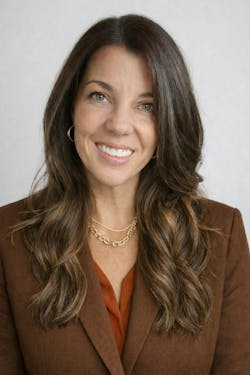
Haley Murphy knows her way around the industry as a second-generation leader in highway safety and co-owner of a family-operated highway safety company.
Her industry prowess and strong operational leadership made her a natural choice to serve as Chair of the American Traffic Safety Services Association (ATSSA). Her leadership and expertise also made her a natural choice for the Top 25 under 40.
“Her voice and vision continue to shape the future of roadway safety, making her a standout nominee for this honor,” said Stacy Tetschner, ATSSA President & CEO.
Her chairmanship has positioned her as a leading voice in national roadway safety advocacy, a platform she wields to advance ATSSA’s core mission of “Toward Zero Deaths.”
“As a second-generation owner and operator of a highway safety company, she is deeply committed to the Toward Zero Deaths initiative,” Tetschner said, “tirelessly championing funding and awareness for lifesaving infrastructure improvements.”
Murphy quickly climbed the ranks in ATSSA’s leadership, which began when she served as president of the Oklahoma chapter from 2019-2020. She has sat on several committees throughout her tenure, and she graduated from ATSSA’s Leadership Program in 2017.
“Her work with ATSSA has helped shape initiatives that support roadway workers and elevate underrepresented voices in the industry,” Tetschner said. “Through her advocacy, including her testimony before Congress, she’s helped secure attention and resources for critical safety measures.”
Her inside knowledge in the industry comes from her background building Direct Traffic Control, Inc., where she strived to build a company culture that prioritizes innovation and encourages team members to take personal ownership in improving roadway safety.
“I am most proud of helping build and grow Direct Traffic Control, Inc. in a way that truly makes a difference in people’s lives — not just our employees, but their families and the traveling public,” Murphy said. “Roadway work is inherently dangerous, and knowing that the systems, culture, and standards we put in place help ensure our crews go home safely at the end of each day is deeply meaningful to me.”
Murphy displays a knack for creating policy that solves real problems experienced in the field, making her a strong advocate for work zone safety on the national stage. Cutting the red tape on approving road safety products is another major pillar for Murphy.
“Her ability to connect data, policy and lived experience made a lasting impression on lawmakers and positioned her as a leading voice in shaping the next Highway Bill,” Tetschner said.
In 2025, she received the opportunity to provide congressional testimony before the House Transportation and Infrastructure Committee’s Subcommittee on Highway and Transit.
During her testimony, she advised members to ramp up investment into roadway safety programs. She seamlessly fielded questions on a wide range of topics and spoke from personal and professional perspectives, highlighting a roadway her company completed that she traveled daily with her children.
Tetschner called Murphy’s testimony a “landmark moment” for the industry.
“She advocated for robust funding in the next Highway Bill, citing daunting statistics in roadway fatalities and ongoing challenges in protecting roadway workers,” Tetschner said.
For Murphy, the biggest challenge in the industry is the public’s lack of insight into the complexities of road work and the dangers at hand. Confronting the issue of work zone fatalities will require a public information campaign to effectually change driver behaviors.
“The biggest challenge — and opportunity — for the roads and bridges industry is addressing work zone fatalities in the face of changing driver behavior, public misunderstanding, and increasing legal and operational pressures,” she said. “Distracted, impaired, and speeding drivers continue to put workers at risk, while many members of the public underestimate the complexity and danger of roadway work.”
Her word of advice to young people entering the industry is to do your time in the field, as it makes for the creation of more impactful policy to understand its real-world consequences. She also recommends investing time into relationships which can open windows for collaboration down the road.
“My advice is to learn the field before the boardroom. Time spent understanding the work firsthand builds credibility, perspective, and better leadership,” Murphy said. “Decisions in this industry have real consequences, and leaders are most effective when they understand how those decisions impact people on the ground.”