A Rising Leader
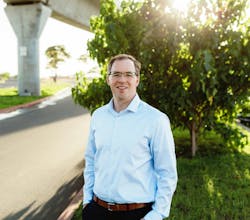
Andrew Wagner didn’t plan to become a bridge engineer. He just knew he wanted to help communities stay connected and safe. After earning his bachelor’s and master’s degrees in civil engineering from the University of Tennessee, he earned his professional engineering license and later pursued a project management professional (PMP) certification, which is uncommon for bridge engineers.
“Early in my career, a mentor joked that I was the best at breaking analysis software, and he meant it as a compliment,” Wagner told Roads & Bridges. “I quickly learned the value of checking my work against basic engineering principles and leaning on trusted mentors when needed.”
Today, Wagner works at HDR, where he combines technical expertise, leadership and mentorship to deliver complex transit and bridge projects across North America. Because of his abilities and dedication to the field, he was a no-brainer for the Top 25 Under 40.
Since joining HDR in 2018, he has moved from reviewing shop drawings for Honolulu’s light-rail system to leading the longitudinal design for the Durham-Orange LRT and serving as bridge design lead for Toronto’s Ontario Line. His projects range from segmental post-tensioned structures to elevated urban transit guideways and often involve coordinating large, multi-discipline teams across multiple regions.
On the Ontario Line, Wagner’s work went beyond typical bridge design. He mapped constraints, coordinated across teams and suggested design adjustments that simplified construction, reduced costs, and avoided environmental and utility impacts.
“Transit projects are complicated because so many disciplines overlap,” he said. “Each team is focused on their piece but understanding how our work affects others prevents delays and costly mistakes. Communication early and often is critical.”
Clients have taken notice. “Andrew consistently delivers excellent work on time,” said Arnab Gupta, vice president of design and construction for the Austin Transit Partnership. “His expertise and innovative thinking make a huge difference for our team and for the client.”
Wagner’s attention to real-world constructability guides his design choices. “How a bridge is built and how it will be maintained matters as much as the design itself,” Gupta said. “Understanding that early helps create infrastructure that lasts.”
Mentorship is another passion. Wagner checks in with engineers across projects, sharing advice and making sure they have the resources to grow. He also hosts seminars for University of Tennessee students and is developing a weeklong summer program to introduce students to unique bridge projects.
He extends this commitment to the wider industry as well. Wagner has served with the Transportation Research Board since 2019, chairing the Concrete Bridge Committee and organizing workshops to share knowledge and improve bridge design practices. At HDR, he co-chairs the Transit Structures Committee, helping engineers worldwide learn from each other and connect with projects.
Outside of work, he is active in his community, holding leadership roles with the Soldier and Family Readiness Group, supporting Army families during relocations, and earning 2024 SFRG Leader of the Year for the Alaska 11th Airborne Division.
“He represents exactly the type of engineer our industry needs,” said Nick Amico, South Atlantic major bridge lead, senior professional associate at HDR, and who nominated Wagner for recognition on this list. “He combines technical skill with the ability to see the big picture, mentor others, and improve both projects and people around him.”
For Wagner, the recognition is motivating.
“Being acknowledged is humbling,” he said. “It reminds me of the responsibility we have as bridge engineers and inspires me to keep delivering safe, reliable infrastructure while mentoring the next generation. Our work truly impacts people’s daily lives, and that keeps me energized.”