Working smarter, not harder
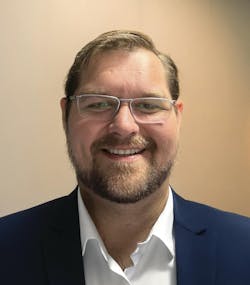
Gregory Kleinrichert Jr. earned a place on our inaugural Top 25 Under 40 with innovative thinking, leadership and a commitment to environmentally responsible infrastructure maintenance.
Early in his career at Best Tec, where he now serves as vice president, Kleinrichert noticed that coating removal was labor-intensive, hazardous and inefficient.
“The motivation started with curiosity, but it was sustained by responsibility,” Kleinrichert said. “I kept asking why highly capable employees were being asked to work harder instead of smarter.”
This inspired him to invent the patented ICRALA process (Induction Coating Removal and Laser Ablation), which combines laser ablation with induction heating and shifts much of the work from humans to intelligent tools, making coating removal safer, more precise and predictable.
Kleinrichert has led high-profile projects, including the Virginia Department of Transportation (VDOT) laser ablation research program, multiple DOT pilot initiatives and nuclear outage operations for Siemens Energy at Waterford and Farley. On one project, a 48-hour task was completed in just 12 hours. His guidance consistently improves schedules, reduces costs and enhances safety while minimizing environmental impact.
Kleinrichert shapes the industry beyond the jobsite by serving on committees for the Association of Materials Protection and Performance, Louisiana, 21511 Laser Ablation Standard and the new AMPP Induction Coating Removal Standard. He has helped set guidelines for environmentally responsible coating removal. His work ensures these technologies are scalable and adopted worldwide, connecting innovation with practical implementation.
Innovation is at the heart of his work. He has made operations simpler and safer by cutting down on setup, cleanup and the transport of hazardous waste, allowing projects to be done in sensitive places like the Florida Keys and nuclear facilities without spreading contaminants.
Gregory also invests in workforce development. He promotes rental, training and licensing programs that equip operators to adopt new technologies safely and efficiently, ensuring advanced maintenance practices continue to be applied globally.
His leadership has not gone unnoticed: “I nominated Greg [for Roads & Bridges’ Top 25 Under 40] because of his strong leadership,” said Tim Niemeier vice president of laser technology business development at Best-Tec. “He is committed to advancing structural steel preservation through technical innovation and environmental stewardship. Greg developed a way to improve bridge steel corrosion control in a cleaner, safer process. It also saves project time and money, while significantly mitigating risks to people and the environment. Greg is an outstanding under-40 professional who’s driving the future of infrastructure maintenance.”
Kleinrichert’s most notable project was Hangar 101, the first time laser ablation was used on a large U.S. government facility. As project manager, he handled planning, logistics and execution, safely removing hazardous coatings without using abrasive materials or containment systems. The project showed that laser ablation could meet production goals while avoiding extra waste, giving the VDOT confidence in the method and helping advance the AMPP LA 21511 Standard, which provides guidelines for safely and efficiently using laser ablation in infrastructure maintenance.
“What stands out most isn’t a single project metric, but the moment when owners in high-risk environments chose to trust a fundamentally different approach,” Kleinrichert said. “Working in nuclear and critical infrastructure settings demands absolute control, every variable matters.”
He added, “I view this recognition less as a personal milestone and more as affirmation that curiosity still drives progress in our industry. If this recognition helps encourage owners, engineers, and the next generation of professionals to think differently, to envision maintenance environments where precision technologies, automation, and human expertise work together, then it serves a meaningful purpose. Cleaner, safer, and more sustainable infrastructure isn’t a distant concept; it’s something we’re actively building, one question at a time.”